A photography studio — whether a dedicated commercial space or a converted spare room — gives you complete control over lighting, background, and environment that outdoor and location photography can’t match. This guide covers what studio photography actually is, how much space and budget you need, essential equipment, and how to run a studio as a sustainable business.
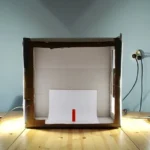
For the lighting equipment itself, our light modifiers guide and lightbox and softbox guide cover softboxes, umbrellas, and controlled lighting setups in full depth. For backdrop selection and setup, our photography backdrops guide covers materials and hanging systems completely.
What Is Studio Photography?
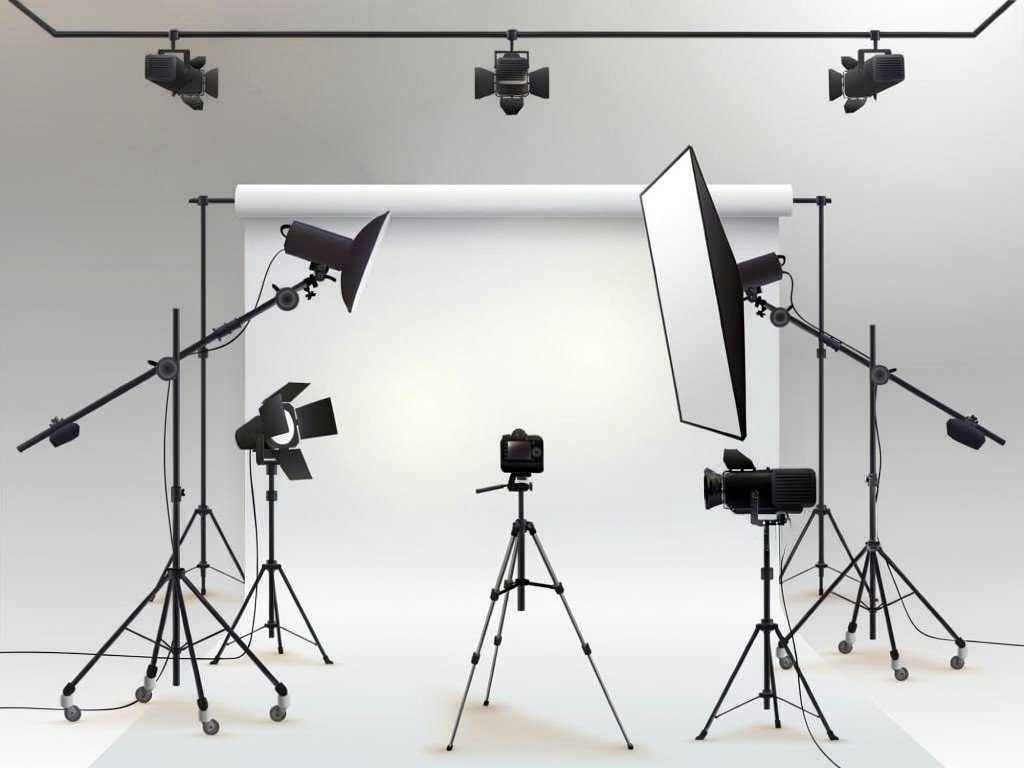
Studio photography involves creating images in a controlled environment — unlike outdoor or natural light photography, you have complete command over lighting, background, and overall aesthetic. This control allows for precision and repeatability that’s essential for professional work: portraits, product shots, and any photography where consistency across a shoot (or across many shoots) matters.
How Much Space Do You Need for a Photography Studio?
The ideal size depends on what you’re shooting. A smaller space can suffice for headshots and tight portraits; full-body portraits or larger product photography need more square footage. A commonly cited minimum starting point is around 12×15 feet with at least 8-foot ceilings — enough room to position lights, backdrops, and working distance between camera and subject without everything feeling cramped.
Renting vs. Building Your Own Studio
Renting an existing studio space (by the hour or day) is the lower-commitment option — no upfront build-out cost, and you can test whether a dedicated studio practice suits your work before committing further. Rental costs vary significantly by location and amenities.
Building or converting your own space — a spare room, garage, or dedicated commercial unit — lets you customise exactly to your specifications and avoids ongoing rental costs, but requires more upfront investment and a longer-term commitment to a fixed location.
Location considerations: Weigh accessibility for clients, natural light availability (even if you plan to primarily shoot artificial light, natural light is valuable for certain shots and for the space simply feeling pleasant to work in), and noise levels, particularly if you’ll be doing video or recording audio alongside stills.
Essential Equipment for a Photography Studio
Camera and lenses: A reliable body with interchangeable lenses is the foundation — a versatile zoom (24-70mm) covers general studio work, and an 85mm prime is the standard portrait-specific addition. For the complete lens decision framework, see our photography lenses guide.
Lighting: This is where studio photography earns its name — studio strobes or continuous lights, paired with modifiers (softboxes, umbrellas, reflectors) to shape and control the light. Understanding light ratios and how modifiers affect your subject is the core studio skill, covered completely in our light modifiers guide. You’ll also need light stands and boom arms to position everything.
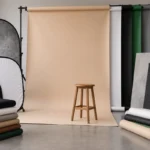
Backdrops: Seamless paper, muslin, or painted canvas in a range of colours and textures, plus a stand system and clamps to hang and secure them — our backdrops guide covers material selection and hanging systems in complete depth.
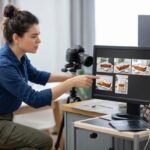
Accessories: A light meter for precise exposure readings, colour calibration tools for consistent output, tethering cables for shooting directly to a computer, and a sturdy tripod.
Setting Up Your Studio: A Step-by-Step Framework
- Assess your space — size, existing lighting conditions, and available electrical capacity for your lighting equipment
- Paint or treat the walls — neutral colours (white, grey) avoid unwanted colour casts bouncing onto your subject
- Install your backdrop system — a stand or wall-mounted system that’s stable and easy to change between shoots
- Set up your lighting — position key light, fill light, and background light based on the style you’re aiming for
- Organise your equipment — everything within easy reach for a smooth workflow during a session
Studio Photography Technique
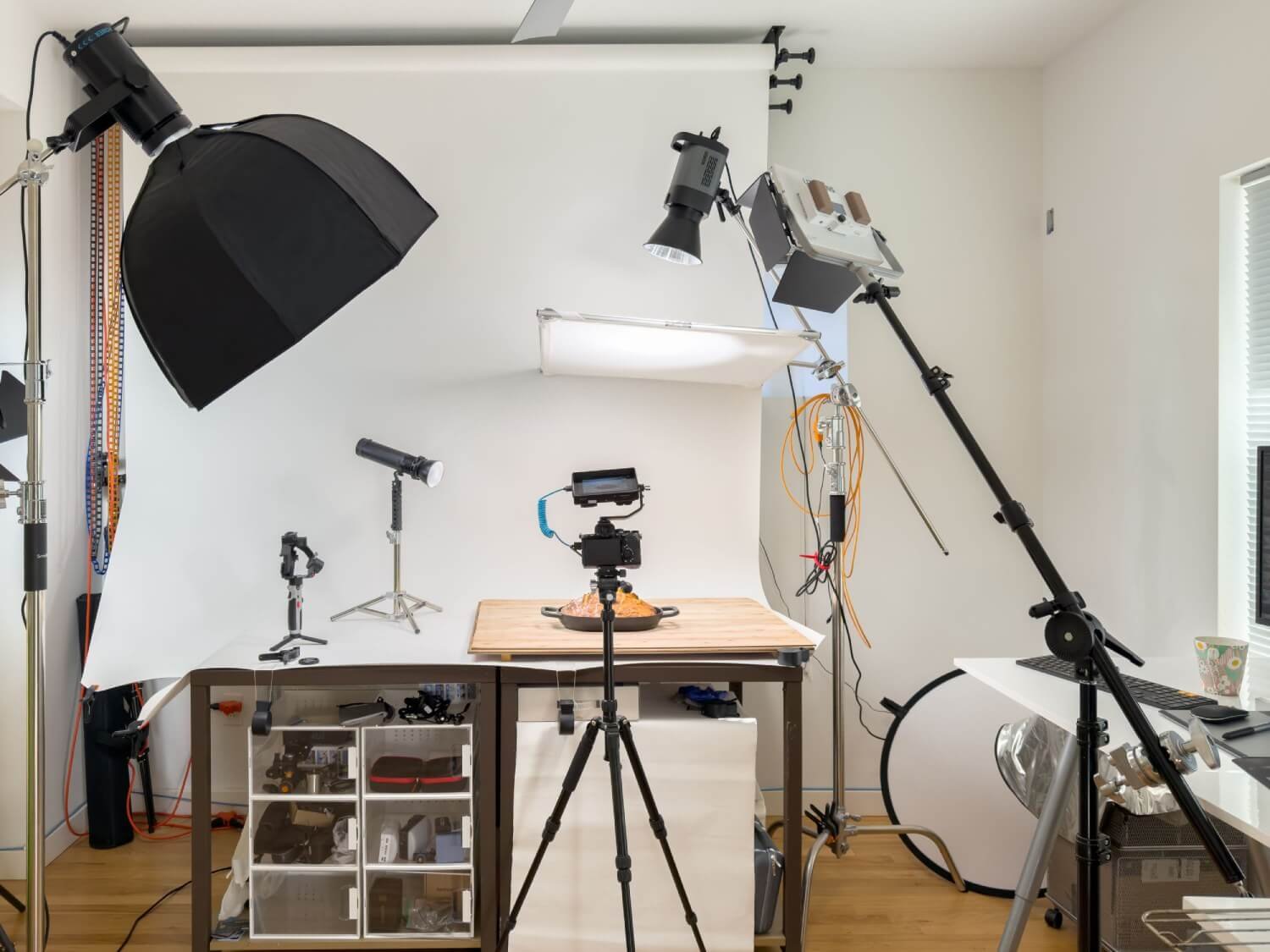
Studio work is built on understanding lighting patterns, posing, and camera settings working together. Experimenting with different lighting setups — the classic patterns (Rembrandt, loop, butterfly, split) covered in our portrait photography guide — and different posing approaches lets you create a range of moods from a single controlled space.
Setting Up a Home Photography Studio on a Budget
You don’t need a dedicated commercial space to shoot studio-style work. A spare room, garage, or even a corner of a living room can become a functional shooting space with portable equipment and creative use of available light.
Budget DIY approach: White sheets or foam boards work as improvised backdrops and reflectors; clamp lights from a hardware store can substitute for dedicated studio strobes at the very start; and natural window light, managed with the diffusion and reflector techniques covered in our reflectors guide, can replace artificial lighting entirely for many portrait and product setups.
Running a Photography Studio as a Business
Business plan and marketing: Outline your target market, pricing strategy, and marketing approach before opening. A professional website and portfolio, plus an active social media presence, are the baseline for attracting clients — covered in complete depth in our marketing guide.
Pricing: Research market rates in your area and set prices that reflect your actual costs — rent (if applicable), equipment, time, and overhead — rather than guessing. Our photography pricing guide covers the complete cost-of-doing-business calculation.
Client relationships: Responsive, professional communication and consistently exceeding expectations build the loyal client base and referral network that sustains a studio business long-term.
Further Reading
For studio lighting setups and modifiers in complete depth, see our light modifiers guide. For controlled product lighting specifically, see our lightbox and softbox guide. For backdrops, see our complete backdrops guide. For pricing and running the business side, see our photography pricing guide and marketing guide.
Final Thoughts
A photography studio — whether a rented commercial space or a converted spare room — is fundamentally about control: over light, background, and environment. Starting small and building up equipment as your work and client base grow is a more sustainable path than over-investing in a full commercial setup before you know exactly what your studio work demands.

Charles is a passionate photographer and visual storyteller with a keen eye for capturing authentic moments and timeless emotions. Through here, he combines creativity, technical expertise, and a love for natural storytelling to create images that preserve life’s most meaningful memories. His work focuses on genuine connections, beautiful details, and the unique stories behind every photograph.