ISO is one of the three variables that determine photographic exposure — alongside aperture and shutter speed. Of the three, it is the most misunderstood and the most frequently used incorrectly. Photographers who understand ISO only as “the brightness dial” are missing more than half of what the setting actually controls and the nuanced decisions it enables.
This guide covers ISO from first principles: what it actually does inside a camera, how it evolved from film sensitivity ratings, what native ISO means and why it matters, what ISO invariance is and how it changes shooting strategy, how to choose the right ISO for every situation, and the relationship between ISO and the digital noise that shapes image quality.
If you have already read our guide to ISO and digital noise management — which covers practical noise reduction workflows in Lightroom and in-camera strategies — this article provides the technical foundation that sits beneath those practical techniques.
The Origin of ISO: From Film to Digital
Understanding where ISO comes from clarifies what it actually measures.
Film Sensitivity: ASA and DIN
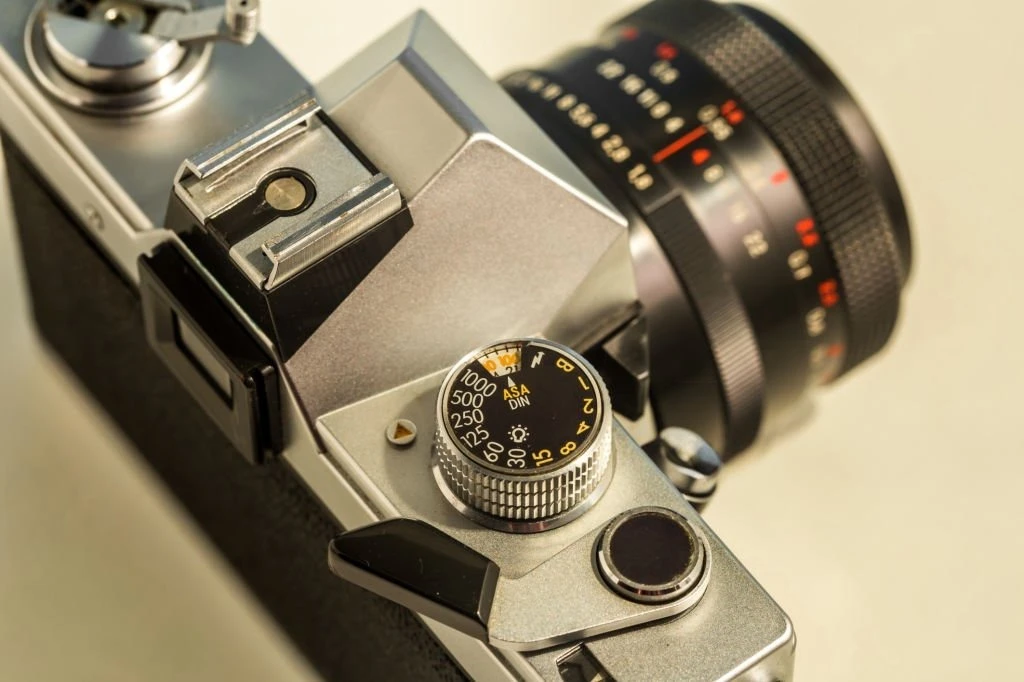
In the era of film photography, different film stocks had different sensitivities to light. A film with high sensitivity needed less light to produce a properly exposed image; a film with low sensitivity needed more. Two competing standards emerged to quantify this sensitivity:
ASA (American Standards Association): An American system that rated film sensitivity on an arithmetic scale — doubling the ASA number doubled the film’s effective sensitivity. ASA 100 film required twice the light of ASA 200 film; ASA 400 required half the light of ASA 800.
DIN (Deutsches Institut für Normung): A German system that rated film sensitivity on a logarithmic scale — each 3-point increase represented a doubling of sensitivity. DIN 21 was equivalent to ASA 100; DIN 24 was equivalent to ASA 200.
In practice, both systems described the same physical property — how sensitive the film’s silver halide crystals were to light. A fast film (high ASA/DIN) had larger silver halide grain structures that caught more photons but produced visible grain in the final print. A slow film (low ASA/DIN) had finer grain that produced smoother, more detailed images but required more light.
The ISO Standard
In 1974, the International Organization for Standardization merged the ASA and DIN approaches into a unified international standard, designated ISO. The ISO system uses the arithmetic scale of ASA — ISO 100 is identical to what was previously called ASA 100. The ASA and ISO labels are effectively interchangeable for film stocks rated under either system.
When digital cameras replaced film in the 1990s and 2000s, manufacturers adopted the ISO numbering system for describing digital sensor sensitivity — maintaining compatibility with exposure knowledge accumulated over decades of film photography. The underlying mechanism changed entirely (photosensitive silicon sensors rather than silver halide crystals) but the numbering system remained.
How ISO Works in Digital Cameras
The mechanism by which a digital camera responds to ISO settings is fundamentally different from film, and understanding this difference clarifies both why high ISO produces noise and why some cameras handle high ISO dramatically better than others.
The Photosite and Signal Chain
A digital camera sensor is covered with millions of individual light-collecting elements called photosites (the physical structures behind each pixel in the final image). Each photosite is a photodiode — a semiconductor device that converts incoming photons into an electrical charge. More photons striking the photosite during the exposure create a larger electrical charge; fewer photons create a smaller charge.
At the end of the exposure, this charge is read by an analogue-to-digital converter (ADC) that translates the electrical charge value into a digital number — the pixel value that appears in the final image file.
Where ISO enters this chain: ISO amplification occurs at the analogue stage — before the ADC conversion — in most camera designs. The tiny electrical charges from each photosite are amplified by an analogue amplifier before being converted to digital values. Increasing the ISO setting increases the amplification factor applied to these charges.
Why High ISO Produces Noise
The amplification that makes a dimly-lit scene appear brighter does not distinguish between signal (the actual light information from the scene) and noise (random electrical variation inherent in the sensor and its electronics). Both are amplified equally.
Three types of electronic noise contribute to digital image noise at high ISO:
Read noise: Introduced when the sensor reads the charge from each photosite and converts it. Present in every exposure regardless of ISO, but becomes proportionally more significant at low signal levels (dark scenes or underexposed images). Read noise is the primary driver of noise in shadows at base ISO.
Shot noise: A quantum mechanical phenomenon — the arrival of photons at a photosite follows random statistical distribution (Poisson distribution), meaning even a perfectly uniform light source produces slight variation in the number of photons reaching each photosite. This randomness creates pixel-to-pixel variation that is inherent to the physics of light itself. Shot noise scales with the square root of the signal level — halving the light doubles the relative shot noise contribution.
Thermal noise: Heat in the sensor electronics generates free electrons that contribute to the measured charge independently of light. Increases with temperature and with exposure duration — the reason long exposure noise is more significant than equivalent short exposures and why some cameras offer a dark-frame subtraction (long exposure noise reduction) option.
When you raise ISO, you amplify all three noise types along with the signal. This is why high ISO images appear grainy — not because the sensor is “less good” at high ISO in some simple sense, but because the physics of amplification make the noise more visible relative to the signal.
ISO Values: What the Numbers Mean
ISO values follow a doubling sequence that corresponds directly to stops of light:
| ISO Value | Stops from ISO 100 | Light Required (relative) |
|---|---|---|
| 100 | 0 (base) | 1× |
| 200 | +1 stop | ½× |
| 400 | +2 stops | ¼× |
| 800 | +3 stops | ⅛× |
| 1600 | +4 stops | 1/16× |
| 3200 | +5 stops | 1/32× |
| 6400 | +6 stops | 1/64× |
| 12800 | +7 stops | 1/128× |
| 25600 | +8 stops | 1/256× |
| 51200 | +9 stops | 1/512× |
Each doubling of ISO provides one additional stop of exposure — allowing either a one-stop reduction in aperture size (smaller aperture, more depth of field) or a one-stop increase in shutter speed (faster shutter, more motion freeze) for the same scene brightness.
Expanded ISO values: Many cameras offer ISO values above their standard maximum — labeled as “Hi 1” or “Hi 2” or simply very high numbers like ISO 204800 or ISO 409600. These extended values are typically produced by additional digital amplification applied after the analogue-to-digital conversion, rather than through analogue signal amplification. The result is usually significantly lower quality than equivalent ISO achieved through in-sensor amplification — noticeably lower resolution and very high noise. These expanded values exist for emergency situations where some image is better than no image; they should not be used as a standard high-ISO option.
Native ISO and Dual Native ISO
Native ISO
Every digital sensor has a native (or base) ISO — the sensitivity at which it operates with the least amplification and produces the cleanest, lowest-noise images. This is typically ISO 100 or ISO 200 depending on the camera system.
At native ISO, the sensor output is read directly by the ADC with minimal amplification — the signal-to-noise ratio is at its maximum for that sensor design. At any ISO above native, analogue amplification increases the signal (and noise) proportionally.
Practical implication: When lighting conditions allow, shooting at native ISO always produces the cleanest possible image from your specific camera. Every stop of ISO increase above native increases noise. This is not merely a recommendation — it is a physical consequence of sensor design.
Dual Native ISO
A significant number of professional and prosumer cameras — introduced primarily by Sony and later adopted by Panasonic, Fujifilm, and others — incorporate dual native ISO architecture. These cameras have two distinct native ISO values: a low native ISO (typically ISO 100–320) and a high native ISO (typically ISO 800–3200).
How dual native ISO works: At the circuit level, the sensor contains two separate read pathways with different amplification gains. When you select an ISO value at or near either native value, the camera routes through the corresponding pathway — producing cleaner results at those specific ISO values than at ISOs in between them.
On a typical dual native ISO camera:
- ISO 100–640: Low native ISO pathway — optimally clean at ISO 100, degrading gradually to ISO 640
- ISO 800–6400: High native ISO pathway — optimal at ISO 800 (second native), degrading gradually to ISO 6400
The practical result: images taken at ISO 800 on a dual native ISO camera often show less noise than images taken at ISO 640 on the same camera, because ISO 640 is above the first native value while ISO 800 uses the second native pathway at its optimal point.
How to identify your camera’s dual native ISO values: Consult your camera’s specifications — Sony labels them in spec sheets; Panasonic and Fujifilm typically document them in user forums and technical documentation rather than marketing materials. Testing with ISO 800 vs ISO 640 in a controlled situation reveals the transition point.
Cameras with dual native ISO (partial list): Sony A7S III, A7 IV, A1; Panasonic S1H, GH5 II, GH6; Fujifilm X-T4, X-T5, X-H2S; Nikon Z6 III; many recent professional video-focused cameras.
ISO Invariance: The Advanced Concept That Changes Shooting Strategy
ISO invariance is one of the most practically important and least understood concepts in modern digital photography. Understanding it changes how you should shoot in certain situations.
What ISO Invariance Means
An ISO-invariant sensor produces equivalent image quality whether you increase ISO in-camera at the point of capture or whether you shoot at base ISO and then raise the exposure in post-processing.
On a perfectly ISO-invariant sensor, a shot taken at ISO 3200 with correct exposure is indistinguishable (in noise terms) from a shot taken at ISO 100 and then brightened by five stops in Lightroom. The noise level and character are equivalent — because both processes involve the same fundamental signal amplification, just at different points in the processing chain.
Why It Matters in Practice
On a highly ISO-invariant camera, you can shoot at base ISO in any situation and recover exposure in post rather than raising ISO in the field. This means:
You preserve the full dynamic range of base ISO — not reducing highlight headroom by exposing brighter. At high ISO settings, the amplified signal can clip highlights more easily; shooting at base ISO and recovering exposure in post avoids this.
You can use “expose to the right” more aggressively — intentionally slightly overexposing at base ISO to maximise signal capture, then pulling the exposure back in post, yielding lower shadow noise than correctly exposing at high ISO.
For video shooters: ISO invariance allows shooting at a fixed ISO (often the camera’s native ISO) and achieving the same tonal result as ISO variation through post-processing, which is valuable for maintaining consistent colour response across a scene.
Which Cameras Are Most ISO Invariant?
ISO invariance varies between sensor designs. Some generalizations:
- Sony sensors (including those in Nikon and many other cameras using Sony-manufactured sensors) tend toward high ISO invariance
- Canon sensors (particularly older generations) tend toward lower ISO invariance — in-camera ISO produces better results than equivalent post-processing brightening
- Fujifilm X-Trans sensors vary by generation but generally show moderate ISO invariance
How to test your camera’s ISO invariance: Shoot the same scene twice — once at base ISO with correct exposure, once at five stops lower exposure at base ISO. In editing, raise the underexposed image by five stops. Compare the shadow noise in both images. If they look similar, your camera is highly ISO invariant. If the in-camera ISO image looks cleaner, your camera benefits from using higher ISO in the field.
Auto ISO: When and How to Use It
Auto ISO is a shooting mode (available on all modern cameras) that allows the camera to automatically select the ISO setting within user-defined limits based on the current scene brightness and exposure requirements.
Auto ISO Configuration
Most cameras allow three Auto ISO parameters:
ISO minimum: The lowest ISO the camera will use (typically set to native ISO — 100 or 200).
ISO maximum: The highest ISO the camera is permitted to select. Setting this appropriately for your camera’s clean ISO ceiling prevents the camera from selecting ISO values that produce unacceptable noise quality. A reasonable starting point: full-frame cameras set to ISO 6400–12800 maximum; APS-C cameras to ISO 3200–6400 maximum.
Minimum shutter speed: The slowest shutter speed the camera will use before raising ISO. This is the most important setting — it determines when the camera begins raising ISO versus slowing the shutter speed. Options include a specific value (1/250s for sports, 1/60s for general use), or an automatic setting based on focal length (preventing camera shake by keeping shutter speed at or above 1/focal length).
When Auto ISO Is Appropriate
Auto ISO works best in situations where light changes unpredictably and your primary concern is maintaining correct exposure and minimum shutter speed:
- Sports and action photography (lighting changes as athletes move across different areas of the venue)
- Documentary and event photography (moving between indoor and outdoor, different rooms with different lighting)
- Wildlife photography in natural environments (dappled light, moving between shade and sun)
- Wedding photography throughout a day from bright outdoor ceremony to dark indoor reception
When Auto ISO Is Appropriate
Manual ISO is preferable when:
- Shooting in consistent, controlled lighting (studio, product photography, landscape with stable conditions)
- You want to deliberately shoot at a specific ISO for a consistent aesthetic (including intentionally high-noise shooting for filmic grain effects)
- Tethered commercial shooting where consistent colour and tonal response between frames is critical
- Video shooting, where ISO changes create visible flicker or tonal shifts mid-take
What ISO to Use: Situation Reference Guide
Your keyword data shows strong search intent around specific ISO recommendations for different situations. Here is a practical reference:
Outdoor Daylight
Bright sun: ISO 100–200. Maximum quality. Even at fast shutter speeds and narrow apertures, there is abundant light for correct exposure at base ISO.
Overcast or open shade: ISO 200–400. Slightly less light but still very manageable at low ISO.
Sunset / golden hour: ISO 200–800 depending on how dark the scene becomes. As the sun drops below the horizon, ambient light falls quickly — be prepared to raise ISO as light decreases.
Indoor and Available Light
Well-lit indoor spaces (office, bright home, well-lit restaurant): ISO 400–800. Normal interior artificial lighting requires modest ISO increase to maintain appropriate shutter speeds.
Dimly lit indoor spaces (dark restaurant, bar, moody interior): ISO 1600–3200. Low ambient light requires significant ISO increase, particularly if flash is unavailable or unwanted.
Concert and stage photography: ISO 3200–12800. Stage lighting is often very intense in spots and very dark elsewhere, with constant changes. High ISO allows the fast shutter speeds (1/500s or faster) needed to freeze performers.
Night Photography
City streets with ambient light (night photography in urban environments): ISO 800–3200. Streetlights and building illumination provide ambient light — how much ISO you need depends on how fast a shutter speed you require.
Dark locations without significant ambient light: ISO 1600–6400. Away from city light, very little ambient illumination means high ISO is necessary for any reasonable shutter speed.
Astrophotography and night sky photography: ISO 1600–6400. Night sky photography requires a specific exposure calculation based on the 500 Rule (500 ÷ focal length = maximum shutter speed in seconds before star trailing) — typically producing exposures of 10–20 seconds on a fixed tripod. ISO 1600–3200 is the most common range; higher ISOs increase background sky brightness without proportionally increasing star brightness, reducing contrast. Our guide to ISO and digital noise management covers the full astrophotography exposure strategy.
Action and Sports
Well-lit outdoor sports (afternoon football, cricket, athletics): ISO 200–400. Ample daylight allows fast shutter speeds at modest ISO.
Indoor sports (basketball arena, gymnastics hall, swimming pool): ISO 1600–6400. Even professional venues vary enormously in lighting quality — test at the start of every event to establish the appropriate ISO for that specific lighting.
Evening outdoor sports under floodlights: ISO 1600–3200. Floodlit venues provide reasonable but not abundant light — the combination of fast shutter speed requirements for freezing motion and the imperfect light quality typically requires ISO 1600 or higher.
ISO in Film Photography vs Digital Photography
The shared ISO number between film and digital creates useful continuity but masks an important difference in how the sensitivity is achieved and what it means creatively.
Film ISO: A physical property of the film stock — the density, size, and chemical composition of the silver halide crystals determine the film’s sensitivity. You cannot change ISO mid-roll; the film loaded determines the ISO for every frame until the roll is finished. A photographer shooting ISO 400 film was committed to that sensitivity for the entire roll, which influenced every exposure decision.
Digital ISO: An adjustable electronic setting that can be changed frame-by-frame — even within a single burst. A digital photographer can shoot ISO 100 for a landscape, immediately switch to ISO 6400 for a dimly lit interior subject, and return to ISO 100 for the next outdoor shot. This flexibility removes the film-era commitment but also removes the discipline that commitment imposed.
Film grain vs digital noise: Both film grain (the visible silver halide crystal patterns in high-ISO film) and digital noise share a visual similarity — a textured, granular quality in the image. But their character is different. Film grain tends to be organic and luminance-based, producing a quality that many photographers find aesthetically pleasing. Digital noise, particularly colour noise (random coloured pixels), tends to read as more artificial. High-quality noise reduction in modern cameras and software has substantially closed this aesthetic gap.
Shooting ISO 3200 film: Many photographers shooting deliberately high-ISO film (Kodak Tri-X at ISO 1600 or ISO 3200 pushed in development, Ilford Delta 3200) embraced the grain as part of the aesthetic — a visual quality associated with photojournalism, street photography, and reportage that digital photographers often try to recreate through grain overlays in post-processing.
What ISO Stands For: The Accurate Answer
The complete and accurate answer to “what does ISO stand for in photography” is:
ISO originally referred to the International Organization for Standardization (ISO in French: Organisation internationale de normalisation) — the international body that established technical standards across many industries, including the ISO 5800 standard that unified ASA and DIN film sensitivity ratings into a single international system.
However: “ISO” as an acronym presents a grammatical complication. The organisation uses the short form “ISO” for all languages — derived from the Greek word isos (ἴσος), meaning “equal” — rather than as an acronym of any single language’s version of the organisation’s name. In photography, “ISO” is therefore best understood as a proper noun (the organisation’s chosen name) rather than as an acronym requiring expansion.
In practical photographic use, “ISO” simply means sensor sensitivity — the inherited legacy of the standard the organisation defined.
Further Reading
For the complete practical guide to managing digital noise in post-processing — Lightroom’s noise reduction tools, selective noise reduction techniques, and AI-powered noise reduction software — our companion guide to ISO and digital noise management covers the full workflow. For how ISO interacts with the other two sides of the exposure triangle, our guide to photography for beginners covers aperture, shutter speed, and ISO as an integrated system. For the specific ISO considerations in sports photography — including Auto ISO configuration for fast-changing arena lighting — our sports photography guide covers the settings in context. For macro photography where base ISO is critical for clean fine-detail rendering, our macro photography guide covers the integration of ISO with macro-specific exposure challenges.
For the most technically rigorous external treatment of digital sensor noise science, DxOMark’s sensor measurement methodology explains how their dynamic range, noise, and sensitivity measurements are produced — the most precise publicly available sensor performance data.
Final Thoughts
ISO is not simply a brightness control. It is a parameter that determines the entire signal-processing chain from photon to pixel — with direct consequences for noise, dynamic range, and image quality at every value. Understanding the underlying mechanism — the amplification of analogue signals, the nature of electronic noise, the role of native ISO in sensor architecture, and the implications of ISO invariance for shooting strategy — transforms ISO from a setting you adjust by habit into a variable you choose with genuine intention.
The practical takeaway remains simple: use the lowest ISO the situation allows. But the understanding behind that practice — why it matters, how much it matters for your specific camera, and when ISO invariance changes the calculus — is what separates the photographer who controls their camera from the one whose camera controls them.

Charles is a passionate photographer and visual storyteller with a keen eye for capturing authentic moments and timeless emotions. Through here, he combines creativity, technical expertise, and a love for natural storytelling to create images that preserve life’s most meaningful memories. His work focuses on genuine connections, beautiful details, and the unique stories behind every photograph.