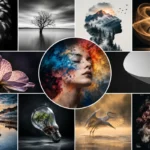
Photography is not one thing. It is dozens of distinct disciplines — each with its own technical demands, creative traditions, equipment requirements, and career trajectories. The skills and instincts that make an exceptional wildlife photographer are different from those that make an exceptional portrait photographer. The equipment that a wedding photographer carries to a reception is not the equipment a macro photographer sets up at a garden pond. The business model of a commercial product photographer bears little resemblance to that of a photojournalist.
Understanding the landscape of photography genres is useful at every stage of development. For beginners, it helps identify where to focus energy rather than attempting to master everything simultaneously. For developing photographers, it clarifies what adjacent skills and genres might complement their primary work. For professionals, it reveals the structural differences between markets that determine pricing, client acquisition, and career trajectory.
This guide covers every major photography genre — what it is, what it requires technically and interpersonally, what equipment it demands, what the career path looks like, and how it differs from adjacent genres. It functions as both an introduction to each genre and a navigation guide to the deeper specialist articles on this site where individual genres are covered in full.
The Difference Between Genre and Style
Before surveying the genres, the distinction between genre and style is worth establishing — because they are frequently confused and the confusion matters for how you think about your own development.
Genre describes what you photograph: the subject matter, the context, and the intended use of the images. Wedding photography, wildlife photography, and architecture photography are genres. They are defined primarily by their subject.
Style describes how you photograph: the aesthetic choices, processing approach, compositional tendencies, and visual voice that make your work identifiable regardless of subject. Documentary style, fine art style, high-key style, and film-emulation style are stylistic approaches. They describe the character of the output rather than the subject matter.
A portrait photographer can shoot in a clean, commercial style or in a moody, painterly style. A wedding photographer can approach weddings documentarily or editorially. Genre and style are independent dimensions — you choose which genre to work in, and you develop a style that expresses your vision within that genre.
People Photography Genres
Portrait Photography
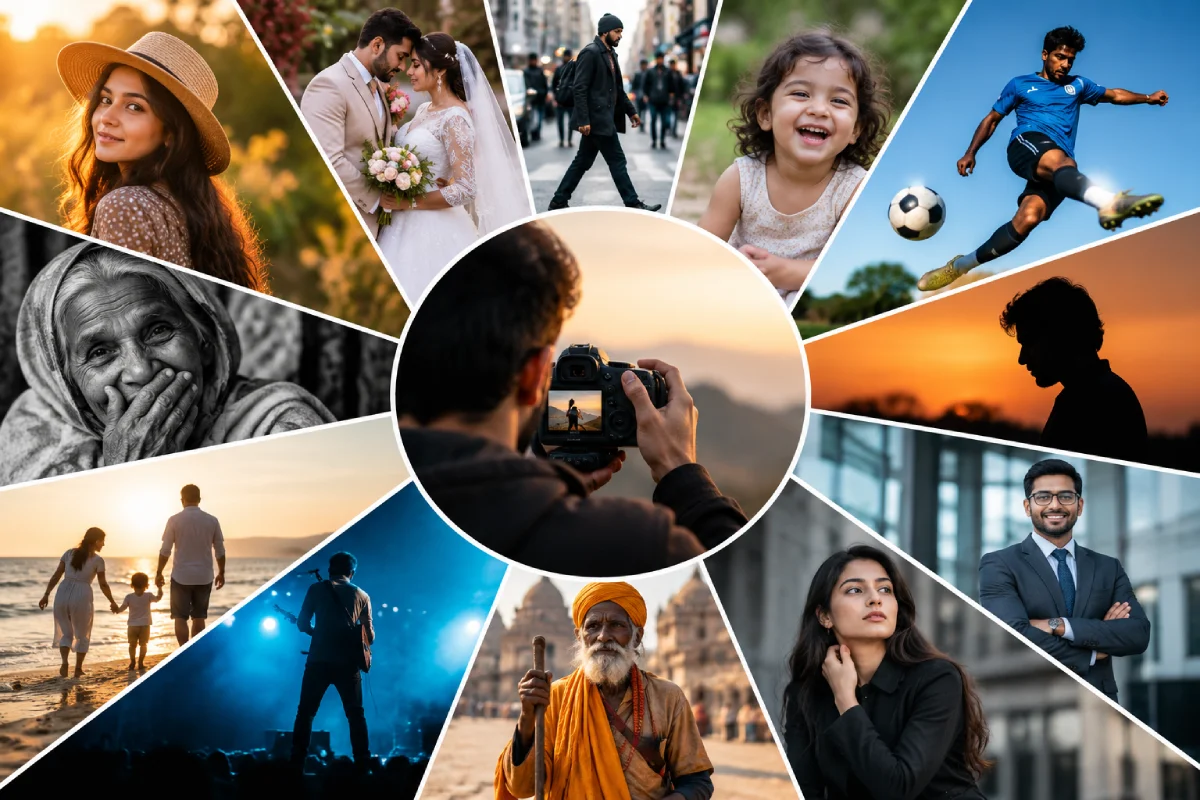
Portrait photography is the broadest people-focused genre — encompassing everything from studio headshots and family sessions to editorial portraits for magazines and fine art character studies. It requires the technical skills of lighting, exposure, and focus, combined with the interpersonal skill of creating an environment where genuine expression emerges.
What it requires: Ability to direct subjects naturally, proficiency with portrait lighting (natural window light, studio flash, or both), sharp focus on eyes, flattering posing knowledge, and — above all — the ability to make people feel comfortable in front of a camera.
Equipment: A mirrorless or DSLR body with a 85–100mm portrait prime lens is the core. Studio photographers add softboxes, beauty dishes, and reflectors. Natural light portrait photographers need a reflector as a minimum.
Career path: Headshots, personal branding sessions, family and maternity portraits, fine art portraiture, editorial portraiture for publications.
Our dedicated guide to portrait photography covers the complete craft including lighting setups, posing direction, and sub-genres.
Wedding Photography
Wedding photography combines documentary instinct, portrait skill, event coverage, and commercial client management in a single demanding genre. It is the highest-revenue single-event photography genre for most photographers and requires managing complex logistics, emotional intensity, and technical challenges simultaneously.
What it requires: Reliability and backup systems, ability to work under pressure without recovery options, posing and direction skills for couple portraits, documentary instincts for ceremony and reception candids, strong flash and low-light technique, and excellent client communication.
Equipment: Two camera bodies minimum, 24-70mm f/2.8 zoom, 85mm portrait prime, 70-200mm f/2.8 telephoto, multiple speedlights, backup triggers and batteries.
Career path: Solo wedding photographer, photography studio with multiple photographers, second shooter to primary, associate photographer.
Our complete guide to wedding photography covers every phase of the wedding day, preparation, gear, and post-processing workflow.
Newborn and Family Photography
Newborn photography is a specialist portrait niche requiring specific safety training, posing knowledge for infants who cannot support their own weight, and the ability to work patiently over extended sessions (2–4 hours) that progress at the baby’s pace.
What it requires: Safety training (many newborn photography educators offer certification courses), warmth and patience, understanding of baby sleep and alertness cycles, posing props and wraps, ability to work quickly during the brief windows when newborns are most cooperative.
Family photography is broader and more accessible — capturing families in natural environments or studio settings. Connection with children and the ability to draw natural interaction between family members are the key interpersonal skills.
Equipment: 85mm or 100mm prime for tight poses, 50mm for environmental family shots, speedlight for fill in outdoor family sessions.
Career path: Maternity, newborn, sitter (6-month), cake smash, and first birthday sessions form a natural sequence for families — repeat bookings across the first year of a child’s life.
Street Photography
Street photography documents human life in public spaces — candid, unposed, spontaneous moments that capture something true about how people live and interact. It has a long and artistically significant tradition, from Cartier-Bresson’s decisive moment philosophy through the New York school of Garry Winogrand and Diane Arbus to contemporary urban documentation.
What it requires: Spatial awareness and the ability to anticipate moments before they peak, the social confidence to photograph strangers in public, quick reflexes and instinctive framing, understanding of street legal rights in your jurisdiction, and genuine curiosity about people and urban life.
Equipment: Small, inconspicuous camera and a 28–50mm prime lens. The less gear you carry, the less attention you attract. Classic choices: Fujifilm X100 series, Ricoh GR, or a mirrorless body with a pancake prime.
Style considerations: Street photography spans from the geometric, graphic formalism of photographers like Vivian Maier to the chaotic, snapshot aesthetic of Daido Moriyama. Finding your street photography style means understanding both traditions and discovering where your instincts naturally fall.
Legal and ethical considerations: Street photography of people in public places is legal in most jurisdictions without a model release (for editorial/artistic use — not commercial use). The ethical considerations around photographing vulnerable people, children, and people in distress are more nuanced and require personal reflection beyond the legal minimum.
Fashion Photography
Fashion photography creates visual content for the clothing, accessories, and beauty industries — for editorial publications, advertising campaigns, lookbooks, and e-commerce. It sits at the intersection of photography, art direction, and commercial production.
What it requires: Understanding of clothing, styling, and the fashion industry aesthetic; ability to direct models with confidence; strong lighting skills (studio and location); creative vision that aligns with brand and editorial aesthetics; ability to work within an art direction brief.
Equipment: Full-frame camera body, 85mm portrait lens for beauty and tight shots, 35–50mm for full-body looks, professional studio lighting or portable battery-powered strobe for location work.
Career path: Test shoots with emerging models and stylists build the portfolio; editorial work for magazines builds the reputation; advertising campaigns and brand campaigns generate the revenue.
Nature and Environment Photography Genres
Landscape Photography
Landscape photography captures the natural environment — mountains, coastlines, forests, deserts, skies, and the transitional moments of light that transform them. It rewards patience, early mornings, advance planning, and a willingness to return to the same location under different conditions until the image you visualised becomes possible.
What it requires: Understanding of weather and light conditions, ability to plan shoots around golden hour and blue hour, knowledge of location scouting tools (PhotoPills, The Photographer’s Ephemeris), tripod discipline, and patience that operates on the timescale of seasons rather than hours.
Equipment: Wide-angle lens (16–24mm full frame equivalent) for the grand vista, telephoto (70–200mm) for compressed distant detail, ND filters for long-exposure water and cloud effects, circular polariser for sky and foliage, sturdy tripod.
Career path: Fine art print sales, stock photography, licensing to publications and travel brands, workshops and tours leading groups to specific locations.
Our guide to ND filters for long exposure photography and circular polarizer filters cover the essential filter techniques for landscape work.
Wildlife Photography
Wildlife photography documents animals in their natural environments — from backyard birds to African wildlife to marine life. It is one of the most technically demanding genres, combining the autofocus and reach requirements of sports photography with the field craft knowledge of naturalism.
What it requires: Deep knowledge of animal behaviour (what subjects do, where and when), telephoto reach (300–600mm minimum for most wildlife), fast autofocus with strong tracking, patience measured in hours of waiting for behaviour, ethical field practice that puts subject welfare above the image, and physical stamina for field conditions.
Equipment: A fast telephoto (400mm f/5.6 at minimum, 500–600mm f/5.6 for birds in flight), a body with fast continuous AF (Sony A9, Canon R3, Nikon Z9), sturdy tripod with gimbal head for long lens support.
Career path: Magazine and publication licensing, stock photography, conservation organisation commissions, prints and fine art sales, safari and wildlife workshop guiding.
Macro Photography
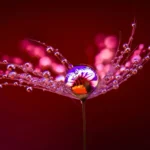
Macro photography reveals subjects at 1:1 or greater magnification — the hidden world of insects, flowers, minerals, water droplets, and textures invisible to the naked eye. It requires specialist close-focusing equipment and techniques that don’t apply to any other genre.
What it requires: Understanding of depth of field at close range (measured in millimetres rather than metres), manual focus discipline, stability (tripod, macro rail, or controlled breathing for handheld), lighting technique for close-range subjects (ring flash, twin flash, or diffused LED), patience with live subjects.
Equipment: Dedicated macro lens (90–105mm recommended), extension tubes as a budget alternative, ring flash or twin flash for field insect work, macro rail and sturdy tripod for studio/garden macro.
Our complete guide to macro photography covers gear, focus stacking, lighting, and subject-specific techniques in full.
Astrophotography and Night Photography
Astrophotography captures celestial subjects — the Milky Way, star trails, planets, nebulae, and the night sky. Night photography more broadly includes cityscape and landscape work in darkness, light painting, and long-exposure urban scenes.
What it requires: Understanding of astronomical timing (dark sky windows, Milky Way core visibility by season and location), location scouting for light pollution levels, mastery of the exposure calculation for star trails vs pinpoint stars (the 500 Rule), high-ISO performance from a capable sensor, and often a tracking mount for deep sky work.
Equipment: Full-frame or APS-C body with strong high-ISO performance, very wide aperture lens (f/1.4 or f/1.8 at 14–35mm), sturdy tripod, cable release, optionally a tracking mount for longer focal lengths.
Career path: Stock photography of night skies (strong consistent demand from travel and nature publications), prints, workshops in dark sky locations, content creation for astronomy and nature audiences.
Commercial Photography Genres
Food Photography
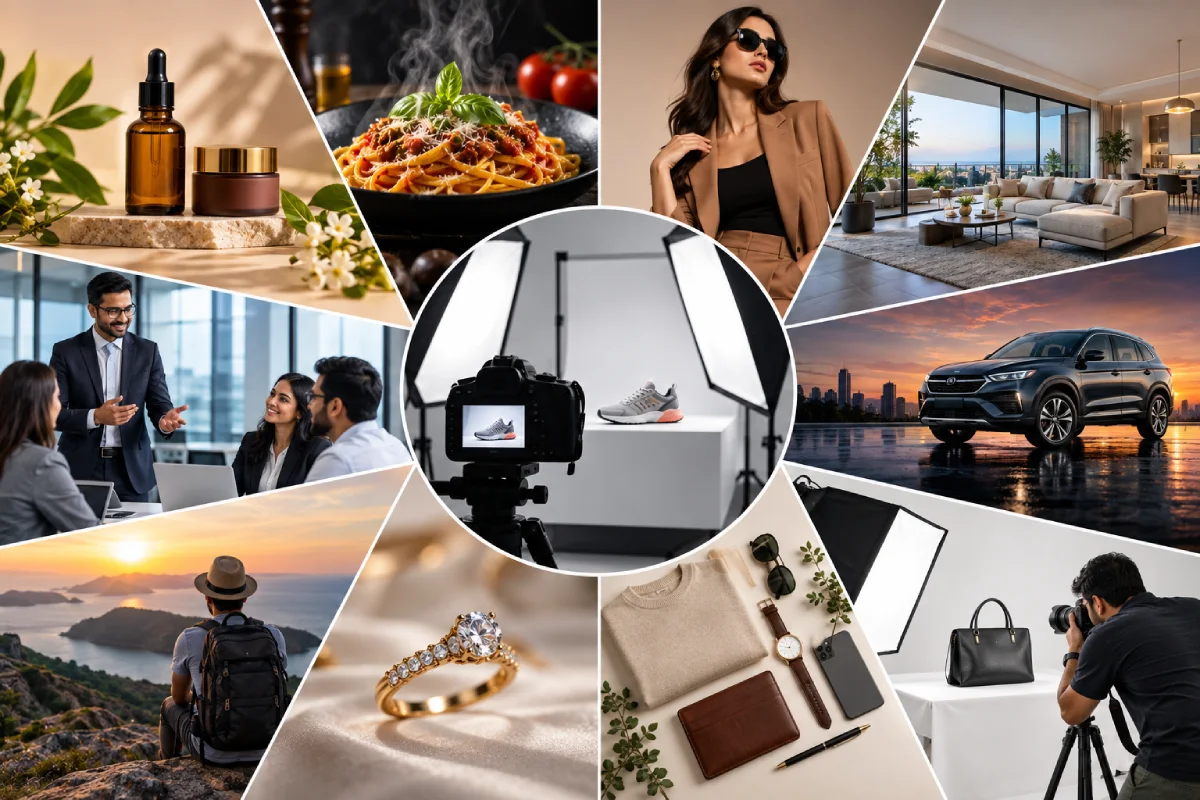
Food photography creates images for restaurants, food brands, cookbooks, recipe publications, and food content creators. It combines technical lighting skill with a specific understanding of food styling, colour, texture, and the visual triggers that make food look appetising.
What it requires: Mastery of directional light (natural window or softbox) to reveal food texture, understanding of food styling principles, prop selection and background composition, editing workflow that preserves accurate colour while enhancing appeal.
Equipment: 50mm or macro lens for close-up detail work, softbox or window light, reflectors, a collection of props and surfaces.
Our complete guide to food photography covers the full craft including lighting setups, styling principles, and how to build a food photography business.
Product Photography
Product photography creates commercial images for e-commerce listings, advertising campaigns, packaging, and brand content. It ranges from clean catalogue shots against white backgrounds to lifestyle product images in environmental contexts.
What it requires: Controlled lighting that flatters the specific product (different products need different lighting approaches — reflective products like jewellery need different treatment from matte fabric products), attention to reflections and surface rendering, consistent white balance across product lines, and for e-commerce work, efficiency for high-volume shooting.
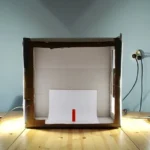
Equipment: Lightbox or softbox setup for clean product shots, tripod for consistency, 50mm macro for close detail work.
Our guide to lightbox and softbox photography covers the controlled lighting setup for product photography in complete detail.
Real Estate and Architectural Photography
Real estate photography documents residential and commercial properties for sales listings, rental platforms, and property marketing. Architectural photography is the more specialist, artistic end of the same spectrum — commissioned by architects, designers, and developers to document completed buildings and interiors.
What it requires: Wide-angle lens to capture interior spaces, vertical correction to keep walls and door frames straight, HDR or flash-window blending technique to handle the extreme dynamic range of interior-with-window exposures, consistent delivery of clean, bright images.
Equipment: Wide-angle lens (16–24mm full frame), tripod, tilt-shift lens for premium architectural work, flash or LED for supplemental fill.
Career path: Volume residential real estate (consistent local demand), luxury property photography (premium rates), architectural commissions (highest per-project rates, most selective client access).
Commercial and Advertising Photography
Broad commercial photography encompasses any photography commissioned for business purposes — corporate headshots, brand content, advertising imagery, annual report photography, and trade publication editorial. It operates through a licensing model where usage rights are priced separately from the creative fee.
What it requires: Understanding of brand aesthetics and the ability to execute within a brief, professional conduct in commercial environments, knowledge of licensing and usage rights pricing, ability to collaborate with art directors and clients.
Career path: Building relationships with marketing departments, design agencies, and advertising agencies; often developed through portfolio work with local businesses before scaling to regional and national brand work.
Sports Photography
Sports photography captures athletes in action — the peak of physical performance, the decisive moment in competition, the emotional aftermath of victory and defeat. It demands the technical combination of fast autofocus, fast shutter speeds, and telephoto reach that no other genre requires simultaneously.
What it requires: Deep understanding of the specific sport being photographed (to anticipate action before it peaks), fast continuous autofocus with excellent tracking, burst rate of at least 10fps, strong high-ISO performance for indoor venues, telephoto reach, and the physical stamina for extended sideline work.
Equipment: Fast-focusing body with strong burst rate, 70-200mm f/2.8 as the minimum, 300-400mm for outdoor field sports, 100-400mm zoom for versatility.
Our complete guide to sports photography covers gear configuration, autofocus settings, sport-specific techniques, and workflow for high-volume sports shoots.
Event Photography
Event photography covers corporate events, conferences, galas, charity functions, private parties, concerts, and festivals — capturing the key moments, atmosphere, and people of any organised gathering.
What it requires: Ability to work unobtrusively in a social environment, awareness of the event structure to anticipate key moments (speeches, awards, performances), competent mixed-lighting technique (ballroom lighting, stage lighting, outdoor evening lighting), and efficient delivery of large image volumes.
Equipment: Versatile zoom (24-70mm or 24-105mm) for most event work, speedlight for dark venues, 70-200mm for stage coverage from distance.
Documentary and Journalistic Photography Genres
Photojournalism
Photojournalism uses photography to document news events, tell stories of public significance, and bear visual witness to events that shape history. It operates under strict ethical constraints around truthfulness and accuracy that distinguish it from other documentary genres.
What it requires: Speed, instinct, and the ability to produce technically adequate images under any conditions; genuine news judgment about what is significant; understanding of photojournalism ethics (no staging, no significant post-processing beyond basic tonal correction, no composite images); relationships with editors and agencies.
Career path: Staff positions at newspapers and magazines have declined dramatically as print media has contracted; most current photojournalists are freelance, working on assignment for news agencies (Associated Press, Reuters, Getty Images) or pitching stories directly to publications.
Documentary Photography
Documentary photography tells longer-form stories — about communities, social issues, historical events, and human experiences — over extended time periods. It differs from photojournalism in working on a slower timescale and typically pursuing personal projects rather than breaking news.
What it requires: Deep commitment to the subject over time (weeks, months, or years), ability to build genuine relationships with subjects, visual storytelling instincts that sequence images into coherent narratives, understanding of how documentary work is funded and published (grants, editorial commissions, book publishers, exhibition spaces).
Notable tradition: Walker Evans’ Depression-era documentation, Sebastião Salgado’s long-form project work, Mary Ellen Mark’s extended immersive projects.
Travel Photography
Travel photography documents places, cultures, people, and experiences — combining elements of landscape, street, portrait, and documentary photography in the context of exploration and movement.
What it requires: Versatility across multiple genres (a travel photographer must be competent at landscape, portrait, food, and street photography simultaneously), the ability to work quickly in unfamiliar environments, cultural sensitivity, and strong editing to curate a large volume of diverse imagery into a coherent visual narrative.
Equipment: Travel photography demands compromise between quality and portability. A versatile zoom (24-105mm), a single wide prime, and — in recent years — a smartphone for quick opportunistic captures covers most travel photography needs without excessive weight.
Career path: Stock photography, licensing to travel publications, brand partnerships with travel companies, content creation for social media, tourism board commissions.
Fine Art and Creative Photography Genres
Fine Art Photography
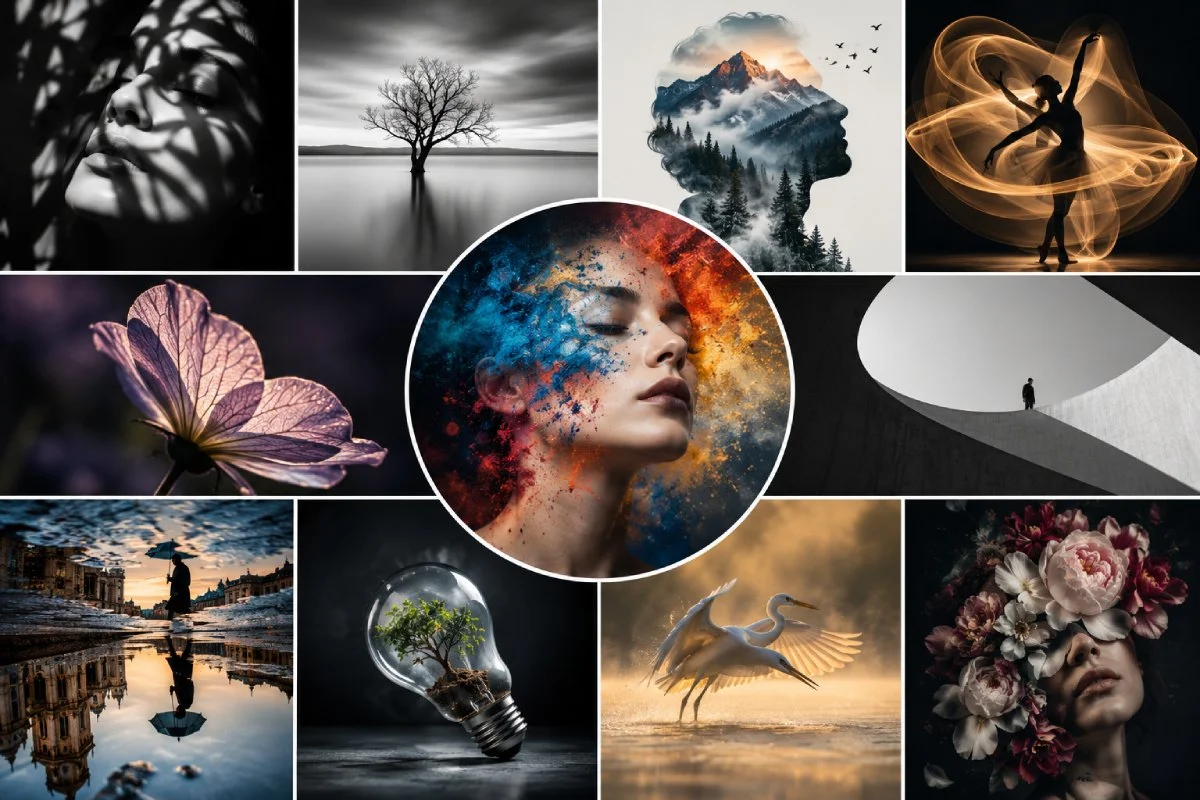
Fine art photography exists as an artistic discipline rather than a commercial service — the photographer’s vision, concept, and artistic intent define the work, which is exhibited in galleries, published in artist books, and sold as limited edition prints.
What it requires: A coherent artistic vision and the ability to articulate it, commitment to extended project work rather than single images, knowledge of the fine art market (galleries, collectors, grants, artist residencies), and typically some formal arts education or equivalent self-directed critical education.
Notable practitioners: Cindy Sherman, Andreas Gursky, Sally Mann, Gregory Crewdson, Hiroshi Sugimoto — photographers whose work is defined by conceptual intent as much as visual quality.
Abstract Photography
Abstract photography moves away from literal subject representation toward form, colour, light, and pattern — producing images whose subjects are not immediately identifiable or whose immediate recognition is secondary to the visual effect.
What it requires: Strong visual sense for colour relationships, compositional geometry, and the transformation of familiar subjects through angle, light, and abstraction. Techniques include extreme close-up (approaching macro), motion blur, multiple exposure, reflections, and intentional camera movement (ICM).
Black and White Photography
Black and white photography removes colour from the visual equation, emphasising tone, texture, contrast, and form. It is both a genre and a stylistic choice that can be applied across almost every other genre — a wedding photographer, a street photographer, and a landscape photographer might all work in black and white.
What it requires: The ability to visualise in monochrome — to see a scene in terms of tonal contrast rather than colour — and to understand how colour values translate to tonal values in black and white conversion. Strong understanding of light and shadow is essential, as black and white amplifies tonal contrast rather than hiding it under colour.
Conversion approach: The best black and white conversions are not simply desaturation — they use HSL panel adjustments to independently control how different colours translate to different tones, allowing dramatic sky darkening, skin tone control, and foliage brightness adjustment that desaturation alone cannot achieve.
Conceptual and Surreal Photography
Conceptual photography prioritises the idea or concept behind the image over the technical execution or visual beauty. The image exists to communicate or provoke rather than to please. Surreal photography creates dreamlike, fantastical imagery through careful staging, compositing, or the discovery of genuinely surreal real-world subjects.
What it requires: Strong concept development before the camera is picked up, often sophisticated post-processing and compositing skills (Photoshop at a high level), prop acquisition and staging, and the ability to execute a pre-visualised concept rather than responding to what’s in front of the camera.
Photography Styles: The How Within the Genre
Within any genre, stylistic choices determine the character of the work. Several major photographic styles operate across genres:
Documentary / candid style: Emphasises unposed, unscripted moments. Minimal direction, maximum observation. The subject’s behaviour and the photographer’s positioning and timing do the work.
Editorial style: Approaches subjects as if creating content for a publication — composed, considered, often with some direction while maintaining a sense of the natural.
Fine art style: Prioritises artistic vision over documentary accuracy. May involve staging, conceptual framing, distinctive processing, or deliberate rejection of technical “correctness.”
Minimalist style: Reduces the frame to its essential elements — clean backgrounds, negative space, simple compositions. Strong in product and portrait photography.
High key style: Bright overall exposure, soft shadows, elevated whites. Associated with lifestyle, beauty, and fashion photography. Creates an airy, optimistic quality.
Low key / moody style: Dark overall tone, deep shadows, limited highlights. Associated with dramatic portraiture, fine dining food photography, and artistic documentary work.
Film emulation style: Processing that mimics the tonal response, grain structure, and colour characteristics of specific film stocks (Kodak Portra 400, Fujifilm Velvia, Ilford HP5). Extremely popular in wedding, portrait, and street photography.
Dark and moody style: A contemporary editing style distinct from traditional low-key photography — typically characterised by lifted shadows (milky blacks rather than deep blacks), muted tones, and cool or split-toned colour treatment. Popular in wedding, portrait, and travel photography.
How to Find Your Photography Genre and Style
With this many options, the practical question becomes: where do you start?
Start broad, narrow deliberately. Most photographers explore multiple genres in their first year or two before finding the one or two that most consistently engage them. Broad exploration is not inefficiency — it is how you discover your natural affinities rather than choosing arbitrarily.
Notice what you are naturally drawn to shoot. Before any deliberate decision, your camera’s existing library of images is evidence about what interests you instinctively. What subjects appear most frequently? What images are you most proud of? These patterns are diagnostic.
Consider the practical fit. The genre that excites you most creatively may not be the most practical given your location, existing equipment, lifestyle, and whether you want to photograph professionally. A wildlife photographer in a dense urban area faces different access challenges than one near wilderness. A newborn photographer who finds infant safety genuinely stressful will find the genre exhausting regardless of how much they admire the images.
Commit to one genre long enough to develop real skill. The photographers who develop most quickly are not those who shoot everything — they are those who commit to a specific genre long enough to develop genuine depth. Three months of shooting only street photography will teach you more about light, timing, and composition than three months of shooting everything.
For the deeper exploration of how to develop a consistent visual style across whichever genre you choose, our guide to developing your photography style covers the creative development process in detail.
Further Reading
Each genre covered in this overview has a dedicated deep-dive guide on Haiku Photography Blueprint covering the complete craft, technique, gear, and business considerations:
- Portrait photography: The Complete Guide to Lighting, Posing, and Connection
- Wedding photography: A Complete Guide to Shooting, Preparation, and Style
- Sports photography: A Complete Guide to Gear, Settings, and Technique
- Food photography: The Complete Guide to Gear, Lighting, Styling, and Business
- Macro photography: The Complete Guide to Gear, Technique, and Focus Stacking
For the technical foundations that underpin every genre — camera settings, autofocus, ISO, and exposure — our photography for beginners guide covers the complete foundation. For equipment decisions, our camera buying guide and photography lenses guide cover the gear decisions relevant to each genre.
For external exploration, the International Photography Awards is one of the most comprehensive international competitions covering all photography genres — its galleries provide an excellent reference for what exceptional work in each genre looks like across cultures and styles.
Final Thoughts
Photography’s diversity is both its greatest complexity and its greatest invitation. There is no genre that is objectively more worthy or more valuable than others — wedding photographers and wildlife photographers and macro photographers and photojournalists are all doing something irreplaceable, each seeing the world through a lens that no other genre occupies.
The question is not which genre is best. It is which genre connects most naturally to how you see the world, what you are drawn to photograph instinctively, and what kind of working life — the subjects, the clients, the equipment, the schedule — you want to build around your camera.
That answer is different for every photographer. The process of finding it is itself part of becoming one.

Charles is a passionate photographer and visual storyteller with a keen eye for capturing authentic moments and timeless emotions. Through here, he combines creativity, technical expertise, and a love for natural storytelling to create images that preserve life’s most meaningful memories. His work focuses on genuine connections, beautiful details, and the unique stories behind every photograph.