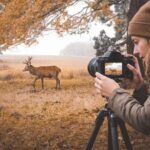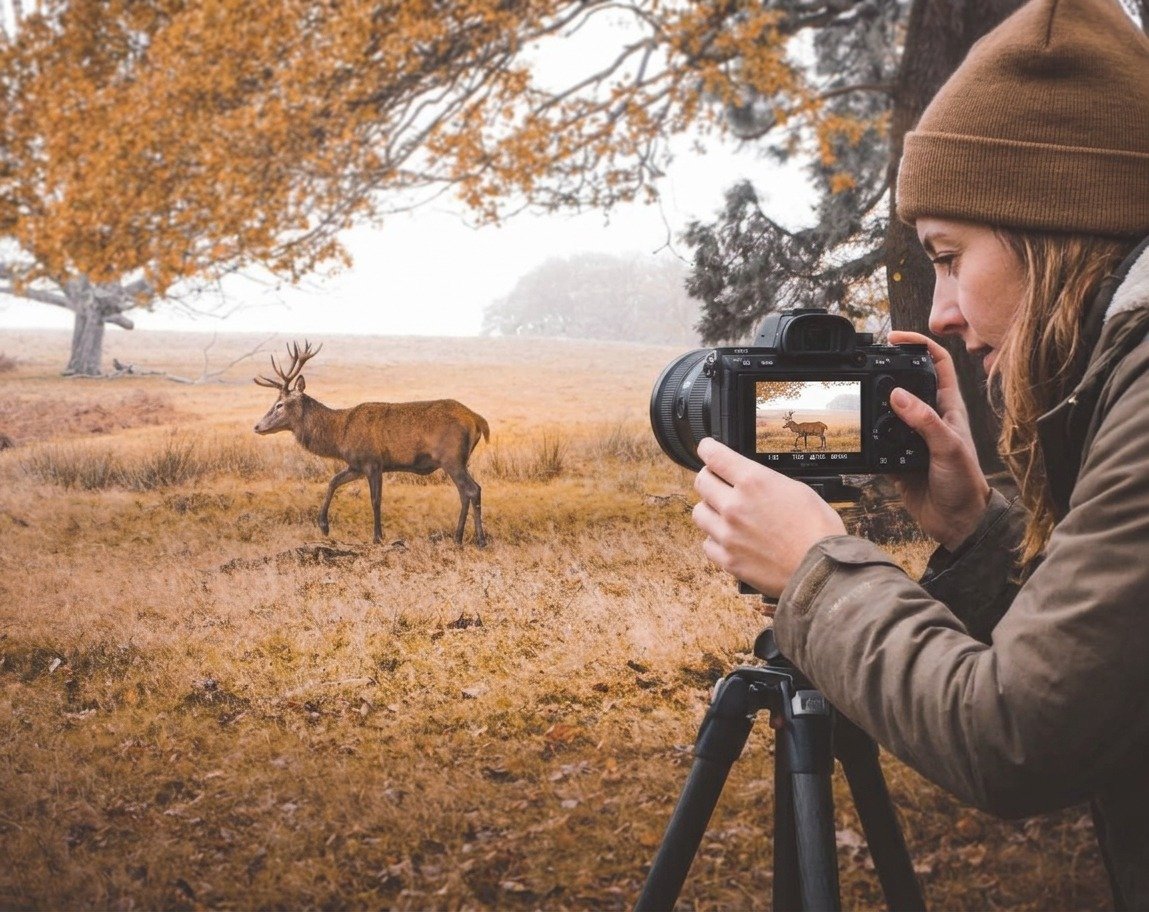
The best camera for wildlife photography in 2026 is the Nikon Z8 for most serious shooters, the Sony A1 II if budget is no object, and the Canon EOS R7 for the best value. If you want a lightweight kit that reaches far, the OM System OM-1 Mark II is hard to beat. All of them recognise animals and birds automatically and track them across the frame.
Quick picks:
- Best overall: Nikon Z8 — flagship sensor and AF in a smaller body
- Best no-compromise pro: Sony A1 II
- Best for Canon shooters: Canon EOS R3
- Best value: Canon EOS R7
- Best lightweight / long reach: OM System OM-1 Mark II
- Best Micro Four Thirds value: Panasonic Lumix G9 II
- Best Fujifilm: Fujifilm X-H2S
- Best for beginners on a budget: Nikon Z50II
- Best superzoom (no lens changes): Nikon Coolpix P950
Wildlife photography asks a lot of a camera. Animals are unpredictable, often far away, frequently in dim light at dawn or dusk, and easily disturbed by noise. The right body helps you focus on a bird’s eye through branches, capture the moment of take-off, and stay comfortable on long days in the field. Below we explain what matters, compare the leading cameras, and help you judge whether your current camera is up to the job.
What Makes a Camera Good for Wildlife Photography?
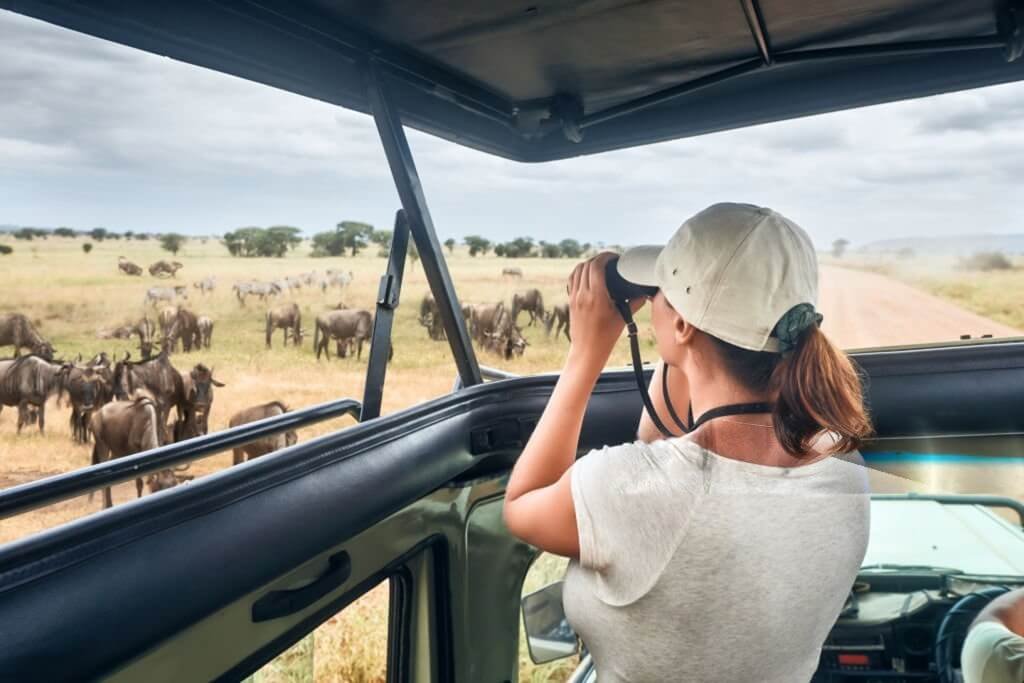
Animal and bird eye-detection autofocus is the most important feature, followed by reach, burst speed and handling in the field.
- Animal and bird subject detection. Modern mirrorless autofocus finds an animal’s eye, head or body and follows it, even through foliage. Bird detection is the toughest test, so check reviews for birds in flight specifically. You’ll mostly shoot in continuous AF; our AF-S vs AF-C guide explains when to switch.
- Pre-capture. Also called Pro Capture or pre-release capture, this buffers frames continuously while you half-press the shutter, then saves the second or so before you fully press it. It’s the best tool ever made for catching take-offs you’d otherwise react to too late.
- Reach (sensor size and crop). APS-C (1.5–1.6x) and Micro Four Thirds (2x) sensors make a lens frame more tightly, so a 400mm lens behaves like 600–800mm. Full frame gives better low-light quality; high-resolution full frame lets you crop instead.
- Burst rate and buffer. 10fps is a workable minimum; 20–30fps captures wing positions and fleeting behaviour. A deep buffer matters when action lasts several seconds.
- Silent shutter. An electronic shutter makes no sound, which avoids spooking skittish animals.
- Low-light performance. Wildlife is most active at dawn and dusk. Good high-ISO performance keeps shutter speeds fast without excessive noise.
- In-body stabilisation. Helps when hand-holding long lenses for perched or slow-moving subjects.
- Weather sealing and battery life. Rain, dust, sand and cold are part of the job, and long days in the field drain batteries.
- Weight. You may carry the kit for hours. A smaller system you take with you beats a bigger one you leave at home.
Best Sports Cameras Compared
Prices are body-only list prices from the cited reviews; retailers vary, so check before you buy.
| Camera | Best for | Sensor | Max burst | Approx. price (body) |
|---|---|---|---|---|
| Sony A1 II | No-compromise pro | 50.1MP full frame, stacked | 30fps | $6,998 |
| Canon EOS R3 | Canon pros | 24.1MP full frame, stacked | 30fps | $3,999 |
| Nikon Z8 | Best overall | 45.7MP full frame, stacked | 20fps RAW | $3,399–$3,700 |
| Fujifilm X-H2S | Fujifilm users | 26.2MP APS-C, stacked | 40fps | $2,499 |
| OM System OM-1 Mark II | Lightweight, long reach | 20MP Four Thirds, stacked | 50fps with C-AF | $1,900–$2,100 |
| Panasonic Lumix G9 II | Micro Four Thirds value | 25.2MP Four Thirds | 60fps with C-AF | $1,698 |
| Canon EOS R7 | Best value | 32.5MP APS-C | 30fps | $1,399–$1,499 |
| Fujifilm X-T50 | Budget high resolution | 40MP APS-C | 20fps (electronic, 1.25x crop) | $1,399 |
| Nikon Z50II | Beginners | 20MP APS-C | 11fps | $907 |
| Nikon Coolpix P950 | Superzoom, no lens changes | 16MP 1/2.3-inch | 15fps | $797 |
Specs and prices from Amateur Photographer – best wildlife cameras (May 2026) and Amateur Photographer – best sports cameras (October 2026); where the two list different prices, both are shown as a range.
The Best Cameras for Wildlife Photography, Reviewed
Professional
Nikon Z8 — best overall. The Z8 uses the flagship Z9’s stacked 45.7MP sensor and subject-detection AF (people, animals, birds, vehicles) in a smaller, lighter body. 20fps in full-resolution RAW and the high pixel count give you room to crop distant subjects. Pair it with Nikon’s excellent Z telephotos, such as the 180–600mm, and it covers everything from songbirds to big game. The trade-off is shorter battery life than the Z9.
Sony A1 II — best no-compromise pro. A 50.1MP stacked sensor, 30fps and what Amateur Photographer calls Sony’s best-ever autofocus, plus a huge high-resolution viewfinder. Sony’s E-mount has the widest choice of wildlife telephotos from Sony, Sigma and Tamron. At around $7,000 it’s overkill unless you sell your work.
Canon EOS R3 — best for Canon shooters. A stacked 24.1MP sensor, 30fps, eye-control AF that selects focus where you look, and a rugged weather-sealed build. Its lower resolution is less suited to heavy cropping than the Z8 or A1 II, but it’s superb in low light.
Enthusiast
Fujifilm X-H2S — best Fujifilm. A stacked 26.2MP APS-C sensor, 40fps silent bursts and detection for animals and birds in a weather-sealed body. Fujifilm’s 150–600mm gives roughly 225–900mm-equivalent reach.
OM System OM-1 Mark II — best lightweight kit. The 2x crop factor means a 150–600mm frames like 300–1200mm, in a kit you can carry all day. Pro Capture, 50fps with continuous AF, IP53 weather sealing and excellent stabilisation make it a favourite with bird photographers. The 20MP sensor is its limitation.
Panasonic Lumix G9 II — best Micro Four Thirds value. A 25.2MP sensor, AI-powered phase-detect AF, 60fps with continuous AF and class-leading stabilisation for about $1,700. It shares the huge range of compact Micro Four Thirds telephotos.
If you’d rather stay full frame for low light, the Canon EOS R6 Mark III and Nikon Z6 III (covered in our best sports cameras guide) are
Value and budget
Canon EOS R7 — best value. 30fps, 32.5MP, in-body stabilisation, subject detection and a 1.6x crop factor for about $1,400–$1,500. With Canon’s affordable RF 100–400mm or RF 200–800mm, it’s one of the most capable wildlife setups for the money. RF-S lenses are limited, but full-frame RF telephotos fit perfectly.
Fujifilm X-T50 — budget high resolution. A 40MP APS-C sensor in a compact body. Bursts top out at 20fps with a crop, and subject detection must be selected manually, so it’s better for perched subjects than birds in flight.
Nikon Z50II — best for beginners. 20MP, 11fps and modern subject-detecting AF for around $900. Pair it with the Nikkor Z DX 50–250mm to start, then add the Z 180–600mm when you’re ready.
Nikon Coolpix P950 — best superzoom. A bridge camera with a huge built-in zoom and RAW support, so you never change lenses. The tiny 1/2.3-inch sensor struggles in low light, but for daylight birding and travel it’s an easy, affordable option.
Editor note: replace the sports guide placeholder link once that article is published.
Is My Camera Good for Wildlife Photography?
Any camera that takes a long lens can photograph wildlife; what changes is how often you’ll nail focus on moving animals. Here’s a rough guide to the models readers ask about most.
| Camera | Verdict for wildlife | Why |
|---|---|---|
| Canon EOS R10 | Very good for the price | Modern tracking in a light body; smaller buffer |
| Canon EOS R5 | Excellent | High resolution for cropping plus animal AF |
| Canon 90D / 80D | Good / fair | Solid APS-C DSLRs; viewfinder AF lacks animal-eye detection |
| Nikon D500 | Very good (DSLR) | A legendary wildlife DSLR with a deep buffer; dated by modern standards |
| Nikon D850 | Very good (DSLR) | 45MP for cropping; slower than mirrorless for flight shots |
| Nikon D750 | Fair | Strong low light, but limited AF coverage and burst |
| Nikon D7500 / D7200 | Good | Capable APS-C bodies with good reach for the price |
| Nikon D5600 / D3500 | Workable | Entry level; slow burst and basic AF tracking |
| Nikon Z50 / Z5 | Good starter | Modern mirrorless; the Z50II and Z5 II improve tracking |
| Nikon Coolpix P1000 | Workable for daylight | Enormous zoom, but small sensor and slow AF for moving subjects |
| Sony a6000 | Workable | Fast burst for its age; older AF and small buffer |
| Sony a6400 | Good | Real-time tracking with animal eye AF; no stabilisation |
| Sony a6700 | Very good | AI subject recognition including birds and animals |
| Sony a7 III | Good | Reliable full-frame all-rounder; less reach without cropping |
If your camera is in the “workable” or “fair” rows, a longer or faster lens and better fieldcraft will usually improve your photos more than a new body. When you upgrade, our guide to choosing a camera helps you decide, and Sony users can compare bodies in our best Sony camera guide.
Editor note: verdicts are general assessments from published specs; confirm burst and buffer figures against manufacturer spec sheets before publishing.
Lenses for Wildlife Photography
Focal length is king in wildlife photography: most work needs 400mm or more on full frame. Your lens will likely cost as much as, or more than, your camera.
| Lens type | Typical use | Notes |
|---|---|---|
| 100–400mm / 100–500mm zoom | Mammals, larger birds, safari | Light, versatile and a good first wildlife lens |
| 150–600mm / 180–600mm / 200–800mm zoom | Birds, shy animals, distant subjects | The most popular enthusiast choice; heavier and slower apertures |
| 70–200mm f/2.8 (+ teleconverter) | Safari vehicles, larger animals, low light | Fast and sharp; add a 1.4x for more reach |
| 500mm / 600mm f/4 primes | Professional bird and wildlife work | Best image quality and low-light ability; very expensive |
| Lightweight PF / DO primes (e.g. 600mm f/6.3) | Hiking with long reach | Smaller and lighter than f/4 primes |
| Macro 90–180mm | Insects, amphibians, small creatures | See our macro photography guide |
A crop sensor multiplies reach: a 600mm lens frames like about 900mm on APS-C and 1200mm on Micro Four Thirds. For more on focal lengths and apertures, read our photography lenses guide.
Best Camera Settings for Wildlife Photography
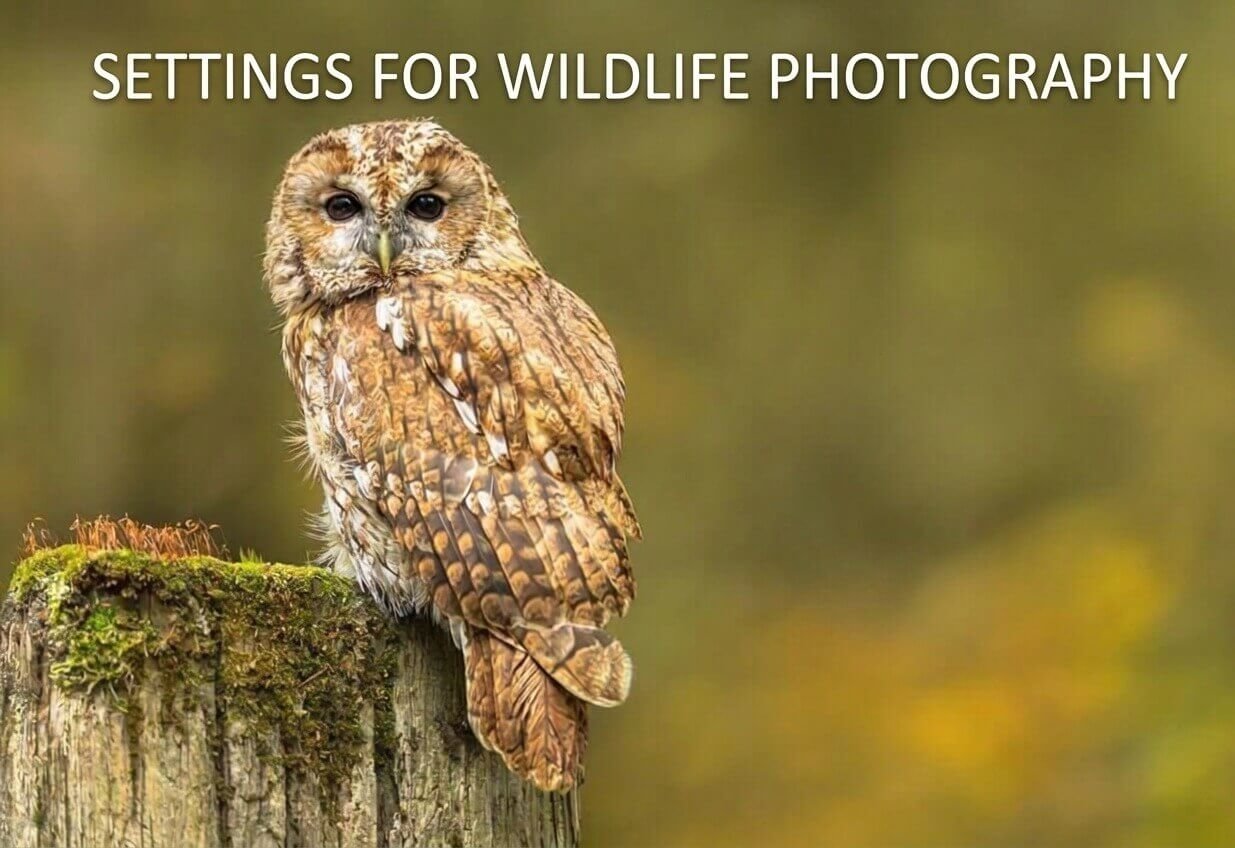
Start with a fast shutter speed, continuous autofocus and a high burst rate, then let auto ISO handle the light.
| Setting | Starting point |
|---|---|
| Mode | Manual with auto ISO, or aperture priority with a minimum shutter speed set |
| Shutter speed | 1/500–1/1000s for walking mammals; 1/2000–1/4000s for birds in flight; as slow as stabilisation allows for perched, still subjects |
| Aperture | Wide open (f/5.6–f/6.3 on most zooms) to gather light and blur backgrounds |
| ISO | Auto ISO with a sensible maximum (6400–12800 on modern full frame) |
| Focus mode | Continuous AF with animal or bird detection on |
| AF area | Wide/tracking for flight; a small point or zone for subjects in foliage |
| Drive | High-speed continuous; enable pre-capture if your camera has it |
| Shutter | Electronic (silent) to avoid disturbing animals |
| Stabilisation | On; use a panning mode for flight shots if available |
| File format | RAW for maximum editing flexibility |
Fieldcraft matters as much as settings: learn animal behaviour, approach slowly, keep the sun behind you, and get down to eye level. Our full wildlife photography guide covers technique and ethics in depth.
Frequently Asked Questions
What is the best camera for wildlife photography?
The Nikon Z8 is the best all-round choice for serious shooters. The Sony A1 II is the ultimate (and most expensive) option, and the Canon EOS R7 offers the best value.
For most people today, yes. Mirrorless cameras have subject-recognition autofocus that tracks players across the whole frame, faster electronic-shutter bursts and viewfinders that show the final exposure.
What is a good camera for wildlife photography for beginners?
An APS-C mirrorless camera with animal detection, such as the Nikon Z50II, Canon EOS R10 or R7, or Sony a6700, paired with a 100–400mm-class zoom.
Are mirrorless cameras good for wildlife photography?
Yes, and they’ve largely overtaken DSLRs. Animal and bird eye detection, silent electronic shutters and pre-capture make a big difference in the field.
Full frame or crop sensor for wildlife?
Crop sensors give more reach for less money and weight. Full frame performs better in low light and offers higher image quality, but needs longer, heavier lenses for the same framing.
Which Canon camera is best for wildlife photography?
The EOS R3 (or R1/R5 Mark II at the top end) for professionals, and the EOS R7 for enthusiasts on a budget.
Which Nikon camera is best for wildlife photography?
The Z8 or Z9 for professionals, the Z6 III for low light, and the Z50II for beginners.
Which Sony camera is best for wildlife photography?
The A1 II for professionals, the a7 V as a full-frame all-rounder, and the a6700 for APS-C shooters.
Is the Nikon P1000 good for wildlife photography?
It’s fine for static or slow subjects in good light thanks to its huge zoom, but its small sensor and slower autofocus struggle with moving animals and dim conditions.
What focal length do I need for wildlife?
At least 400mm on full frame for most subjects, and 600mm or more for small birds.
Final Thoughts
Choose a body with reliable animal and bird detection, then budget seriously for a long lens. The Nikon Z8 is the best balance of speed, resolution and size; the Canon EOS R7 delivers remarkable results for the money; and the OM System OM-1 Mark II is the kit you’ll happily carry all day. Whatever you shoot with, patience and fieldcraft will make more difference than any spec sheet.

Charles is a passionate photographer and visual storyteller with a keen eye for capturing authentic moments and timeless emotions. Through here, he combines creativity, technical expertise, and a love for natural storytelling to create images that preserve life’s most meaningful memories. His work focuses on genuine connections, beautiful details, and the unique stories behind every photograph.