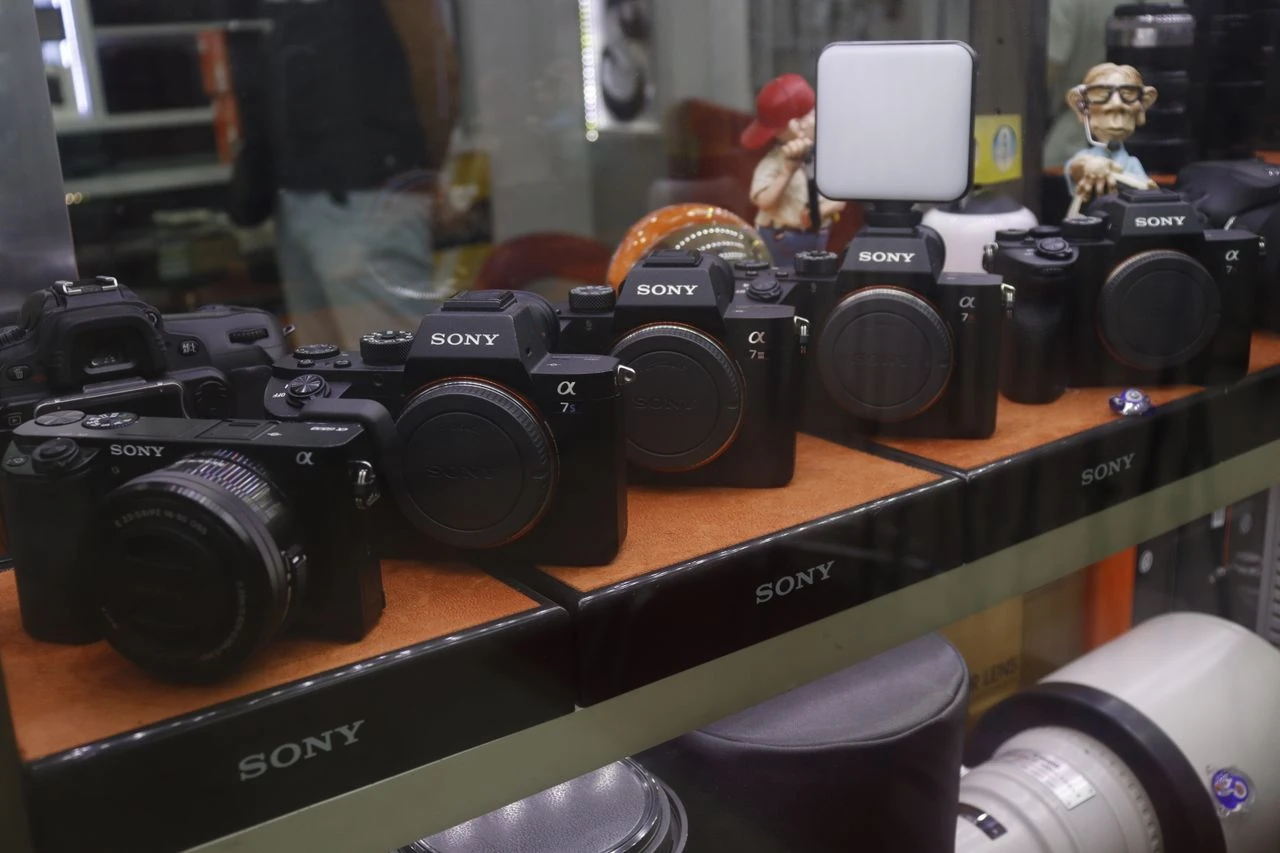
Sony’s camera lineup has grown large enough that choosing between models has become a genuinely confusing exercise — full-frame and APS-C bodies, photography-first and video-first models, and a naming system (A7, A7R, A7S, A7C, A6700, ZV-E10, FX3) that doesn’t obviously communicate what each camera is actually for.
This guide works through the entire current Sony lineup from a photography-first perspective — what each series is built for, which specific models suit which kind of photography, and where video-centric cameras like the FX3 fit in if photography is only part of what you shoot. It also covers the Sony vs Canon question that inevitably comes up alongside any Sony buying decision.
Sony's Camera Lineup: The Big Picture
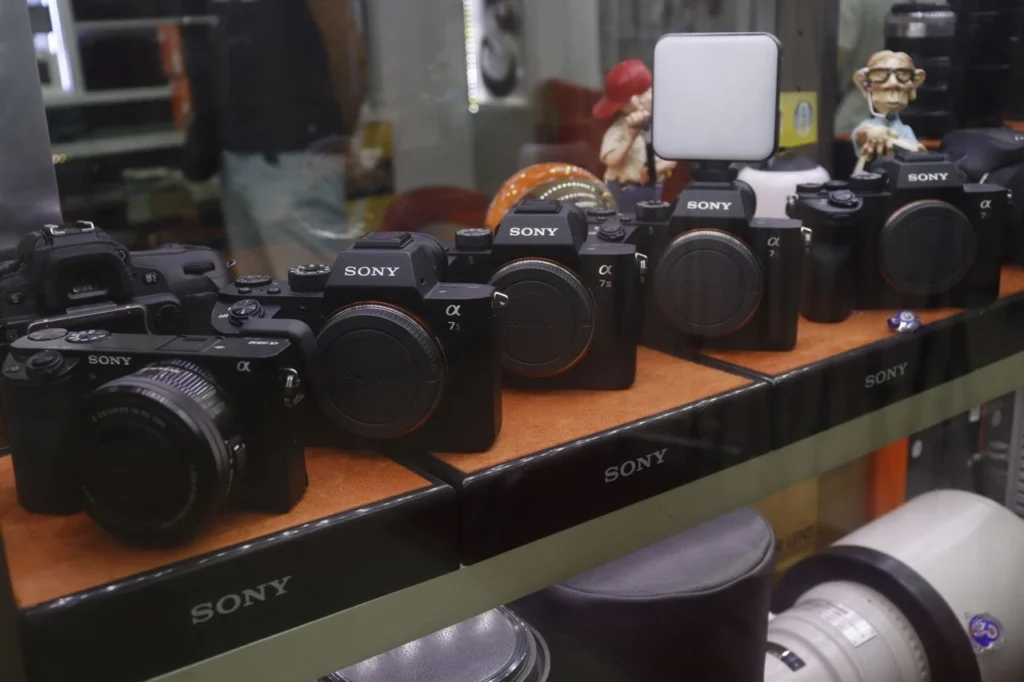
Sony’s current mirrorless range splits into two sensor formats and several distinct series within each:
Full-frame (E-mount, 35mm sensor): The A7 series (standard, R for resolution, S for video/low-light, C for compact), plus the Cinema Line (FX3, FX30, FX6) which are video-first but photography-capable.
APS-C (E-mount, smaller sensor): The A6000 series (photography-focused) and the ZV series (vlogging and content-creation focused).
Within full-frame, the letter after “A7” tells you what the camera prioritises:
- A7 (no suffix): The all-rounder — balanced photo and video, the default recommendation for most photographers
- A7R: Resolution — the highest megapixel counts, built for landscape, studio, and commercial work where maximum detail matters
- A7S: Sensitivity — lower resolution, exceptional low-light and video performance
- A7C: Compact — full-frame sensor in a smaller body, aimed at travel and everyday carry
The A7 Series: Sony's Core Full-Frame Line
Sony A7 IV — Still a Strong All-Rounder
Released in 2021 with a 33-megapixel full-frame sensor, the A7 IV remains a genuinely capable hybrid camera and, with the A7 V now on the market, has become significantly more affordable on the used and discounted new market. It offers excellent autofocus with real-time Eye AF for people and animals, strong dynamic range, and 10fps continuous shooting.
Is the Sony A7 IV good for photography? Yes — it remains one of the best value full-frame options for portrait, wedding, and general photography work, particularly now that pricing has dropped following the A7 V’s release.
Sony A7 V — The Current Generation (Released December 2025)
The A7 V replaced the A7 IV as Sony’s core full-frame model, released in December 2025 with wider availability from February 2026. It uses a newly developed partially stacked 33-megapixel sensor paired with Sony’s BIONZ XR2 processor, delivering meaningfully faster readout, improved AI-based subject recognition, and burst rates up to 30fps — a significant jump from the A7 IV’s 10fps. It also adds uncropped 4K 60p video, borrowing ergonomic improvements from the A7R V.
Reviewers consider the A7 V a major upgrade for anyone still on an A7 III or older body, describing it as harder to justify skipping if you shoot events, weddings, wildlife, action, or mixed professional work — though a more selective upgrade for existing A7 IV owners whose current camera already handles portraits, landscapes, and controlled work. Lens & Shutter
Which Sony A7 is best for photography right now? For photographers buying new in mid-2026, the A7 V is the current core recommendation — faster, smarter autofocus, and a genuine step up in burst shooting for a modest price increase over the A7 IV’s original launch price.
Sony A7R Series — Maximum Resolution
The A7R line prioritises resolution over speed, built for landscape, architecture, studio, and commercial photographers who need maximum detail and cropping flexibility. The A7R V (61 megapixels, released 2022) has been the resolution flagship for several years.
Sony announced the A7R VI in May 2026, featuring an approximately 67-megapixel fully-stacked sensor with up to 16 stops of dynamic range, 30fps burst shooting with pre-release RAW capture, and improved image stabilisation. This makes it the highest-resolution mainstream mirrorless camera on the market at time of writing, ahead of comparable Nikon and Canon high-resolution bodies. The New CameraPhotography Life
Best for: Landscape photographers who print large, architectural and real estate photographers, commercial and product photographers, and any work where extreme detail and cropping latitude matter more than burst speed.
Sony A7S Series — Low Light and Video Specialist
The A7S line (currently A7S III) uses a deliberately lower resolution sensor (12.1 megapixels) with correspondingly larger individual photosites — producing exceptional high-ISO, low-light performance at the cost of resolution and cropping flexibility.
Is the Sony A7S III good for photography? Yes, specifically for low-light work — event photography in dark venues, astrophotography, and any situation where clean high-ISO files matter more than resolution. It is not the right choice if you need to crop significantly or print very large.
Sony A7C Series — Full-Frame in a Compact Body
The A7C and A7C II pack full-frame sensors into a body closer to the size of an APS-C camera — aimed at travel photographers and anyone who wants full-frame image quality without full-frame bulk.
Is the Sony A7C good for photography? Yes — a genuinely capable everyday and travel camera, with the trade-off of a smaller viewfinder and slightly reduced handling compared to the standard A7 body size.
The FX3 and Cinema Line: Video Cameras That Can Take Photos
Is the Sony FX3 Good for Photography?
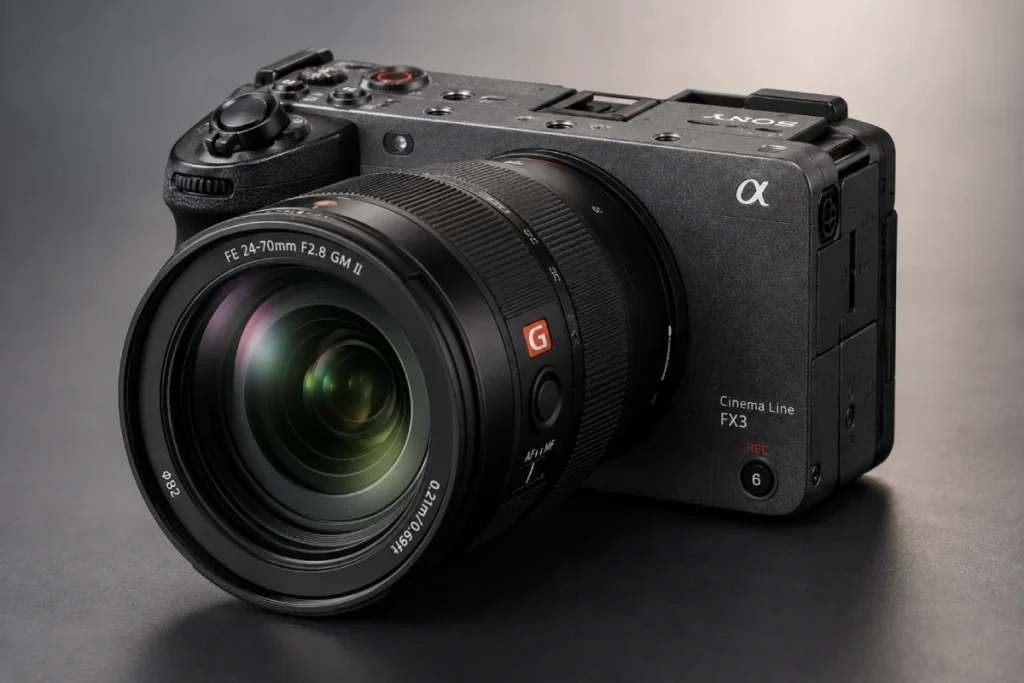
The FX3 is built first for video — its cage-style body is designed for rigging, and its internal recording capabilities are extensive. It shares the A7S III’s 12.1-megapixel sensor, which means the same trade-off applies: exceptional low-light and video performance, but limited resolution and cropping flexibility compared to the A7 or A7R lines.
The honest answer: The FX3 can take good photographs — the sensor is clean, especially at high ISO — but it was not designed as a photography-first tool. It lacks a built-in electronic viewfinder (you compose primarily via the rear screen or an add-on EVF accessory), which is a genuine handicap for stills work in bright conditions or fast-moving situations. If photography is your main focus and video is occasional, a dedicated photography body — the A7 V or A7C II — will serve you better. If you’re primarily a videographer who occasionally needs stills, the FX3 is perfectly adequate.
FX30 and FX6
The FX30 is the APS-C version of the FX3’s concept — video-first, more affordable, with the same stills limitations. The FX6 sits above the FX3 as a more dedicated cinema camera and is even less photography-oriented. Neither is a sensible primary purchase if photography is your priority.
APS-C: The A6000 Series and ZV Series
APS-C: The A6000 Series and ZV Series
The A6000 series (A6000, A6100, A6300, A6400, A6500, A6600, and the current A6700) offers full-frame-adjacent autofocus and image quality in a smaller, more affordable body and system.
Is the Sony A6700 good for photography? Yes — it’s the most recent and most capable entry in the A6000 line, positioned for photographers and hybrid shooters who want strong autofocus and video features without full-frame size or cost. Compared to the A7 IV, choose the A6700 if you want a more compact system with similar AI autofocus capabilities and 4K video at a more accessible price point; choose a full-frame A7-series body if you need the low-light advantage and dual card slots that professional work often requires. Mirrorless ComparisonCampkins Cameras
Is the Sony A6400 good for photography? Yes, for photographers on a tighter budget — the A6400 remains a capable, popular choice with reliable autofocus, though it is now several generations behind the A6700 in AI subject tracking sophistication.
Can the A6700 be used for wedding photography? It can, and some photographers do use A6000-series bodies for wedding work — but a full-frame body is generally preferred professionally for its superior low-light performance during receptions and dimly lit ceremony venues, and for the depth-of-field control that full-frame sensors provide more readily.
APS-C: The A6000 Series and ZV Series
The ZV-1, ZV-1F, and ZV-E10 are marketed at content creators and vloggers rather than photographers. They can take usable photos for casual and social media purposes, but their feature set — a fully articulating screen optimised for front-facing video, background defocus buttons, and vlogging-specific autofocus behaviour — is not built around still photography.
Is the Sony ZV-E10 good for photography? Adequate for casual use; not a sensible choice if photography is your primary interest. If you want an affordable APS-C Sony for photography specifically, the A6100 or A6400 will serve you significantly better than any ZV model.
Which Sony Camera Should You Buy for Photography?
| Priority | Recommended Camera |
|---|---|
| Best all-round value, buying new in 2026 | Sony A7 V |
| Best budget full-frame (used/discounted) | Sony A7 IV |
| Maximum resolution for landscape/commercial | Sony A7R V (or A7R IV for lower cost) |
| Best low-light / astrophotography | Sony A7S III |
| Best compact full-frame for travel | Sony A7C II |
| Best APS-C for photography on a budget | Sony A6700 (or A6400 for lower cost) |
| Primarily video, occasional stills | Sony FX3 |
| Vlogging and content creation | Sony ZV-E10 |
Best Sony Lenses by Genre
Portrait photography: The Sony FE 85mm f/1.4 GM and FE 50mm f/1.2 GM are the standard recommendations for their combination of sharpness and flattering background blur.
Landscape photography: The Sony FE 16-35mm f/2.8 GM is the most widely recommended wide-angle zoom for its combination of field of view and edge-to-edge sharpness, particularly valuable on high-resolution bodies like the A7R V and A7R VI.
For a broader look at lens selection across focal lengths and genres, our photography lenses guide covers the complete picture beyond any single manufacturer.
Sony vs Canon: Which Is Better for Photography?
Neither brand is objectively better — both produce excellent cameras across every price tier, and the differences that matter most come down to ergonomics, lens ecosystem, and specific feature priorities rather than a clear overall winner.
Where Sony tends to lead: Autofocus subject tracking (particularly eye and animal detection) has been a consistent Sony strength across generations. Sony’s E-mount lens ecosystem is large and mature, with strong third-party support from Sigma and Tamron. Battery life and in-body stabilisation are generally competitive or ahead of Canon equivalents.
Where Canon tends to lead: Canon bodies are frequently praised for more comfortable ergonomics and a more intuitive menu system — the A7 V review cited above specifically notes that reviewers leaned toward Canon’s EOS R6 III for its grip comfort and interface, despite the Sony’s stronger video feature set. Canon’s colour science, particularly skin tone rendering, remains a commonly cited preference among portrait and wedding photographers.
The practical answer: If you’re already invested in one system’s lenses, the switching cost rarely justifies a move for most photographers. If you’re choosing fresh, handle both systems in person before buying — the ergonomic and menu differences matter more day-to-day than most spec sheet comparisons suggest.
For the complete framework on choosing a camera system generally — sensor size, mirrorless vs DSLR, and budget allocation — our camera buying guide covers the decision beyond any single brand.
Further Reading
For lens selection across every focal length and photography genre, our photography lenses guide covers the complete picture. For the broader camera-buying decision including sensor size and system selection, our camera buying guide covers the fundamentals.
For ongoing, up-to-date camera reviews and comparisons, DPReview remains the most rigorous independent source for testing new camera releases as they launch.
Final Thoughts
Sony’s lineup can look overwhelming from the outside, but the logic behind it is straightforward once you separate the questions: full-frame or APS-C, photography-first or video-first, and which specific priority (resolution, low light, speed, portability) matters most for your work. The A7 V is now the sensible default recommendation for most photographers buying new; the A7 IV remains excellent value at a discount; the A6700 covers APS-C photography well; and video-first bodies like the FX3 are worth buying only if video is genuinely your primary use case.
As with any camera decision, the body matters less than the lens and less than the photographer behind it — but understanding what each Sony series is actually built for makes the choice considerably less confusing.

Charles is a passionate photographer and visual storyteller with a keen eye for capturing authentic moments and timeless emotions. Through here, he combines creativity, technical expertise, and a love for natural storytelling to create images that preserve life’s most meaningful memories. His work focuses on genuine connections, beautiful details, and the unique stories behind every photograph.