Light is the raw material every photograph is made from — not just what illuminates a subject, but what shapes form, creates mood, and directs the viewer’s eye. Understanding light at a fundamental level, before getting into any specific lighting setup, is what lets you read any scene and know instinctively how to work with it.
This guide covers the core properties of light that apply across every genre and setup, how to find and shape natural light, and an overview of the artificial lighting tools available — with links to our complete, dedicated guides for the specific setups each genre demands.
The Four Fundamental Properties of Light
Every lighting decision in photography comes down to controlling some combination of these four properties.
Intensity is simply the brightness of the light — how much of it there is. Intensity determines your exposure settings and, combined with the other properties below, the overall mood of an image.
Direction is the angle at which light strikes your subject. Front lighting is flat and reveals little texture; side lighting reveals form and dimension through shadow; backlighting creates silhouettes or rim-light effects. Direction is the single most important creative decision in most lighting setups.
Quality — hard or soft describes how sharply defined the shadows a light source creates are. Hard light (a small, direct source like bare sun or an undiffused flash) creates strong, defined shadows and high contrast. Soft light (a large or diffused source like an overcast sky or a softbox) creates gentle, gradual shadows. Quality is determined primarily by the apparent size of the light source relative to the subject — a large source close to the subject is soft; a small source, or one far away, is hard, regardless of its actual physical size.
Colour temperature, measured in Kelvin, affects the overall colour cast of your image. Warmer light (lower Kelvin — candlelight, golden hour sun) appears orange or yellow; cooler light (higher Kelvin — open shade, overcast sky) appears blue. Understanding colour temperature lets you use white balance deliberately rather than just correcting it automatically.
How Light Is Used in Photography

Controlling intensity, direction, quality, and colour temperature is how you sculpt a subject, create mood, and guide a viewer’s attention. This applies whether you’re positioning yourself relative to the sun outdoors or placing a studio light — the underlying principles are identical.
Working With Natural Light
Natural light is freely available and, understood well, one of the most beautiful light sources in photography.
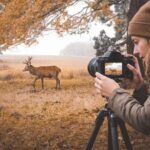
Golden hour — the hour after sunrise and before sunset — offers warm, soft, directional light that’s ideal for portraits and landscapes. It’s a favourite specifically because it combines flattering direction with naturally soft quality.
Overcast days provide diffused, even light with minimal shadow — the sky itself acts as a giant softbox, making overcast conditions genuinely excellent for portraits despite their reputation as “bad” weather for photography.
Reflectors bounce existing sunlight back onto your subject, filling in shadows and adding brightness without introducing a second light source — covered in complete depth, including DIY options, in our reflectors guide.
Diffusers soften harsh direct sunlight, converting a hard source into a softer one — the same principle used with artificial light modifiers.
Finding good light is a skill that develops with practice. Look for interesting patterns of light and shadow, and pay attention to how light changes throughout the day. Experimenting with different angles and positions relative to a fixed light source teaches you more about how light behaves than any amount of reading.
An Overview of Artificial Lighting Tools
When natural light isn’t available or doesn’t produce the effect you want, artificial lighting opens up complete creative control.
Strobes (studio flashes) are powerful light sources built for studio photography, typically requiring modifiers to shape their output.
Speedlights (hot shoe flashes) are portable flash units that mount on-camera or trigger remotely off-camera — covered completely in our flash photography guide, including TTL vs manual control, sync speed, and off-camera technique.
Continuous lights — LED panels or fluorescent lighting — provide constant illumination you can evaluate in real time, useful for both video and stills.
Common lighting setups range from a simple one-light configuration with a softbox or umbrella, to a two-light key-and-fill setup that softens shadows, to full three-point lighting (key, fill, and backlight) that separates a subject from its background. Every specific modifier — softboxes, umbrellas, beauty dishes, strip boxes — and how to position them for these setups is covered completely in our light modifiers guide.
Lighting by Genre: Where to Go Deeper

Rather than duplicate genre-specific lighting technique here, each is covered in complete, dedicated depth elsewhere:
Portrait lighting — the classic patterns (Rembrandt, loop, butterfly, split) and specific setups — is covered fully in our portrait photography guide.
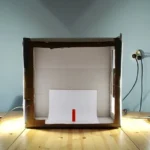
Product and studio lighting — even, controlled light for clean commercial results — is covered fully in our lightbox and softbox guide.
Light painting — using a handheld light source to paint light into a long exposure — is covered fully, including camera settings and technique, in our night photography guide.
Essential Lighting Equipment
A working lighting kit typically includes reflectors (to bounce and redirect existing light), diffusers (to soften harsh light), softboxes and umbrellas (to create soft, diffused light from artificial sources), light stands (to position everything), and speedlights or strobes for artificial illumination itself. Complete buying guidance for each is covered in our light modifiers guide.
Further Reading
For every specific lighting modifier and portrait setup, see our light modifiers guide. For flash technique specifically, see our flash photography guide. For product and controlled studio lighting, see our lightbox and softbox guide. For reflectors and natural light shaping, see our reflectors guide.
Further Reading
Every lighting setup, however complex, is built from the same four fundamentals: intensity, direction, quality, and colour temperature. Understanding these first — rather than memorising specific setups without knowing why they work — is what lets you adapt to any lighting situation you encounter, on location or in a studio, with equipment or without it

Charles is a passionate photographer and visual storyteller with a keen eye for capturing authentic moments and timeless emotions. Through here, he combines creativity, technical expertise, and a love for natural storytelling to create images that preserve life’s most meaningful memories. His work focuses on genuine connections, beautiful details, and the unique stories behind every photograph.