Choosing a camera feels overwhelming from the outside. Walk into any camera shop or open any review site and you’re immediately confronted with dozens of bodies, hundreds of lenses, and an ocean of specifications — megapixels, autofocus points, frames per second, dynamic range, weather sealing — most of which matter far less than the marketing suggests.
The truth is that choosing the right camera is simpler than the industry wants you to believe. Most cameras at any given price point are genuinely excellent. The decisions that matter are fewer and more fundamental than the spec sheets suggest. This guide cuts through the noise and helps you identify exactly what you need — and what you don’t.
The Most Important Principle: The Camera Matters Less Than You Think
Before getting into specifications, this needs to be said clearly: within any given price tier, the differences between cameras from major manufacturers are smaller than the difference between a photographer who understands light and composition and one who doesn’t.
A Canon, Nikon, Sony, or Fujifilm camera at the $700 price point will all produce images of essentially equivalent quality in the hands of someone who knows how to use them. The arguments between systems — Canon vs Nikon, Sony vs Fujifilm — are real but marginal compared to the impact of developing your eye, understanding exposure, and learning to find good light.
Buy a camera that fits your hands comfortably, fits your budget without stretching uncomfortably, and comes from a system with lenses you can grow into. Then stop researching cameras and start shooting with the one you have.
With that established, here is what actually matters when choosing a camera.
Step One: Understand the Camera Categories
Smartphone Cameras
Modern flagship smartphones — iPhone Pro, Samsung Galaxy S series, Google Pixel — produce genuinely excellent images for most purposes. If you are just starting out and uncertain about committing to a dedicated camera system, shooting seriously on your existing smartphone first is a completely legitimate path.
The limitations become apparent when you want:
- Shallow depth of field beyond what computational portrait modes can simulate
- A telephoto reach beyond 5x optical zoom without significant quality loss
- Full manual control over exposure
- RAW files with the flexibility for serious post-processing
- Fast, reliable tracking autofocus for sports or wildlife
If none of those limitations matter to you yet, a smartphone may be all you need. If they do, it’s time for a dedicated camera.
Point-and-Shoot / Compact Cameras
The premium compact camera market has narrowed significantly as smartphone cameras have improved, but a small number of excellent options remain — notably the Sony RX100 series, the Ricoh GR series, and the Fujifilm X100 series.
These cameras offer larger sensors than smartphones (producing noticeably better image quality), real optical viewfinders in some cases, and full manual control — in a pocketable form factor. The trade-off is that lenses are fixed and non-interchangeable.
Best for: Travel photographers, street photographers, and photographers who want excellent image quality in a carry-everywhere package without the bulk of an interchangeable-lens system.
Mirrorless Cameras
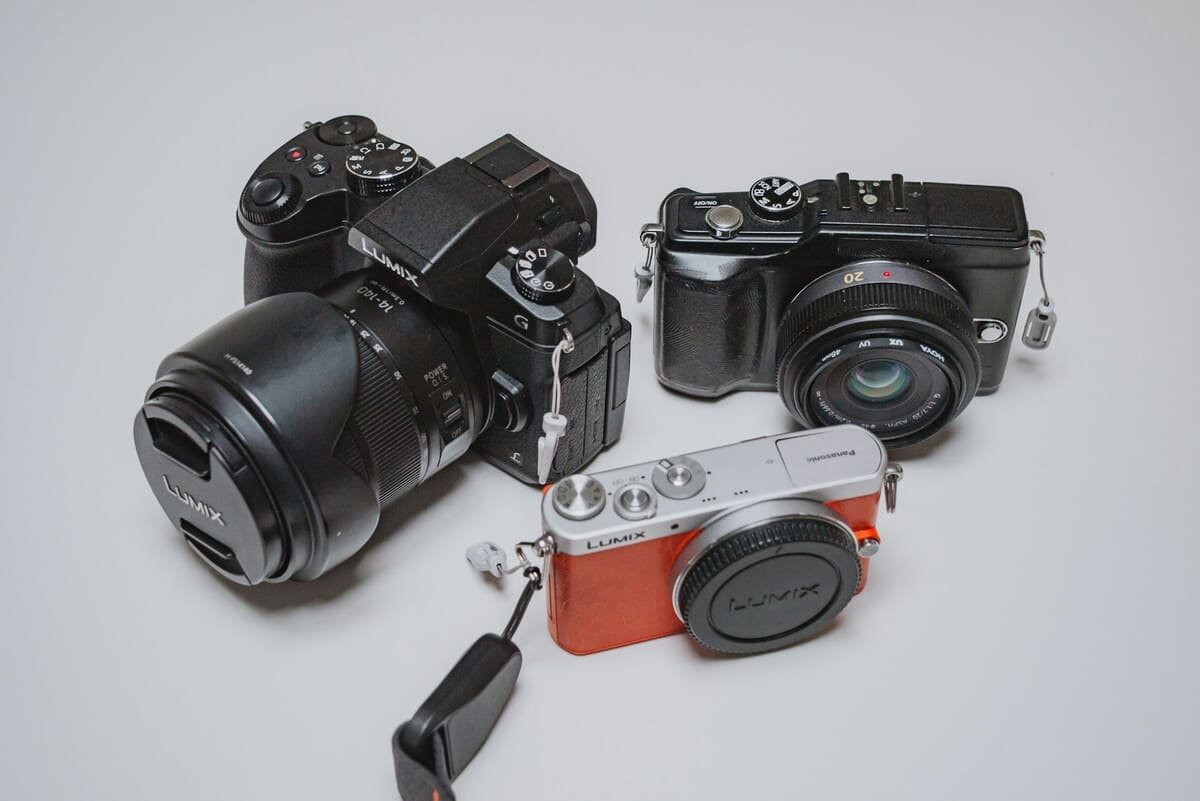
Mirrorless cameras are now the dominant format for new camera purchases across all price levels. They offer interchangeable lenses, large sensors, full manual control, and a compact body (smaller than equivalent DSLRs because they omit the mirror box that DSLRs require for their optical viewfinder).
Mirrorless cameras use an electronic viewfinder (EVF) — a small screen inside the viewfinder eyepiece that shows a live preview of the image as the sensor sees it, including exposure and white balance effects in real time. For many photographers this is a significant advantage; for some who grew up with optical viewfinders, it takes adjustment.
Every major manufacturer has committed to mirrorless as their primary system. Sony’s A-series, Canon’s R-series, Nikon’s Z-series, Fujifilm’s X-series, and Panasonic’s S-series are all mirrorless platforms with growing lens ecosystems.
Best for: Most photographers at all levels. The flexibility, image quality, and evolving technology make mirrorless the default recommendation for any new camera purchase.
DSLRs
Digital single-lens reflex cameras use a mirror to reflect light from the lens up into an optical viewfinder. When you press the shutter, the mirror flips up and the sensor is exposed. DSLRs have been the professional standard for twenty years and have enormous, mature lens ecosystems.
Both Canon and Nikon have announced they are discontinuing development of new DSLR bodies in favour of their mirrorless lines. DSLRs still produce excellent images and will continue to do so — but the lens ecosystem and body development is winding down. The main reason to buy a DSLR in 2026 is to take advantage of significant discounts on used bodies and lenses as professionals upgrade to mirrorless.
Best for: Budget-conscious buyers who can take advantage of the used DSLR market, or photographers with existing DSLR lens collections who aren’t ready to transition systems.
Step Two: Understand Sensor Sizes
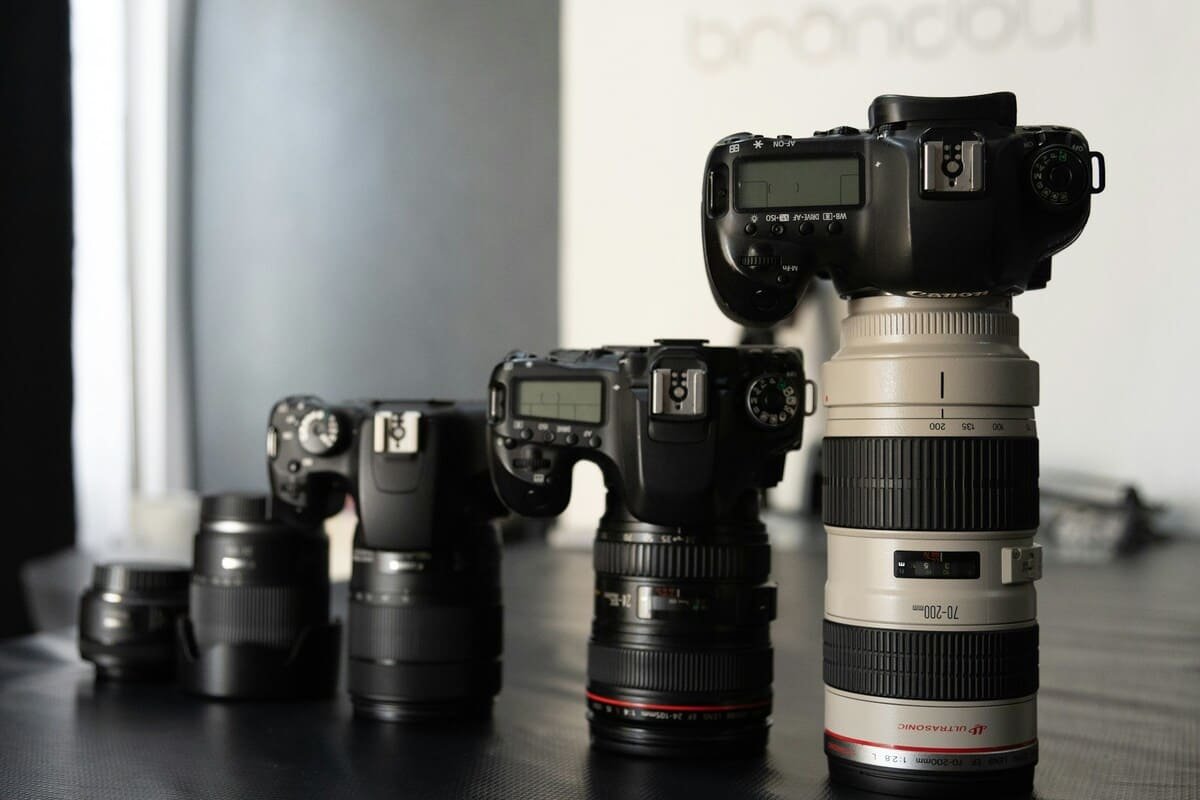
Sensor size is the most significant technical variable in camera image quality — more so than megapixels, autofocus systems, or any other specification.
Full Frame (35mm)
A full-frame sensor measures 36×24mm — the same dimensions as a frame of 35mm film. It is the largest sensor size in common use for still photography and offers:
- The best high-ISO performance (largest individual photosites collect more light, producing cleaner files at high ISO)
- The widest available dynamic range (the ability to hold detail in both highlights and shadows simultaneously)
- The shallowest depth of field potential for a given field of view (useful for portrait and product work where background blur is desirable)
- The largest, heaviest, and most expensive bodies and lenses
Best for: Professional or serious enthusiast photographers shooting in challenging light, making large prints, or doing commercial work where maximum image quality is required. Also the right choice if background separation in portraits is a priority.
Full-frame options: Sony A7 series, Canon R5/R6, Nikon Z6/Z7, Panasonic S5.
APS-C (Crop Sensor)
An APS-C sensor measures approximately 23.5×15.6mm — roughly 60% of the area of a full-frame sensor. The “crop factor” (typically 1.5x or 1.6x depending on manufacturer) means a 50mm lens behaves like a 75mm lens in terms of field of view.
APS-C sensors offer:
- Genuinely excellent image quality for most purposes — the difference from full frame is visible in controlled tests but rarely meaningful in real-world use
- Smaller, lighter, less expensive bodies and lenses
- An effective focal length multiplier that benefits telephoto work — a 300mm lens becomes effectively 450mm, making APS-C popular for wildlife and sports photography
- Less shallow depth of field than full frame at equivalent field of view — which can be a limitation for portrait work but is irrelevant for most other genres
Best for: Most photographers at beginner, enthusiast, and semi-professional levels. The image quality is excellent, the cost is lower, and the system size is more manageable. This is the sensor size most photographers should buy.
APS-C options: Fujifilm X-T5, Sony A6700, Canon R10/R50, Nikon Z30/Z50.
Micro Four Thirds (MFT)
Micro Four Thirds sensors measure 17.3×13mm — half the area of full frame with a 2x crop factor. Used primarily by Panasonic (Lumix G/GH series) and Olympus/OM System (OM-5, OM-1).
MFT offers the smallest, lightest system bodies and lenses of any interchangeable-lens format. The trade-off is slightly reduced high-ISO performance and dynamic range compared to larger sensors — though the gap has narrowed considerably with recent sensor generations.
Best for: Travel photographers, videographers (Panasonic GH series has excellent video capabilities), and photographers who prioritise portability above all else.
Step Three: Identify What You Actually Want to Shoot
The right camera depends significantly on your primary subject matter. Here’s how to match camera characteristics to common shooting scenarios:
Portraits and people
Priority: Shallow depth of field for background separation, good skin tone rendering, reliable face/eye autofocus tracking.
Recommendation: Any mirrorless camera with modern AI-based eye-tracking autofocus. Full frame gives the most background blur potential; APS-C is perfectly capable. Look for: Sony A7C II, Canon R8, Nikon Z5II, Fujifilm X-T5.
Lens: A 50mm f/1.8 (full frame) or 35mm f/1.8 (APS-C) prime is the ideal starting lens for portrait work. Inexpensive, sharp, and produces beautiful background blur.
Landscapes and architecture
Priority: High resolution for large prints, wide dynamic range to capture detail in highlights and shadows simultaneously, good high-ISO for dawn/dusk shooting.
Recommendation: High-resolution mirrorless body. Resolution matters more here than for other genres because large prints benefit from more pixels. Look for: Sony A7R V, Nikon Z8, Canon R5, Fujifilm GFX (if budget allows medium format).
Lens: A wide-angle zoom (16-35mm full frame equivalent) for architecture and environmental landscape; a standard zoom (24-70mm) for general landscape work.
Sports and wildlife
Priority: Fast continuous autofocus with strong subject tracking, fast burst rate (at least 10fps), long telephoto reach.
Recommendation: A camera with proven subject-tracking AI and fast burst rate. APS-C is particularly useful here for the effective focal length multiplier. Look for: Sony A6700, Canon R7, Nikon Z8 (for serious use), OM System OM-1.
Lens: A telephoto zoom (100-400mm or equivalent) is the core lens for this work. Budget-friendly options include the Tamron 100-400mm and Sigma 100-400mm, available for multiple systems.
Street and documentary
Priority: Compact and inconspicuous form factor, quiet or silent shutter, fast enough autofocus for candid moments.
Recommendation: A compact mirrorless with a small prime lens. Being unobtrusive is more important than any technical specification. Look for: Fujifilm X100VI, Ricoh GR IIIx, Sony A6700 with 35mm prime, Leica Q3 (if budget is not a constraint).
Lens: A 28mm or 35mm (full frame equivalent) prime is the classic street photography focal length.
Video and hybrid shooting
Priority: Good autofocus in video mode, 4K resolution, good rolling shutter performance, log profiles for colour grading.
Recommendation: Panasonic GH6 or G9 II (Micro Four Thirds, excellent video), Sony A7 IV (full frame, balanced photo/video), Fujifilm X-H2S (APS-C, excellent video specs). For dedicated video, DJI Pocket and Sony ZV series are worth considering.
Step Four: Set a Realistic Budget
Camera pricing follows a fairly predictable tier structure. Here is what each tier realistically delivers:
| Budget | What to Expect | Example Bodies |
|---|---|---|
| Under $500 | Entry-level APS-C, excellent image quality, limited weather sealing, basic AF | Canon R50, Nikon Z30 (body only) |
| $500–$1,000 | Mid-range APS-C or entry full frame, better AF, more controls | Sony A6700, Canon R8, Nikon Z5 II |
| $1,000–$2,000 | Advanced APS-C or mid full frame, professional AF, weather sealing | Fujifilm X-T5, Sony A7C II, Canon R6 II |
| $2,000–$4,000 | High-resolution or high-speed full frame, professional build | Sony A7R V, Canon R5, Nikon Z8 |
| $4,000+ | Flagship professional bodies | Sony A9 III, Canon R3, Nikon Z9 |
Important: Budget for lenses, not just the body. The lens affects image quality more than the body in most cases. A $700 body with a $400 prime lens will outperform a $1,500 body with a $50 kit zoom for most work. Allocate at least 40–50% of your total budget to lenses.
Step Five: Choosing Your First Lenses
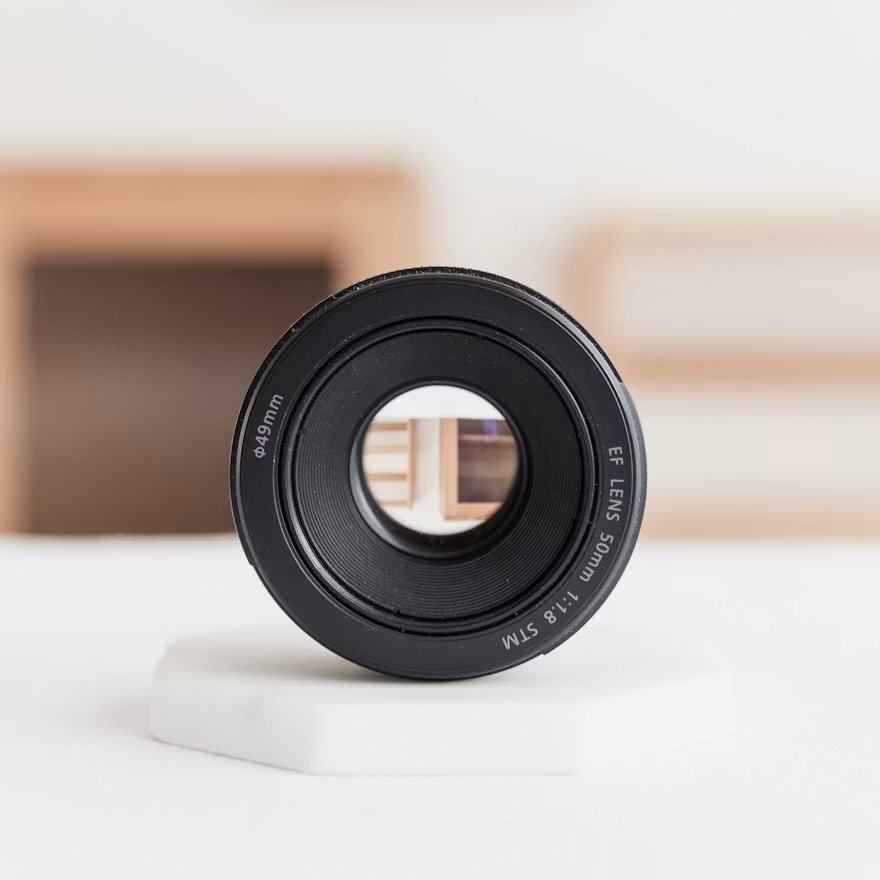
The kit lens (usually an 18-55mm or 16-50mm zoom) that comes bundled with most entry-level and mid-range bodies is a decent starting point — it covers a useful range and teaches you to work with zoom. But adding a fast prime lens early transforms what your camera can do.
The essential first prime: 50mm f/1.8 (full frame) or 35mm f/1.8 (APS-C)
Every major manufacturer offers a version of this lens in the $150–$300 range. It is:
- Sharp from corner to corner from f/2 onward
- Capable of beautiful background blur at f/1.8
- Significantly better in low light than a kit zoom at f/5.6
- Small and light enough to carry everywhere
Buy this lens early and shoot with it exclusively for a month. It will teach you more about composition, light, and focal length than any zoom can, because you have to move your feet rather than turning a ring.
The second lens: a zoom for reach
Once you know your kit lens and a prime, adding a telephoto zoom (70-200mm or 100-400mm equivalent) dramatically expands what you can shoot — portraits with more compression, wildlife, sports, and detail shots at distance. The Tamron and Sigma third-party options are often excellent at significantly lower prices than manufacturer glass.
New vs Used: The Case for Buying Used
The used camera market — particularly for DSLRs and first-generation mirrorless bodies — offers excellent value. Camera bodies depreciate significantly from new, and the image quality of a well-maintained three-year-old body is essentially unchanged from when it was purchased.
Reliable sources for used camera gear: MPB, KEH Camera, and B&H Used Department all grade condition accurately and offer return policies. Local camera shops with used sections are also worth visiting.
A used Sony A7 III or Canon R6 at 60–70% of original retail price is an excellent option for a photographer ready to move beyond entry-level.
What Not to Buy
The most expensive body you can afford. Buy the most capable body your budget allows without sacrificing lens quality. An expensive body with a poor lens produces worse results than a modest body with excellent glass.
A full system from a manufacturer you can’t grow into. If you buy a Canon body but all the lenses you want are Sony E-mount, you’ve built yourself into a corner. Research the lens ecosystem — particularly the fast primes and telephoto zooms — before committing to a system.
Video-focused cameras for still photography. Cameras marketed primarily for video (certain Panasonic and Sony cinema lines) can have compromises in ergonomics and still photography autofocus that make them less suitable as primary stills cameras.
Too many accessories before you’ve shot. Filters, bags, triggers, extra batteries, cleaning kits — all are eventually useful. None of them improve your photography in the first six months as much as simply shooting more would.
Further Reading
For independent, technically rigorous reviews of specific camera bodies and lenses, DPReview remains the most thorough source — their studio comparison tool allows you to compare noise performance between any two cameras at identical ISOs side by side. For used gear pricing and market value, MPB’s pricing guide is a reliable reference for what used bodies and lenses are actually selling for.
On the Haiku Photography Blueprint, our guide to photography for beginners covers how to use whatever camera you choose — understanding exposure, composition, and light. For understanding how your lens choice affects specific photographic situations, our articles on light modifiers for portraits and ND filters for long exposure explore how glass and accessories interact with creative intent.
Final Thoughts
The camera you buy matters far less than what you do with it after purchase. Every camera on this list — from the entry-level Canon R50 to the Sony A7R V — is capable of producing extraordinary images in the right hands. The right hands are built through shooting, not through researching the next upgrade.
Buy something solid, learn it completely, and resist the upgrade impulse until your current camera is genuinely the limiting factor in your work. For most photographers, that moment arrives much later than they expect — if ever.

Charles is a passionate photographer and visual storyteller with a keen eye for capturing authentic moments and timeless emotions. Through here, he combines creativity, technical expertise, and a love for natural storytelling to create images that preserve life’s most meaningful memories. His work focuses on genuine connections, beautiful details, and the unique stories behind every photograph.