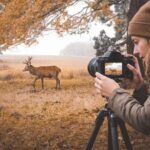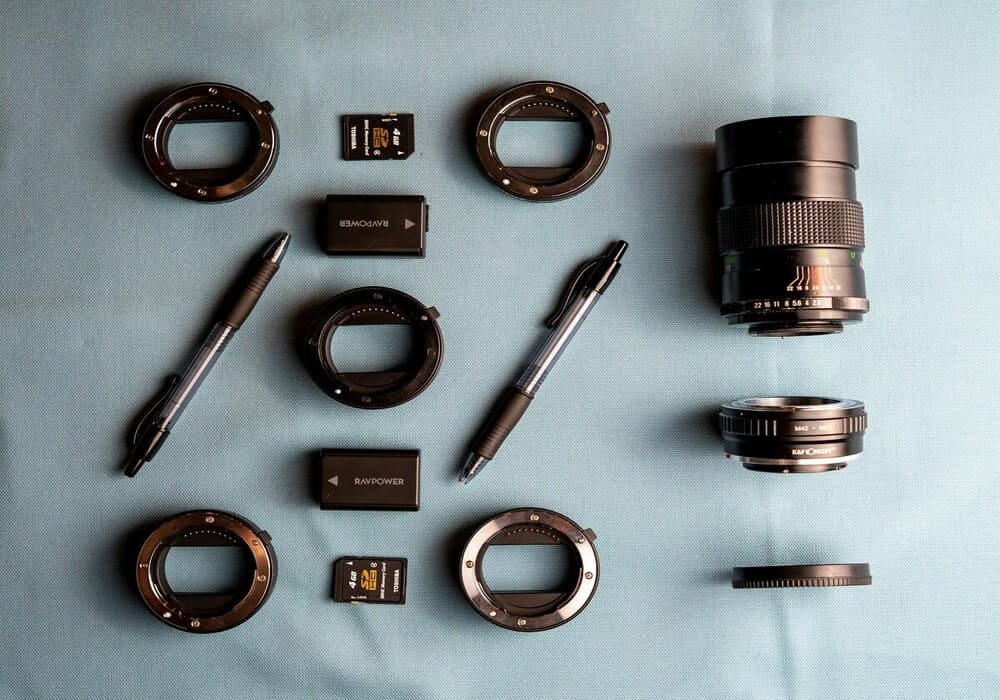
If your camera body is the engine, your lens is the steering wheel. It determines where you can go, what you can see, and how the world is rendered in the final image. Two photographers with identical camera bodies but different lenses will produce fundamentally different photographs of the same subject — different perspectives, different depth of field, different rendering of distance and space.
Understanding lenses is arguably more important than understanding camera bodies. Bodies are replaced every few years; quality lenses can last decades and carry their value better than almost any other photography investment. This guide covers every major lens type, what each does, when to use it, and how to build a practical lens kit at any budget level.
The Two Fundamental Lens Categories: Prime vs Zoom
Every lens in existence falls into one of two categories based on whether its focal length is fixed or variable.
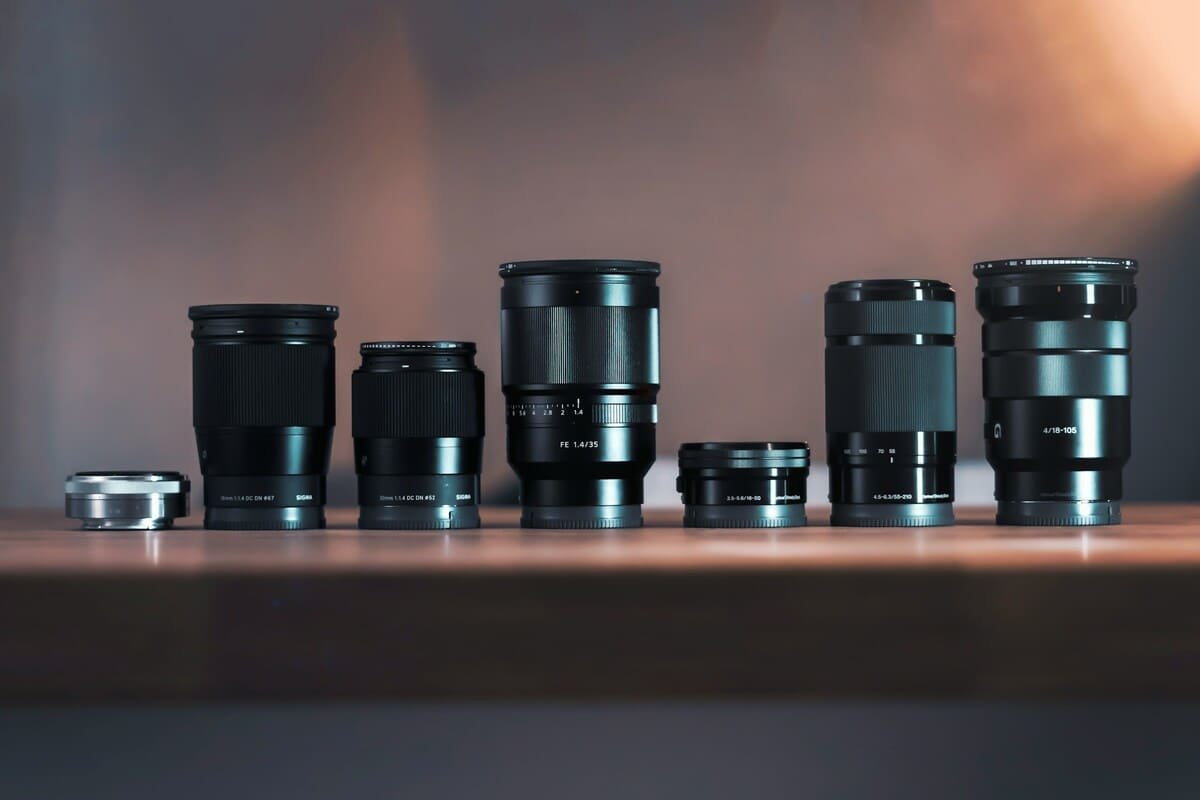
Prime Lenses
A prime lens has a single, fixed focal length — 35mm, 50mm, 85mm, and so on. It cannot zoom. To change your framing, you move your feet.
This constraint is a feature, not a limitation. Prime lenses offer several consistent advantages over zooms:
Wider maximum apertures. A 50mm f/1.8 prime costs $125–$250 and opens to f/1.8. A zoom covering the same focal length typically maxes out at f/4 or f/5.6 unless you spend significantly more. That difference — three to four stops — means the prime admits eight to sixteen times more light, enabling shallower depth of field and better low-light performance.
Superior optical quality for the price. A prime lens has one job: render one focal length as well as possible. Without the compromises required to cover a focal range, prime lenses produce sharper images, better colour rendering, and less distortion than comparably priced zooms — particularly at wide apertures.
Smaller and lighter. Fixed focal length designs require fewer optical elements than zooms, producing more compact, lighter lenses. A 35mm f/2 prime fits in a jacket pocket; the zoom covering that focal length does not.
Forces creative discipline. Working with a fixed focal length forces deliberate framing decisions — you cannot lazily zoom to fill the frame. Many photographers find that working with a prime for an extended period accelerates their compositional development significantly.
The main limitation: if your subject suddenly requires a longer or wider perspective, you either change lenses or move — neither of which is always possible.
Zoom Lenses
A zoom lens covers a range of focal lengths — 24-70mm, 70-200mm, 100-400mm — allowing you to change framing without moving. This flexibility is genuinely valuable in many shooting situations.
When zoom lenses are the practical choice:
- Event and wedding photography: A 24-70mm f/2.8 covers wide environmental shots and tighter portraits without changing lenses in unpredictable, fast-moving situations.
- Wildlife and sports: A 100-400mm zoom lets you reframe as subjects move at distance without swapping glass.
- Travel photography: One versatile zoom covering a wide range reduces the weight and volume of glass to carry.
The trade-offs of zooms: slower maximum apertures (typically f/2.8 at the premium end, f/4–5.6 for consumer zooms), larger and heavier designs, and higher cost for equivalent optical quality to primes.
The zoom paradox: A cheap zoom is usually worse than a cheap prime at equivalent focal lengths. An expensive professional zoom (Canon RF 24-70mm f/2.8L, Sony GM 24-70mm f/2.8) approaches prime quality but at a price that exceeds most prime combinations. The middle ground — mid-range zooms at f/4 — offers a useful compromise of portability, versatility, and reasonable image quality.
Understanding Focal Length
Focal length — measured in millimetres — determines two things simultaneously: how wide or narrow the field of view is, and how subjects are rendered spatially (compressed or expanded relative to the background).
The Crop Factor
Focal length ratings assume a full-frame (35mm) sensor. If you’re shooting with an APS-C camera (crop factor of approximately 1.5x for most brands, 1.6x for Canon), multiply the focal length by the crop factor to get the equivalent full-frame field of view.
A 50mm lens on an APS-C camera behaves like a 75mm lens on full frame. A 200mm telephoto becomes effectively 300mm. This matters when selecting lenses — particularly for wide-angle work, where the crop factor makes achieving a truly wide field of view harder.
All focal length descriptions below assume full-frame equivalents. If shooting APS-C, divide by your crop factor to find the native focal length that achieves the same look.
Lens Types by Focal Length
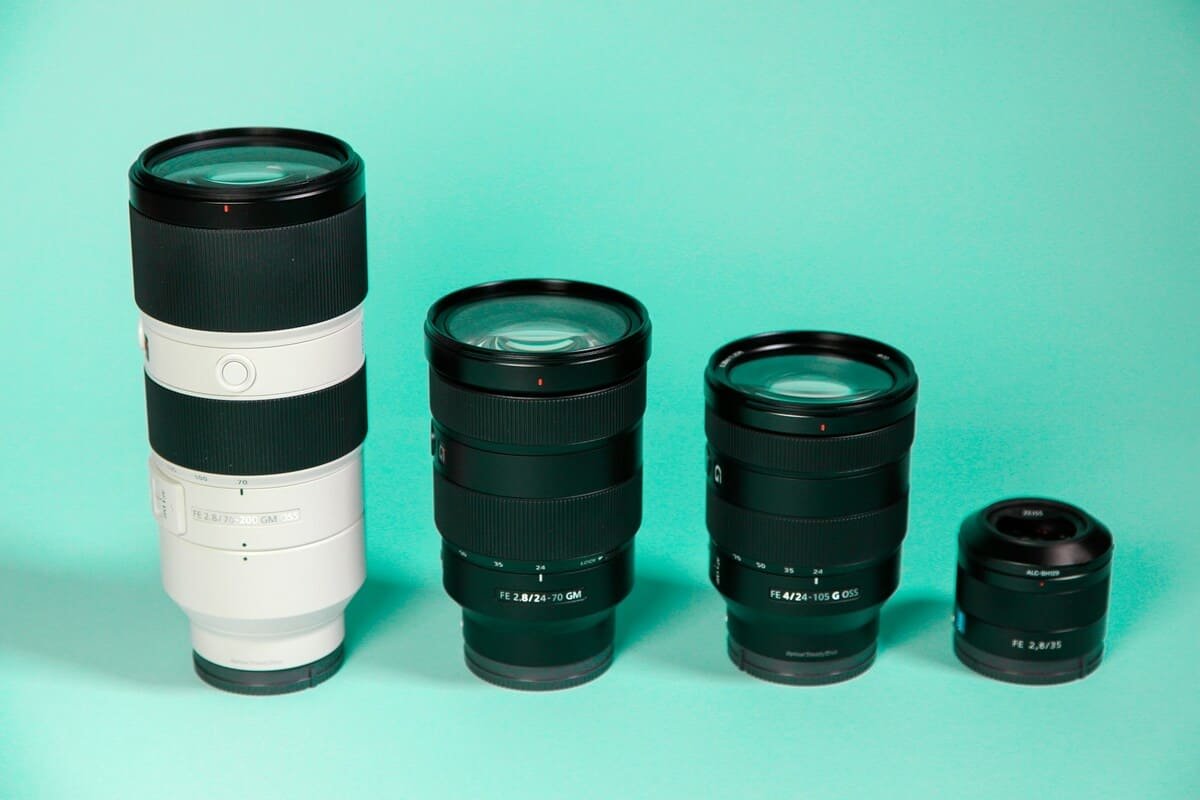
Ultra Wide Angle: 8–18mm
What it does: Captures an extremely wide field of view — sometimes beyond what the human eye sees peripherally. At the widest end (8–12mm fisheye), the image has a characteristic spherical distortion. At the longer end (14–18mm rectilinear), straight lines remain straight but the field of view is still dramatically wider than normal vision.
Spatial rendering: Ultra-wide lenses exaggerate the sense of depth and distance. Objects close to the camera appear very large; objects a short distance away appear small. Backgrounds feel far from the subject.
Best for: Architecture interiors (fitting an entire room into one frame), dramatic landscape foreground-background compositions, astrophotography (capturing wide sweeps of night sky), creative environmental portraits where the surroundings tell the story.
The challenge: At very short focus distances, subjects close to the lens distort significantly — faces shot with a 14mm lens at one meter distance will have elongated noses and compressed ears. Generally avoided for standard portraiture.
Recommended options: Sony FE 14mm f/1.8 GM, Canon RF 15-35mm f/2.8L, Nikon Z 14-30mm f/4, Laowa 15mm f/2 (third-party, multiple mounts), Samyang/Rokinon 14mm f/2.8 (budget-friendly).
Wide Angle: 18–35mm
What it does: Provides a noticeably wider-than-normal field of view without the extreme distortion of ultra-wide lenses. The 24mm and 28mm focal lengths are close to the natural perspective of human peripheral vision; the 35mm is considered by many street and documentary photographers to be the most natural-looking wide angle.
Spatial rendering: Moderate depth exaggeration — subjects appear slightly separated from backgrounds, with a sense of environmental context. Less distortion than ultra-wide; more characteristic “wide” feel than the 50mm.
Best for: Street photography (the classic reportage focal length), environmental portraits (showing the subject in their context), landscape photography, travel photography, architectural exteriors, photojournalism.
The 35mm as a first prime: For APS-C shooters, a 35mm prime (equivalent to approximately 52mm full frame) is often the recommended first prime purchase — natural perspective, wide enough to be versatile, typically available at f/1.8 for under $400 from major manufacturers.
Recommended options: Sony FE 35mm f/1.8, Canon RF 35mm f/1.8 IS, Nikon Z 35mm f/1.8 S, Fujifilm XF 23mm f/2 R WR (35mm equivalent on APS-C), Sigma 35mm f/1.4 Art (premium third-party).
Standard: 40–60mm
What it does: Renders scenes with a perspective closest to natural human vision — neither compressed nor expanded, neither wide nor tele. Objects appear to relate to each other spatially in a way that feels “normal” to the viewer.
The 50mm is the most universally recommended first prime for full-frame cameras — for historical reasons (50mm was the standard lens supplied with 35mm film cameras for decades), practical reasons (available in f/1.8 versions for under $300 from every manufacturer), and aesthetic reasons (the natural perspective produces honest, unmanipulated-looking images).
Best for: Street photography, documentary, portraits (particularly environmental and half-body portraits where you want natural-looking perspective), food photography, product photography, travel.
Recommended options: Canon RF 50mm f/1.8 STM ($200 — exceptional value), Nikon Z 50mm f/1.8 S ($600 — excellent), Sony FE 50mm f/1.8 ($250), Sigma 50mm f/1.4 Art (premium third-party), Fujifilm XF 35mm f/2 R WR (50mm equivalent on APS-C, excellent).
Short Telephoto: 70–105mm
What it does: Provides a moderately telephoto perspective — slightly compressed space, flattening the apparent distance between subject and background. The 85mm is the most celebrated focal length in portrait photography; the 100mm is the standard focal length for portrait-oriented macro lenses.
Spatial rendering: The compression at 85–105mm is very flattering for faces — it reduces the nose-forward distortion of wider focal lengths and produces proportions closer to how we perceive faces in person rather than how camera perspective renders them.
Best for: Portraiture (85mm is often called the “portrait lens” for good reason — the combination of perspective compression, available working distance, and typical f/1.4–1.8 apertures makes it ideal for head and shoulders shots), event candids, macro photography (100mm macro lenses provide working distance from the subject that 50mm macros don’t).
Recommended options: Canon RF 85mm f/2 IS ($600, excellent), Nikon Z 85mm f/1.8 S ($800, outstanding), Sony FE 85mm f/1.8 ($550, very good), Sigma 85mm f/1.4 Art (premium third-party), Samyang 85mm f/1.4 (budget option).
Medium Telephoto: 135–200mm
What it does: Significant telephoto compression — backgrounds feel close to the subject, space is flattened dramatically. At 135mm and 200mm, background blur (bokeh) is very prominent even at moderate apertures like f/2.8.
The 135mm f/2 is a legendary focal length among portrait photographers — it produces extraordinary background separation, beautiful bokeh, and a compression effect that is extremely flattering to the human face. It was less popular during the zoom era because it covers a single focal length that falls between most common zoom ranges, but it has experienced a significant revival among photographers who have discovered its qualities.
Best for: Portraiture (particularly when you want very strong background separation), event candids where you need to work at distance, sports from moderate distances, detail shots in landscape photography.
Recommended options: Sony FE 135mm f/1.8 GM (outstanding, premium), Canon RF 135mm f/1.8L IS ($2,700, superb), Nikon Z 135mm f/1.8 S Plena ($2,800, exceptional), Sigma 135mm f/1.8 Art (excellent third-party option), Samyang 135mm f/2 (excellent budget option, manual focus).
Telephoto: 200–400mm
What it does: Brings distant subjects close — animals at distance, athletes on a playing field, birds in flight, aircraft in the sky. At these focal lengths, subjects fill the frame from distances that would be physically impossible or inappropriate to reduce.
Spatial rendering: Extreme compression — backgrounds appear very close to subjects, perspective is flattened dramatically. A 400mm lens pointed at a mountain range compresses the apparent distance between ridges so they appear stacked behind each other.
Best for: Wildlife photography (the minimum useful focal length for most wildlife work is 300mm; 400–600mm is more typical for birds), sports photography (400mm at f/2.8 is the classic press box telephoto), aviation photography, nature documentation.
The cost reality: Long fast telephoto lenses are among the most expensive optical instruments available. A 400mm f/2.8 from any manufacturer costs $10,000–$15,000 new. Budget-friendly alternatives exist in the f/5.6 and f/6.3 aperture range — Sigma’s 100-400mm Contemporary and Tamron’s 150-500mm offer excellent reach at affordable prices (under $1,000), though the slower apertures require higher ISO in challenging light.
Recommended options (accessible price points): Sigma 100-400mm f/5-6.3 DG DN Contemporary, Tamron 150-500mm f/5-6.7, Nikon Z 180-600mm f/5.6-6.3 (excellent value), Sony FE 200-600mm f/5.6-6.3 G.
Super Telephoto: 500mm and Beyond
For professional wildlife, sports, and nature photography. The domain of specialist photographers with specialist budgets. The Nikon Z 800mm f/6.3 PF ($6,500) and Sony FE 600mm f/4 GM ($13,000) represent the accessible and professional ends of this category respectively.
For most photographers, a 400–600mm zoom at f/5.6–6.3 is the practical maximum before the returns diminish relative to cost and physical manageability.
Specialty Lenses

Macro Lenses
Macro lenses are designed to focus at very short distances, achieving a 1:1 (life-size) reproduction ratio — meaning the subject is reproduced on the sensor at the same size as it is in reality. A 1cm insect fills the same sensor area as a 1cm sensor pixel.
Standard macro focal lengths are 60mm (APS-C), 90mm, and 100mm. The longer focal lengths (90–100mm) are generally preferred because they provide more working distance between the lens front and the subject — critical when photographing insects that flee at close approach.
Any macro lens is also an excellent portrait lens for its focal length — the optics required for close-focus performance produce very sharp, well-corrected images throughout the focus range.
Recommended options: Sigma 105mm f/2.8 DG DN Macro Art, Tamron SP 90mm f/2.8 Di VC USD, Canon RF 100mm f/2.8L Macro IS (also excellent for portraits), Sony FE 90mm f/2.8 Macro G OSS.
Tilt-Shift Lenses
Tilt-shift lenses — available only in manual focus, typically from camera manufacturers rather than third parties, and expensive — allow the lens plane to be tilted or shifted relative to the sensor plane. This enables two things impossible with conventional lenses:
Perspective correction (shift): By shifting the lens upward, the camera can remain level rather than tilted upward while still capturing the top of a tall building. This eliminates the converging vertical lines (keystoning) that make tall buildings appear to lean inward — a critical capability for architectural photography.
Selective focus plane manipulation (tilt): By tilting the lens, the plane of sharpest focus can be angled rather than remaining parallel to the sensor. This allows everything from near foreground to distant background to be sharp at wide apertures (by tilting the focus plane to run through the scene at an angle), or conversely, used to create the miniaturisation effect where real scenes appear like scale models.
Best for: Architectural photography (shift function), product photography (precise focus plane control), creative miniaturisation effects.
Understanding Aperture in Lenses
The maximum aperture of a lens — its widest opening — is one of the most important specifications affecting both image quality and creative flexibility.
Faster lenses (wider maximum aperture — f/1.4, f/1.8, f/2) admit more light, enable shallower depth of field, and allow shooting in lower light without raising ISO. They are heavier, larger, and more expensive.
Slower lenses (narrower maximum aperture — f/4, f/5.6) are lighter, smaller, less expensive, and often optically very good from their maximum aperture. The trade-off is less flexibility in low light and less capacity for background blur.
Variable aperture zooms (e.g., 18-55mm f/3.5-5.6) have different maximum apertures at different focal lengths — f/3.5 at 18mm, f/5.6 at 55mm. The narrowing aperture as you zoom means less flexibility at the telephoto end, which matters most in low light.
Constant aperture zooms (e.g., 24-70mm f/2.8) maintain the same maximum aperture throughout the zoom range. Generally more expensive and heavier, but consistent exposure as you zoom — important for video and critical for event work.
First, Second, and Third Party Lenses
First-party lenses are made by the camera manufacturer for their own mount (Canon RF lenses for Canon RF cameras, Nikon Z lenses for Nikon Z cameras). They are guaranteed to be fully compatible, optically optimised for the specific mount, and often benefit from special optical designs (like Canon’s DO elements or Nikon’s PF elements) only available through the manufacturer.
Third-party lenses are made by independent optical companies — primarily Sigma, Tamron, and Tokina — for multiple camera mounts. They have improved dramatically in recent years and now regularly match or exceed first-party image quality at lower prices. Sigma’s Art series and Tamron’s SP series are widely respected by working professionals.
Key considerations with third-party lenses: autofocus compatibility sometimes lags on new camera bodies until firmware updates are issued; weather sealing may be less comprehensive than first-party equivalents; resale values are typically lower.
Budget third-party options: Samyang (also sold as Rokinon) produces manual focus lenses — primarily primes — at very low prices with surprisingly good optical quality. They have no autofocus, which limits their use for action and portrait work but makes them excellent for landscape, astrophotography, and video where manual focus is preferred.
Building a Practical Lens Kit
Beginner kit (starting out)
Kit lens (18-55mm or 16-50mm, whatever came with your camera) + 50mm f/1.8 prime (or 35mm equivalent on APS-C).
Total additional cost: $150–$300. This combination covers the vast majority of everyday photography situations and teaches you what you actually need before spending more.
Enthusiast kit (developing photographer)
24-70mm f/2.8 zoom (or f/4 for budget) + 85mm f/1.8 prime + 100-400mm zoom.
This three-lens kit covers architecture to wildlife, portraits to events, with no significant gaps. Total cost: $1,500–$4,000 depending on brand and aperture.
Specialist portrait kit
35mm f/1.8 (environmental portraits) + 85mm f/1.4 or f/1.8 (headshots and close portraits) + 135mm f/2 (creamy background separation for beauty and fashion).
Three focal lengths, all fast, covering the full range of portrait work from wide environmental to tight beauty shots.
Landscape kit
14-24mm f/2.8 or f/4 (wide environment) + 24-70mm f/4 (standard range) + 70-200mm f/4 (compression and detail). Add a solid circular polarizer and ND filter system and this covers every landscape scenario.
Lens Care and Maintenance
Cleaning: Use a blower (Giottos Rocket or similar) first to remove loose dust before touching the glass. For smears and fingerprints, a quality microfiber cloth with a small amount of lens cleaning solution — applied to the cloth, not the lens — removes most contamination. Never use paper towels or clothing.
Storage: Store lenses in a dry environment with a silica gel desiccant packet if you live in a humid climate. Fungus growth inside lenses is a genuine risk in tropical or humid conditions and is expensive or impossible to reverse.
UV filters: The debate about protective UV filters is long-running. A quality multi-coated UV filter (B+W or Hoya HD) on an expensive lens provides genuine protection from front element scratches at the cost of a very small optical penalty. A cheap UV filter can actively degrade image quality. If you use one, use quality glass.
Lens hoods: Always use the lens hood supplied with your lens. It reduces flare from light sources outside the frame and physically protects the front element from impact. There is no downside to using it.
Further Reading
For specific lens recommendations by photography genre and budget, DPReview’s lens review database is the most comprehensive resource available — every major lens is tested with standardised methodology and compared. For optical quality measurements and comparisons between lenses, LensRentals’ Roger Cicala publishes some of the most technically rigorous lens analyses available anywhere online.
On the Haiku Photography Blueprint, our guide to how to choose a camera covers the body side of the gear decision — sensor sizes, mirrorless vs DSLR, and budget allocation. For understanding how lenses interact with specific creative techniques, our guides on ND filters for long exposure and circular polarizer filters cover the filter accessories that work alongside your lens choice. For the lighting tools that complement lens selection in portrait work, see our guide to light modifiers for portraits.
Final Thoughts
Lenses are the most enduring investment in photography. Camera bodies become obsolete within a camera generation or two; a quality lens made today will still be producing excellent images twenty years from now on a camera body that doesn’t yet exist.
The practical approach: start with what you have, add one prime lens early (the 50mm f/1.8 for full frame, the 35mm f/1.8 for APS-C), and resist the urge to buy the full kit before you understand what you actually need. The gap between what you have and what you want becomes clear through shooting — and that clarity is far more valuable than any gear guide’s recommendation, including this one.

Charles is a passionate photographer and visual storyteller with a keen eye for capturing authentic moments and timeless emotions. Through here, he combines creativity, technical expertise, and a love for natural storytelling to create images that preserve life’s most meaningful memories. His work focuses on genuine connections, beautiful details, and the unique stories behind every photograph.