Your photography portfolio is doing one job: convincing someone who has never met you and never seen you work that you are the right photographer for something they care deeply about. A wedding. A brand campaign. A corporate headshot. A family session. Whatever the context, the portfolio is the argument, and you are not there to make it in person.
That single-sentence job description has significant implications for how a portfolio should be built, curated, and presented — and most photographer portfolios fail at it in the same predictable ways. Too many images. Wrong images for the target client. No clear voice or consistency. Presented on a platform that loads slowly or looks unprofessional on a phone.
This guide covers every dimension of building a portfolio that actually converts viewers into enquiries: what to include, how many images, how to sequence them, what to write, what platform to use, how to handle the problem of not having enough strong work yet, and how to keep a portfolio effective as your work develops.
What a Portfolio Is Actually For
A photography portfolio is not an archive. It is not a record of your career. It is not a place to show everything you can do or prove how much you have shot. It is a curated argument, assembled for a specific audience, designed to produce a specific response — the decision to make contact.
Every image in your portfolio should earn its place by contributing to that argument. Images that are technically acceptable but not excellent dilute the overall impression. Images from genres you no longer want to shoot attract enquiries for work you do not want to do. Images that are inconsistent in style undermine the sense of a coherent photographic voice.
The standard for portfolio inclusion is not “is this one of my better images?” It is “does this image, in the context of the full portfolio, strengthen the argument I am making to my ideal client?”
That is a harder standard. It is also the one that produces portfolios that actually work.
Define Your Audience Before Selecting a Single Image
The single most common portfolio mistake is building it without a specific audience in mind. A portfolio designed for everyone is compelling to no one.
Before selecting any images, answer two questions honestly:
Who is my ideal client? Not a demographic — a specific person. A couple planning an intimate destination wedding who care about authenticity and documentary storytelling. A brand director at a food company who needs images for national advertising campaigns. A parent who wants natural, outdoor family photographs that don’t look staged. The more specifically you can picture this person, the more precisely you can curate for them.
What do they need to see to decide to contact me? A wedding couple needs to see evidence that you can capture the ceremony, the emotion, the details, and the people — all in images that match their aesthetic. A commercial client needs to see evidence that you understand brand aesthetics, work with art directors, and deliver images that function in advertising contexts. A family portrait client needs to see warm, natural images of families that look like real people having real moments.
Every curation and sequencing decision follows from these answers.
How Many Images: The Right Number by Context
The most frequently asked portfolio question. The honest answer: fewer than you think, and the specific number matters less than the quality threshold you apply to reach it.
General online portfolio: 20–40 images
This is the right range for a primary portfolio gallery on your website — enough to demonstrate range and consistency within your specialty, not so many that quality variation becomes visible or viewer fatigue sets in. The strongest photographers in any market tend to have tighter, not larger, portfolios.
The test: if you removed the weakest five images from your current portfolio, would the overall impression improve? If yes, do it. Then ask again. Keep asking until the answer is no.
Specialty gallery: 15–25 images
If your website has separate galleries for different services (weddings, portraits, commercial), each gallery should be tighter and more focused than a general portfolio would be. A wedding gallery of 25 images showing the full arc of a wedding day — prep, ceremony, portraits, reception — is more persuasive than a wedding gallery of 60 images where the weaker shots are unavoidable.
Physical portfolio book: 10–20 images
A printed portfolio — used for in-person meetings, agency submissions, or gallery proposals — should be even more ruthlessly curated than an online portfolio. In a physical book, you control the sequence completely, the viewer engages more slowly, and every image receives more sustained attention. Ten genuinely extraordinary images in a beautifully produced book are more impressive than thirty adequate ones.
Agency or editorial submission: 8–15 images
Most commercial clients, agents, and publications reviewing new photographers are making a quick decision about whether to continue engaging. Eight to fifteen images, all exceptional, all directly relevant to what that specific client commissions, is the right format. Longer submissions are not more impressive — they signal poor editing judgment.
A Level / academic portfolio: Follow the brief
Academic portfolios typically specify image count in the assessment brief. Within whatever constraint you are given, the same quality-over-quantity principle applies — the maximum number specified is a ceiling, not a target.
The Curation Process: How to Select the Right Images
Curation is the most important and most neglected skill in portfolio building. Technical shooting skill is widely discussed; the ability to look at your own work critically and honestly is rarer and more valuable for portfolio purposes.
Step One: Compile a Long List
Pull together every image you consider potentially portfolio-worthy — your complete archive of candidates, without filtering. For most photographers this is 100–300 images. Export them to a folder or create a collection in Lightroom for review.
Step Two: Technical Pass
First elimination round: technical quality only. Remove any image with soft focus on the primary subject, distracting motion blur not used intentionally, significant exposure problems that editing could not resolve, or unflattering compression artefacts. This pass should be quick and decisive — technical failures are not portfolio images regardless of how compelling the moment was.
Step Three: Relevance Pass
Remove any image that doesn’t directly represent the work you want to attract. A landscape photographer who has shot three weddings should not include wedding images in their primary portfolio unless they want more wedding enquiries. A wedding photographer who has photographed product work for a friend’s business should not include it unless they want commercial enquiries. Show exactly what you want to be hired for.
Step Four: Quality Pass
This is the hardest elimination round. From your technically acceptable and relevant images, identify the genuinely strong ones — images that have something beyond competence. A compelling moment. A distinctive light quality. A composition that works. An emotional truth. Images where something is happening that earns the viewer’s attention.
The standard: would you be proud to show this image to the most respected photographer whose work you admire? Not “would they think it was acceptable” — would you be proud?
Step Five: Coherence Check
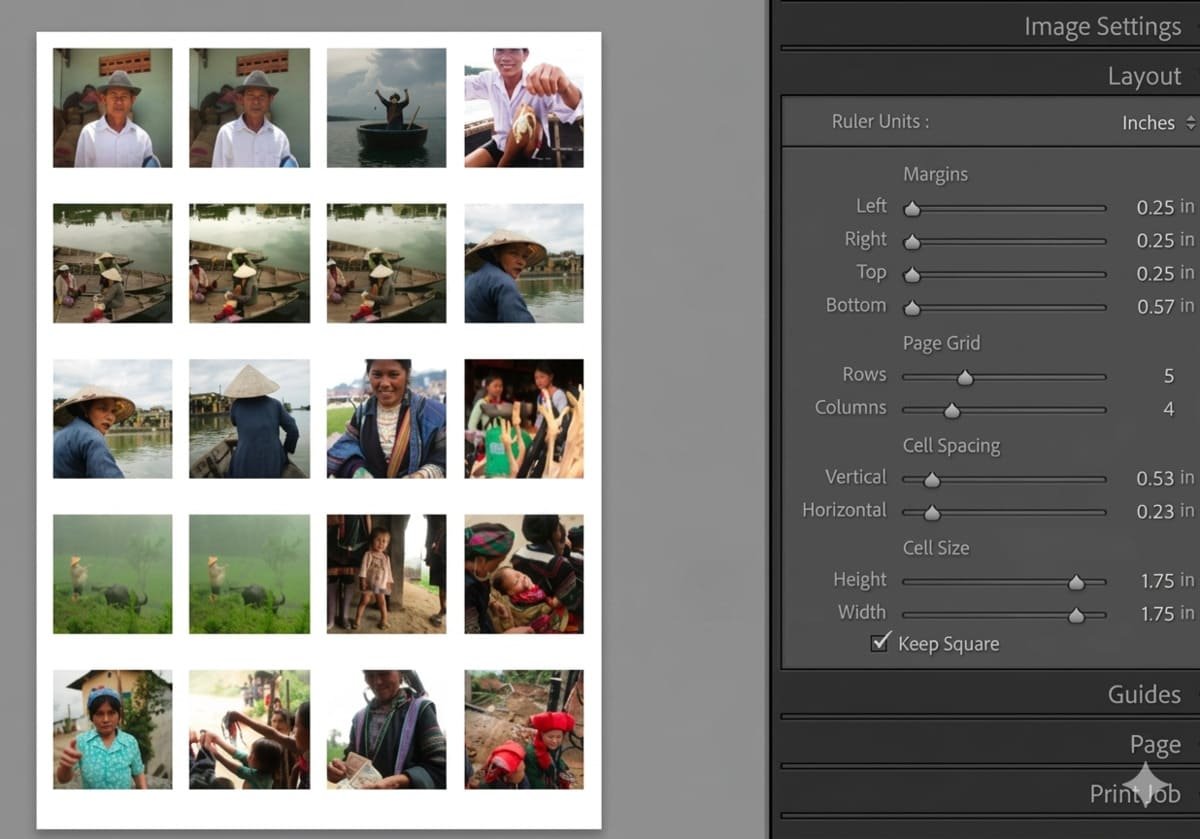
Lay all remaining images out in a grid view (Lightroom’s Grid mode, or a physical print layout). Look at them together. Do they feel like they were made by the same photographer? Is there a consistent tonal approach, a consistent relationship to light, a consistent perspective? If one image feels like it belongs to a different photographer’s portfolio, it probably shouldn’t be in yours — even if it’s technically strong in isolation.
Step Six: The Outside Eye
Ask someone you trust — a photographer whose judgment you respect, not your most enthusiastic friend or family member — to tell you which five images they would remove and why. Listen without defending. You do not have to agree, but the images they would remove are worth examining critically rather than dismissively.
Image Sequencing: The Order That Matters
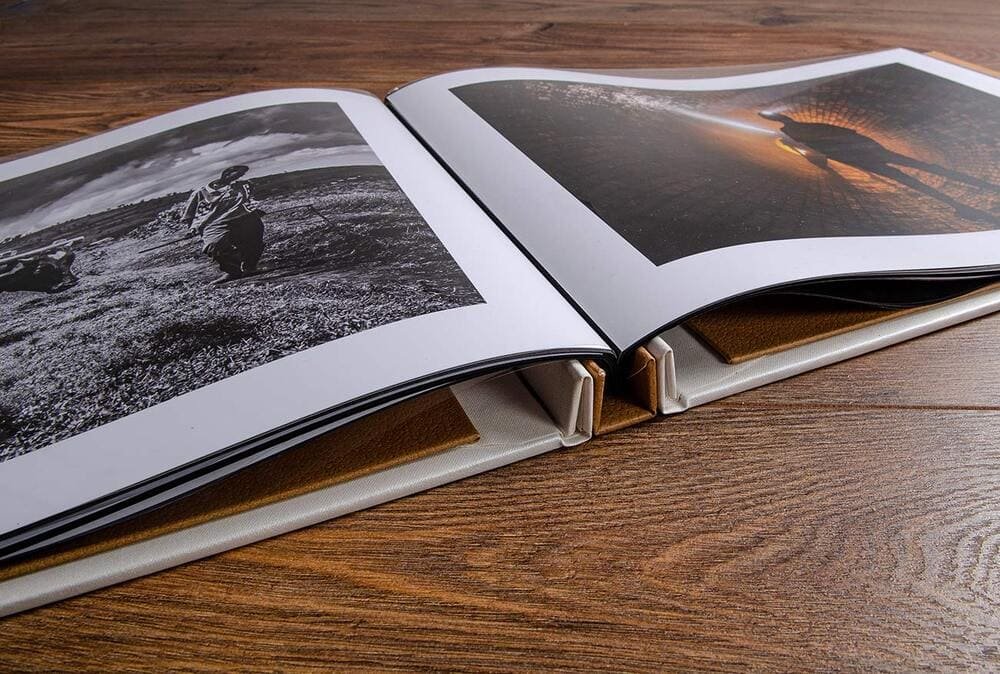
The sequence in which images appear in a portfolio is not a neutral decision. Sequence shapes the narrative experience, determines what impressions compound on each other, and controls the emotional arc of a portfolio review.
Open with your single strongest image. Not your most technically impressive — the image that most powerfully communicates what your work is about. This is the image that stops scrolling, that creates the initial impression everything else builds on. If you cannot identify a clear single strongest image, that is diagnostic information about your portfolio’s current state.
Build toward a second peak. The middle of a portfolio is where attention is naturally lowest. Build through the middle with images that demonstrate range and consistency — different subjects, different light qualities, different emotional registers — working toward a second moment of impact roughly two-thirds through.
Close with something memorable. The final image is the last impression. It should be strong, complete, and tonally appropriate to how you want the viewer to feel having spent time in your portfolio. A quiet, contemplative image that invites reflection often works better as a closing image than another high-impact action shot.
Avoid same-same adjacency. Two images of similar composition, similar subject distance, or similar tonal quality placed next to each other make both look weaker. Vary orientation (landscape next to portrait), vary distance (close portrait next to environmental image), vary emotional register (joyful moment next to contemplative one).
Group thoughtfully, not rigidly. Images from the same shoot can appear together — the context helps — but a portfolio that moves through shoots chronologically feels like a contact sheet rather than a curated selection. Prioritise visual rhythm and emotional arc over chronological organisation.
What to Write in Your Portfolio
The written elements that accompany your portfolio are consistently underinvested in by photographers. Three pieces of writing matter:
Artist Statement
A brief (100–200 word) articulation of your photographic approach, what you value, and what you are trying to do with your work. Not a bio — not where you went to school or what camera you use — but what you are pursuing and why.
The test for a good artist statement: could another photographer have written the same words? If yes, it is not specific enough. Replace every generic photography phrase (“capturing authentic moments,” “storytelling through images”) with the specific language of your actual perspective and values.
Image Captions
Not all portfolios include captions, but when they are included they add context that makes individual images more meaningful: the location, the event, the subject, the specific project. For commercial and editorial portfolios, captions also demonstrate that your images have been used in real professional contexts — a portrait captioned “Personal branding session for architect, Edinburgh” signals professional practice more concretely than “Portrait” alone.
Captions should be brief. One sentence, two at most. The image should do the work; the caption provides context, not explanation.
About Page
Covered in more depth in our guide to building your photography website, but the About page connected to your portfolio is where the personal connection that precedes a booking is established. Write in first person. Be specific about your approach and your values. Include a photograph of yourself. End with a clear call to action.
Platform Options for Your Portfolio

Where you present your portfolio significantly affects how it is perceived. The platform decision determines loading speed, design quality, mobile experience, and the degree of control you have over presentation.
Your own website (WordPress, Squarespace, Showit) is the most important long-term platform. Covered in complete detail in our guide to how to build a photography website, but the summary: your website is the only digital platform you fully own and control, and it should be the primary home of your portfolio.
Adobe Portfolio is a free, clean portfolio platform included with Adobe Creative Cloud subscriptions. Limited in design customisation but fast, image-forward, and well-suited to photographers who want a minimal online presence without the complexity of a full website. Not a long-term substitute for a dedicated website, but a useful starting point.
Format is a portfolio-specific platform with photographer-designed templates, client proofing integration, and a clean presentation approach. Plans start around $10/month. A good option for photographers who want something more polished than Adobe Portfolio without the full complexity of WordPress.
Behance is Adobe’s professional portfolio community — widely used by commercial photographers and useful for agency discovery. Not a substitute for your own website, but a valuable secondary presence particularly for commercial and editorial work.
Instagram functions as a portfolio sampler rather than a complete portfolio. It is where many potential clients will first encounter your work, which makes its curation important — but the format (square crops, algorithm-determined ordering, mixed content from different periods) makes it unsuitable as a primary portfolio presentation. Direct viewers from Instagram to your website where the full portfolio can be experienced on your terms.
Physical portfolio books remain relevant for in-person presentations, agency meetings, and any context where the tactile quality of a printed portfolio is appropriate. Services like Artifact Uprising, Momento Pro, and Milk Books produce professional-quality photo books at accessible prices. A printed portfolio book communicates commitment and investment in a way a phone screen does not.
The Problem of Not Having Enough Strong Work Yet
Every photographer starting out faces the same challenge: you need portfolio images to get bookings, and you need bookings to get portfolio images. Breaking this cycle requires deliberate portfolio-building work that is not contingent on paying clients.
Styled shoots: Organise or participate in styled shoots — collaborations between photographers, models, stylists, florists, and other vendors, producing images specifically for portfolio purposes. Common in wedding and portrait photography. Everyone contributes time and gets images to use for their own marketing. The images can be indistinguishable from real client work in a portfolio.
Personal projects: Shoot the subjects you want to be hired to shoot, without waiting for a client to commission the work. A commercial photographer who wants to shoot food photography assembles food and shoots it. A portrait photographer who wants to expand into personal branding photography reaches out to local professionals and offers sessions in exchange for portfolio use. The images are real photographs; the context of production is simply different.
Collaboration with emerging talent: Partner with makeup artists, stylists, models, and other creatives who are also building their portfolios. These collaborations produce professionally executed images for everyone involved at minimal cost.
Second shooting: As discussed in the wedding photography guide, second shooting for an established photographer provides both experience and portfolio images from real professional contexts.
The key principle in all of these: the images need to be indistinguishable in quality and professionalism from your best client work. Portfolio images produced through styled shoots or personal projects that look like test shots rather than finished professional work hurt your portfolio rather than helping it.
Portfolio Mistakes That Cost You Bookings
Including too many images out of insecurity. A large portfolio signals “I could not decide what my best work is.” A curated portfolio signals taste and editorial judgment. Clients hire photographers with good judgment — a curated portfolio demonstrates it before the client has even spoken to you.
Including images from genres you no longer want to shoot. A landscape photographer’s portfolio that includes corporate headshots attracts corporate headshot enquiries. If you include it, you are saying you want it.
Inconsistent processing across the portfolio. Images that look like they were edited by three different people in three different styles undermine the sense of a coherent photographic voice. If your oldest portfolio images look significantly different from your newest work, retire the old ones.
No clear call to action. A portfolio with no “contact me” or “check availability” button requires the client to go looking for your contact information. They will sometimes succeed. Sometimes they will leave. A visible, persistent call to action on every page of your portfolio presentation — online or in a physical book, as the final spread — reduces that friction.
Letting the portfolio go stale. A portfolio that has not been updated in eighteen months signals to returning visitors that you are not actively shooting, and may signal to Google (if your website is involved) that the site is not actively maintained. Review your portfolio every three to six months and replace any images that no longer represent your current best work.
Showing the Portfolio: In-Person Presentation
For photographers who present their portfolio in person — to potential clients, to agents, to art directors — the presentation itself is a performance that the portfolio must support.
Know your own work deeply. For every image in your portfolio, be able to speak spontaneously about what was happening, what drew you to that moment or subject, and any technically interesting decision you made. Fumbling over your own images in a portfolio review signals a lack of genuine engagement with your work.
Let them look before you talk. Hand a physical portfolio across and allow the person to form their initial impression without your narration. Their unguided response is more honest than a response shaped by your commentary. Then invite questions and discuss.
Have a story ready for the weakest image. There will always be an image someone pauses on that you are less certain about. Know why you included it, what it contributes to the whole, and be able to articulate that calmly without becoming defensive. If you cannot construct that argument, reconsider whether the image belongs.
Watch where they pause and where they move quickly. Sustained attention on specific images tells you which are most compelling to your target audience. Quick movement past others tells you which are not earning their place. This real-world feedback is more useful than any amount of self-assessment.
Keeping Your Portfolio Current
A portfolio is not a finished object — it is a living document that should evolve as your work develops. The photographers whose portfolios consistently perform best are those who engage with this actively rather than treating the portfolio as something to be updated only when it becomes embarrassingly outdated.
Set a review schedule. Quarterly reviews — looking at the portfolio fresh and asking what should be added, removed, or resequenced — prevent the gradual staleness that settles on neglected portfolios. A calendar reminder takes thirty seconds to set.
Retire images on a rolling basis. As you shoot stronger work, the older images in the portfolio should be measured against it. An image that represented your best work two years ago may now be making your portfolio look older than your current capabilities.
Maintain separate archives. A gallery of older work, retired portfolio images, or genre-specific work that is not in your main portfolio can live elsewhere on your website — a “personal work” page, an “archive” section — without diluting the primary portfolio. This preserves the older work for clients who want to see more without including it in the primary curation.
Further Reading
For the creative development that produces portfolio-worthy work in the first place — building a consistent body of work, developing your visual voice, shooting personal projects — our guide to developing your photography style covers the artistic side of portfolio building in depth. For the website on which your portfolio will live — platform selection, page structure, SEO, and technical setup — our complete guide to building a photography website covers every step of the implementation. For the marketing context that determines what kind of portfolio you need and who it is speaking to, our guide to marketing your photography business provides the strategic framework.
For external perspective on portfolio review and critique, the A Photo Editor blog by Rob Haggerty — a working photo editor who has reviewed thousands of photographer portfolios — offers one of the most direct and useful perspectives available on what editors and art buyers actually respond to. The Lenscratch portfolio review archives provide published examples of how portfolios are critically evaluated across fine art and documentary photography.
Final Thoughts
A portfolio that gets you hired is the result of two things working together: genuinely strong images and the editorial judgment to present them well. Neither alone is sufficient. Strong images in a poorly curated, poorly sequenced, poorly presented portfolio consistently underperform. And strong curation and presentation cannot rescue a portfolio of mediocre images.
The work is to develop both simultaneously — to keep shooting and developing your eye, while also developing the self-critical capacity to curate your output honestly. That combination, practised consistently over time, produces a portfolio that does its job: convincing someone who has never met you that you are exactly the photographer they need.

Charles is a passionate photographer and visual storyteller with a keen eye for capturing authentic moments and timeless emotions. Through here, he combines creativity, technical expertise, and a love for natural storytelling to create images that preserve life’s most meaningful memories. His work focuses on genuine connections, beautiful details, and the unique stories behind every photograph.