Digital photography is so embedded in daily life that the question “what is digital photography?” almost seems unnecessary to ask. Almost every photograph made today is digital — captured on a sensor, stored as a file, displayed on a screen, and shared instantly across networks. The analogue alternative, film photography, has become a deliberate aesthetic choice rather than a technological necessity.
But understanding what digital photography actually is — how the sensor works, how the image forms, how it differs from film at a technical and aesthetic level, and how this technology transformed not just cameras but the entire relationship between people and images — deepens every practical decision a photographer makes. This guide covers the complete picture.
What Is Digital Photography: The Core Definition
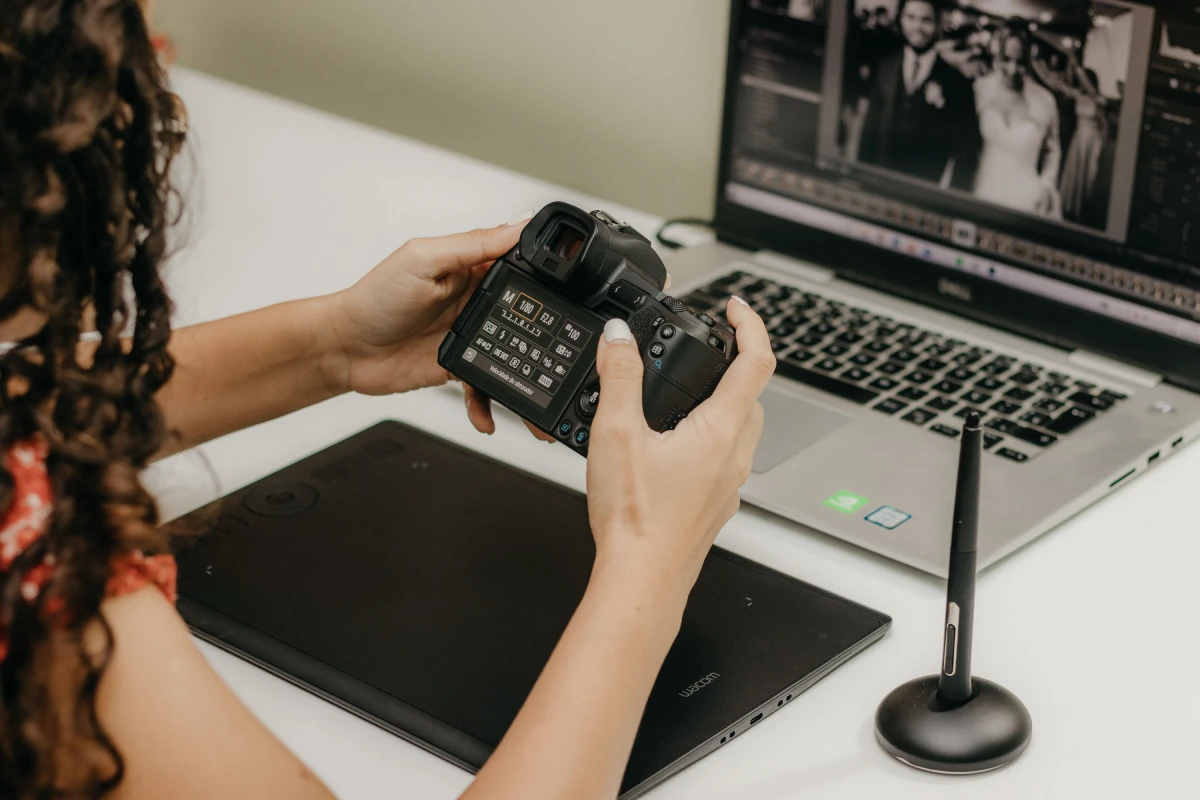
Digital photography is the capture, storage, and processing of images using electronic sensors rather than light-sensitive chemical film. Instead of photons triggering a chemical reaction in silver halide crystals (as in film photography), a digital camera uses a semiconductor sensor — typically a CMOS (Complementary Metal-Oxide-Semiconductor) or CCD (Charge-Coupled Device) chip — to convert incoming photons into electrical signals that are processed and stored as digital data.
The key distinctions from film photography:
Storage: Film photography records images on a physical medium that must be chemically processed before viewing. Digital photography records images as data files (JPEG, RAW, TIFF) that are immediately accessible on a memory card, computer, or network.
Review: Film photographers had no immediate way to see captured images — feedback came only after processing, sometimes days or weeks later. Digital photographers can review images on the camera’s LCD screen within seconds of capture.
Quantity: A roll of 35mm film typically holds 24 or 36 exposures. A digital memory card holds thousands of images at comparable file sizes. The effective cost per image in digital photography is essentially zero, removing the per-frame financial constraint that shaped film-era shooting discipline.
Processing: Film images are developed chemically in a darkroom. Digital images are processed in software — Lightroom, Capture One, Photoshop, or in-camera processing algorithms. The darkroom has become the digital editing suite.
Sharing: Film photographs must be printed or scanned before sharing. Digital images can be shared instantly across email, social media, and messaging apps.
How Digital Photography Works: The Technical Process
Understanding the technical sequence from light entering the lens to image file on the memory card clarifies many practical photography decisions.
Step 1: Light Through the Lens
The process begins identically to film photography. The camera’s lens collects and focuses light from the scene — the optical physics of refraction, focal length, and aperture are identical regardless of whether film or a digital sensor sits at the focal plane. The quality of the lens determines the sharpness, aberration, and character of the focused light that reaches the sensor.
Step 2: The Image Sensor
The image sensor is a silicon chip divided into millions of individual photosites — one for each pixel in the final image. A 24-megapixel sensor contains approximately 24 million photosites arranged in a grid across the sensor surface.
Each photosite is a photodiode — a semiconductor device that generates an electrical charge proportional to the number of photons that strike it during the exposure. More photons (brighter light) generate more charge; fewer photons (dimmer light) generate less charge. The charge is measured and recorded after the shutter closes.
The Bayer filter: Standard digital sensors cannot directly detect colour — each photosite responds only to the total brightness of incoming light regardless of wavelength. To create colour images, most sensors overlay a Bayer filter array — a pattern of red, green, and blue colour filters arranged over individual photosites (typically two green photosites for every red and blue, reflecting the human eye’s higher sensitivity to green). The camera’s processor interpolates the colour information from adjacent photosites to determine the colour value of each pixel — a process called demosaicing.
CCD vs CMOS sensors: Two primary sensor technologies exist, though CMOS now dominates the market by a wide margin.
CCD (Charge-Coupled Device) sensors transfer the charge from each photosite across the chip to a single readout point — producing clean, high-quality image data but requiring more complex and power-hungry electronics. CCDs were the dominant technology in early professional digital cameras (late 1990s–mid 2000s).
CMOS (Complementary Metal-Oxide-Semiconductor) sensors read the charge from each photosite independently through individual transistors at each site — allowing faster readout speeds, lower power consumption, and integration of additional processing circuitry directly on the sensor chip. Modern CMOS sensors, particularly back-illuminated (BSI) designs, produce image quality that matches or exceeds CCD performance in most applications. Almost all current digital cameras use CMOS sensors.
Step 3: Analogue-to-Digital Conversion
The electrical charges from each photosite are analogue values — continuous electrical signals. Before these can be stored as a digital image file, they must be converted to discrete digital values through an analogue-to-digital converter (ADC). The ADC quantises each photosite’s charge into a numerical value (typically 12-bit or 14-bit in RAW files, representing 4,096 or 16,384 possible tonal levels per channel).
The bit depth of this conversion directly affects the tonal gradation visible in the final image — higher bit depth preserves more subtle tonal transitions, particularly in highlight and shadow areas. This is one reason RAW files preserve more editing latitude than compressed JPEGs: RAW files contain the full 12-bit or 14-bit ADC output, while JPEG files compress this to 8-bit per channel (256 tonal levels per channel).
Step 4: Image Processing
After the ADC conversion, the camera’s image signal processor (ISP) — a dedicated chip optimised for this task — applies a sequence of algorithms to transform the raw sensor data into a viewable image:
Demosaicing: Interpolating the colour information from the Bayer pattern to assign RGB colour values to every pixel.
White balance: Adjusting the colour channels to neutralise the colour cast of the ambient light (tungsten, daylight, fluorescent, etc.).
Noise reduction: Reducing the random pixel variation in shadows and at high ISO settings.
Sharpening: Applying edge-enhancement algorithms to compensate for the slight softness introduced by demosaicing and the anti-aliasing filter.
Tone curve application: Applying a contrast and tonal response curve that shapes the image’s brightness distribution.
JPEG compression: If saving as JPEG, applying DCT (Discrete Cosine Transform) compression to reduce file size — discarding some image data irreversibly.
When shooting in RAW format, most of this processing is bypassed — the raw sensor data (plus minimal corrections) is saved directly to the memory card. The photographer then applies equivalent processing decisions in editing software with full creative control over every parameter.
Step 5: Storage and Display
The processed image data is written to a memory card (SD, CFexpress, or XQD depending on camera) as an image file. The dominant formats are:
JPEG: A compressed image format using lossy DCT compression. Produces small file sizes (3–8MB typically) at the cost of irreversible data reduction. Appropriate for situations where speed, storage efficiency, and immediate shareability matter more than maximum editing flexibility.
RAW: A proprietary, largely unprocessed sensor output format. File sizes are larger (15–45MB typically) and require editing software for processing, but preserve the maximum possible image information for post-processing. Different manufacturers use different RAW formats (Canon .CR3, Nikon .NEF, Sony .ARW, Fujifilm .RAF) — all readable by major editing software.
TIFF: An uncompressed image format common for archiving edited images, large-format printing, and professional printing workflows. Very large file sizes (50–200MB) but no compression-related quality loss.
HEIF/HEIC: A newer compressed format offering better quality than JPEG at equivalent file sizes, supported by Apple devices and some recent cameras. Adoption is growing but compatibility remains more limited than JPEG.
When Was Digital Photography Invented? The Complete History
The invention of digital photography is not a single moment but a sequence of interconnected breakthroughs spanning decades.
The CCD Invention (1969)
The foundational technology enabling digital photography was invented at Bell Labs in 1969 by Willard Boyle and George Smith — the charge-coupled device (CCD). Designed originally as a new type of computer memory, the CCD’s ability to transfer electrical charges across a silicon chip was quickly recognised as a mechanism for capturing images. Boyle and Smith received the Nobel Prize in Physics in 2009 for this invention.
The First Digital Camera (1975)
The first functional digital camera was built by Steven Sasson, an engineer at Eastman Kodak, in 1975. It used a modified Fairchild CCD sensor to capture a single 0.01-megapixel black-and-white image, recording it to a cassette tape at a resolution of 100×100 pixels. The entire device weighed 3.6 kilograms and required 23 seconds to capture and store a single image.
Kodak shelved the technology. The company’s leadership recognised that digital photography would eventually displace film — their primary revenue source — and made a strategic decision not to pursue it aggressively. This decision would ultimately contribute to Kodak’s bankruptcy in 2012, widely cited as one of the most significant failures of corporate innovation strategy in business history.
How Kodak Missed the Digital Photography Revolution
The Kodak story deserves its own examination because it illustrates a pattern of technological disruption that extends far beyond photography.
Kodak’s engineers continued developing digital photography technology throughout the 1980s despite leadership ambivalence. By the late 1980s, Kodak had produced digital cameras capable of producing commercially viable images — and had filed multiple foundational digital photography patents. The company possessed both the technology and the patents for the revolution that would eventually destroy it.
The structural problem: Kodak’s entire profitability was built on the film and chemical processing cycle. Every roll of film sold generated revenue when purchased and again when developed and printed. A digital camera that eliminated film and processing would destroy both revenue streams simultaneously. The short-term financial logic of protecting the existing business overrode the long-term strategic imperative to lead the transition.
By the time Kodak began taking digital photography seriously in the mid-1990s, Sony, Canon, Nikon, and other competitors had established market positions that Kodak could not displace despite its technical and patent advantages. Kodak filed for Chapter 11 bankruptcy protection in January 2012 — the company that invented digital photography having been destroyed by it. The case is now taught in business schools worldwide as a classic example of disruptive innovation theory.
Commercial Digital Camera Development (1980s–1990s)
Several early milestones in commercial digital photography:
1981: Sony introduced the Mavica (Magnetic Video Camera) — technically a still-video camera that recorded analogue video frames to a magnetic disc rather than true digital images, but it demonstrated the concept of filmless photography to the public.
1990: Kodak partnered with Nikon to produce the DCS 100 — a digital back mounted on a Nikon F3 film camera body, producing 1.3-megapixel images stored on a separate hard drive unit worn on a shoulder strap. Priced at $30,000, it was used primarily by photojournalists at the Associated Press.
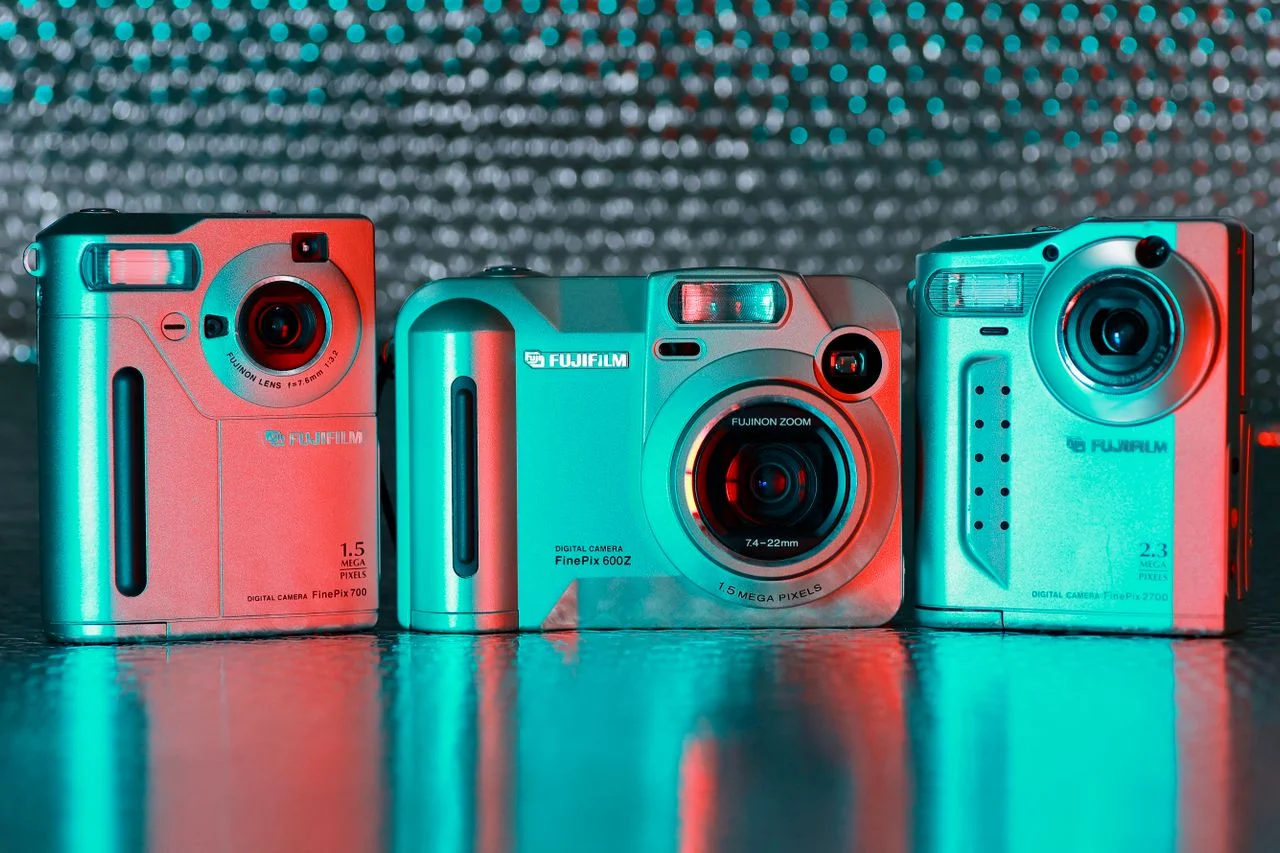
1994: Apple introduced the QuickTake 100 — the first digital camera marketed to consumers at a retail price below $1,000. Produced by Fujifilm under Apple’s brand, it produced 640×480 pixel images and sold for $749.
Late 1990s: Canon, Nikon, and Sony introduced digital SLRs at progressively lower prices, while Casio, Olympus, and others pioneered the consumer digital camera market. Megapixel counts increased from 1–2MP to 3–5MP through this period.
1999–2002: The quality crossover point. By around 2000, digital cameras in the $500–$1,500 price range produced image quality that matched 35mm film for most practical purposes. Consumer film camera sales began their terminal decline.
2007: iPhone introduction. Apple’s first iPhone included a 2-megapixel camera — technically inferior to dedicated digital cameras of the time, but integrated with a touchscreen display and internet connectivity that transformed how photographs were captured, viewed, and shared. The smartphone camera would eventually become the most-used photographic tool in history.
2012: Kodak bankruptcy. Film camera sales had declined from a peak of approximately 77 million units in 1999 to under 1 million. The photographic film market had contracted by over 90% in a decade.
Digital vs Film Photography: An Honest Comparison
The film vs digital debate has been ongoing since digital cameras became commercially viable. Rather than declaring a winner, understanding what each medium genuinely does better serves photographers who want to make informed choices.
Advantages of Digital Photography
Immediate review: The ability to verify exposure, focus, and composition in real time eliminates the uncertainty that characterised film photography. A professional portrait photographer in the film era could not see whether the subject’s eyes were open and sharp until processing — a problem that simply does not exist digitally.
Zero per-image cost: Film photographers managed the cost of every frame carefully — each exposure cost money in film stock and processing. Digital photography removes this constraint entirely, allowing experimental, high-volume, and exploratory shooting that would have been prohibitively expensive on film.
ISO flexibility: Film photographers chose a film stock for an entire roll and were committed to its ISO for 24 or 36 exposures. Digital photographers can change ISO frame-by-frame — shooting ISO 100 for a landscape, immediately switching to ISO 6400 for an indoor portrait, and back to ISO 100 for the next exterior shot.
Post-processing control: The digital darkroom — Lightroom, Capture One, Photoshop — provides precise, reproducible, and reversible control over every aspect of image processing. The chemical darkroom required physical skill, produced permanent results, and could not be undone. Digital editing is non-destructive, infinitely adjustable, and immediately comparable between different settings.
Storage and organisation: A terabyte hard drive holds more images than a photographer could shoot in multiple careers. Metadata, keyword tagging, facial recognition, and searchable databases allow instant retrieval of specific images from archives of hundreds of thousands of files. Physical negatives require physical storage, physical retrieval, and — if lost or damaged — cannot be recovered.
Sharing and distribution: Digital images can be sent anywhere in the world instantaneously. The photojournalism workflow of the film era — photographing an event, processing film, printing photographs, and physically transmitting them to a newspaper — has been replaced by photographers transmitting edited images from the scene within minutes of capture.
Advantages of Film Photography
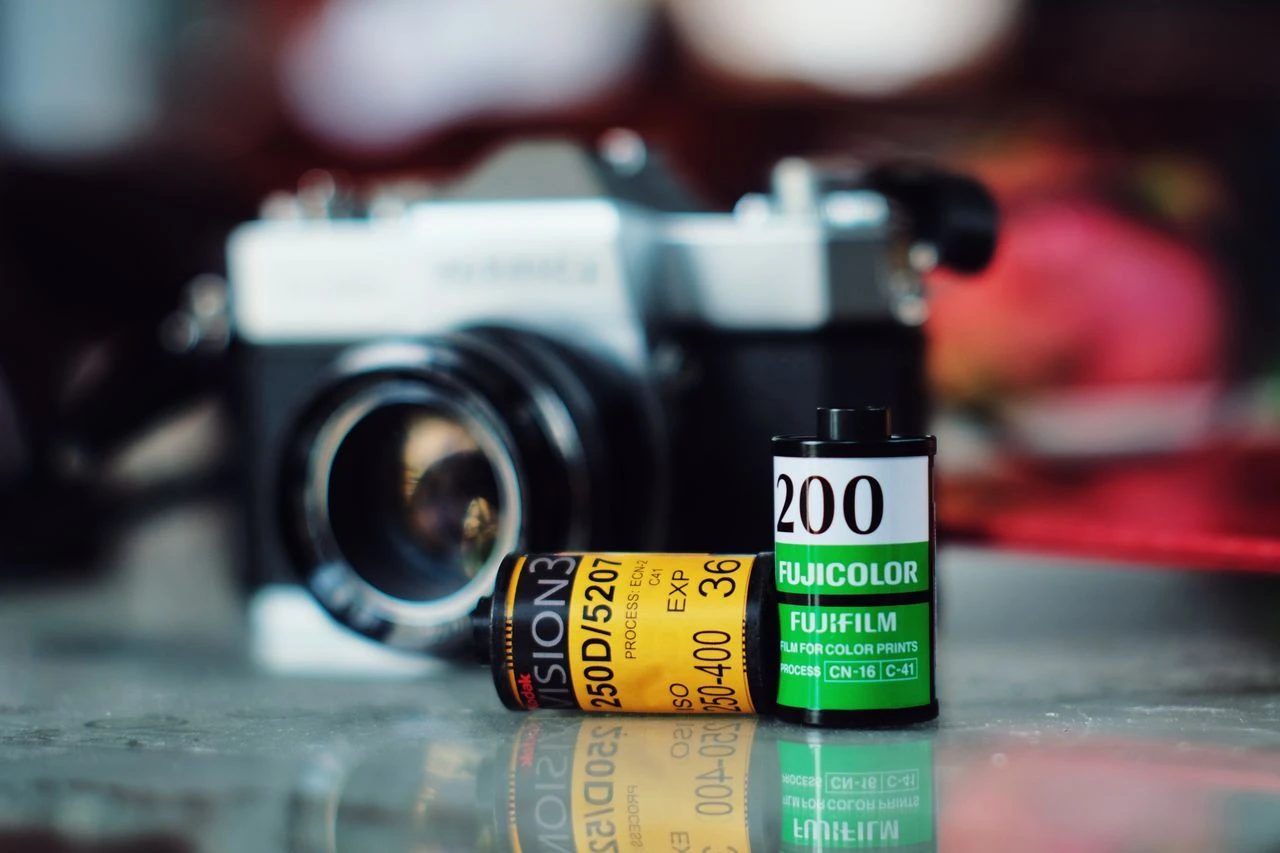
Tonal character: Film grain has an organic, random quality — each grain randomly positioned — that differs aesthetically from digital noise, which tends to be more regular and colour-contaminated. Many photographers find the grain structure of film more aesthetically pleasing, particularly in black and white work with high-speed films like Kodak Tri-X or Ilford Delta 3200.
Dynamic range characteristics: Film handles extreme highlights differently from digital sensors. While modern digital sensors have excellent dynamic range overall, film — particularly colour negative film — compresses extreme highlights gradually rather than clipping them abruptly. The resulting highlight rolloff is considered by many photographers to be more pleasing than digital highlight clipping.
The constraints as discipline: The forced limitations of film — 24 or 36 exposures per roll, no preview, commitment to a single ISO for an entire roll, cost per frame — impose a discipline on the shooting process that many photographers find creatively valuable. Shooting carefully, thoughtfully, and sparingly can produce different creative results than the exploratory, high-volume approach that digital enables.
Archival stability: A properly stored colour negative or transparency can remain printable for 100+ years. The long-term archival stability of digital formats — dependent on the continued readability of specific file formats and storage media — is less certain over comparable timescales. JPEG files from 2000 are still readable; whether current RAW formats will be readable in 2100 is genuinely uncertain.
The darkroom process: For photographers who develop their own film, the chemical darkroom process provides a tactile, hands-on engagement with the photographic process — the smell of developer, the appearance of an image in the tray, the physical print as a crafted object — that digital photography does not replicate.
Is Digital Photography Better Than Film?
For most photographers in most situations: yes, digital photography is more practical, more flexible, more cost-effective, and produces equal or superior technical quality for most applications.
For photographers who specifically value the tonal character of film, the discipline of limited exposures, the darkroom process as a craft, or the specific aesthetic qualities of particular film stocks — film remains a legitimate and artistically meaningful choice.
The practical reality of the current photography world: digital photography has won the commercial market entirely. Film survives as a deliberate aesthetic choice, a hobby medium, and in specialist niches (large-format fine art printing, certain motion picture applications) where its specific qualities are valued. The question is not which is objectively better but which serves your specific creative and practical purposes.
Digital Photography as Art: Is Photography Digital Art?
The question of whether digital photography constitutes art — and specifically whether digital manipulation disqualifies it from being considered “photography” in the traditional sense — has been debated since digital editing tools became available.
The argument that digital manipulation undermines photography’s claim to be a documentary medium has some validity: a heavily composited, AI-generated, or extensively retouched image is qualitatively different from a straight photographic record of a moment. The distinction between photography (recording what exists) and digital illustration (creating what doesn’t) can become genuinely blurred in heavily processed work.
The counter-argument is equally valid: the darkroom has always been a manipulation space. Ansel Adams made extensive use of dodging, burning, cropping, and development manipulation in the darkroom. Photomontage artists used darkroom techniques for composite imagery before computers existed. The principle that a photographer makes choices in both capture and processing — and that those choices constitute creative authorship — applies regardless of whether the tools are chemical or digital.
The practical consensus in the photography community: straight photography (minimal processing, no compositing) and heavily manipulated digital art exist on a spectrum, and both constitute legitimate creative practices. The ethical distinction matters most in photojournalism and documentary contexts, where the expectation of truthful representation creates a genuine obligation that fine art photography does not share. For more on how digital photography evolved as a creative medium, our history of photography guide covers the full arc from chemical to digital image-making.
The Digital Photography Workflow
Understanding the typical digital photography workflow clarifies where decisions matter and where time is spent.
Capture
The image is captured and written to the memory card as JPEG, RAW, or both simultaneously. The choice between JPEG and RAW determines the post-processing options available and the file management requirements downstream.
The case for RAW: RAW files preserve the full sensor output — 12–14 bits per channel of data that can be adjusted non-destructively in editing software. Recovering a slightly overexposed sky, correcting white balance after the fact, reducing noise, and adjusting tonal response are all far more flexible in RAW than JPEG. For any photography where image quality and editing flexibility matter, RAW is the clear choice.
The case for JPEG: JPEG files are processed by the camera — applying white balance, noise reduction, sharpening, and compression automatically — producing immediately usable images without post-processing. For high-volume situations where editing time is a constraint (sports coverage, event photography, photojournalism), well-configured JPEG output from a modern camera is fully professional quality for most uses.
Import and Organisation
Images are imported to a computer via card reader (faster and more reliable than USB connection to the camera body), catalogued in digital asset management software (Lightroom, Capture One, or free alternatives like digiKam), and typically backed up to a second drive immediately.
A consistent folder and file naming structure from the start of a photography practice prevents the catastrophic organisational failure — thousands of images named “DSC_0001.jpg” across dozens of folders — that many photographers experience after years of inconsistent file management.
Culling
The selection process — identifying which images from a shoot are worth editing — is called culling. For high-volume shoots (weddings, sports, events), culling is the most time-intensive stage of the workflow. Efficient culling tools (Lightroom’s Quick Collection and Reject functions, Photo Mechanic’s fast ingestion and culling, or dedicated apps like Aftershoot’s AI culling) significantly reduce the time investment.
Editing
Post-processing in Lightroom or Capture One covers the primary adjustment workflow — exposure, contrast, white balance, highlights, shadows, colour correction, noise reduction, and sharpening. For portraits and commercial work, Photoshop handles more complex retouching that goes beyond global and selective adjustments.
Export and Delivery
The edited images are exported in the format and resolution appropriate for their intended use — full-resolution TIFF or JPEG for printing, web-optimised JPEG (72–150 DPI, 2000px long edge) for digital delivery and online use, specific file specifications for stock photography platforms or publication requirements.
The Advantages and Disadvantages of Digital Photography: Summary
Advantages
- Immediate review and no per-image cost
- Frame-by-frame ISO flexibility
- Non-destructive, reversible post-processing
- Unlimited storage capacity at low cost
- Instant global sharing and distribution
- Computational photography capabilities (HDR, focus stacking, AI processing)
- Continuous improvement through firmware updates
Advantages
- Dependence on batteries (film cameras can operate without power)
- Screen and file dependency (no physical negative)
- Long-term format obsolescence uncertainty
- The abundance of digital images has arguably reduced their individual cultural significance
- The ease of manipulation raises authenticity concerns in documentary contexts
- The zero marginal cost of digital shooting can encourage undisciplined, volume-based approaches
The Future of Digital Photography
Digital photography continues to evolve through several converging technological trajectories.
Computational photography: The integration of software algorithms into the image capture process — multi-frame HDR, AI noise reduction, computational bokeh, scene recognition, subject detection — has transformed the boundary between optics and software. Modern smartphone cameras produce results that would have been impossible from their physical components alone. This trajectory continues to accelerate.
AI-assisted capture and editing: Artificial intelligence applied to autofocus (subject detection, eye tracking), scene recognition (automatic mode selection), and post-processing (AI noise reduction, AI sky replacement, AI background removal) is removing technical barriers that previously required significant expertise. The practical consequence is that technically competent images are easier to produce than ever before — raising the importance of creative vision relative to technical skill.
Mirrorless systems: The transition from mirror-reflex to mirrorless camera design — removing the optical viewfinder mirror in favour of electronic viewfinders — has enabled faster burst rates, better autofocus through on-sensor phase detection, quieter shutters, and more compact system designs. Mirrorless has effectively replaced DSLR as the professional standard.
Sensor technology advances: Back-illuminated (BSI) CMOS sensors, stacked CMOS designs (with logic circuitry on a separate layer), global shutter sensors (eliminating rolling shutter distortion in video and fast-flash sync in stills), and advances in on-sensor phase detection continue to improve both image quality and camera performance.
Further Reading
For the complete history of photography from its earliest chemical origins through the digital revolution, our guide to the history of photography covers the full arc including the CCD invention and Kodak’s story. For a practical beginner’s guide to using a digital camera — understanding the exposure triangle, composition, and getting started with your first setup — our photography for beginners guide is the right starting point. For choosing your first digital camera and understanding the sensor size and system decisions involved, our camera buying guide covers the decision in detail. For understanding ISO — one of the core digital photography settings — our guides to what is ISO in photography and ISO and digital noise management cover the technical and practical sides respectively.
For external reference on the digital photography revolution, the George Eastman Museum’s digital photography collection documents the transition from film to digital with archival material. For the technical specifications of current digital sensors and their performance measurements, DxOMark’s sensor database is the most rigorous publicly available resource.
Final Thoughts
Digital photography is not simply a more convenient version of film photography. It is a fundamentally different medium — different in how images are formed, stored, and processed; different in the economic constraints it imposes on the photographer; different in the relationship between capture and output; different in the cultural relationship between image and viewer that instant sharing has created.
Understanding what digital photography actually is — the sensor, the signal chain, the file formats, the workflow — transforms your relationship with your camera from operating a device to understanding a system. Every practical decision, from choosing ISO to selecting RAW or JPEG to managing your editing workflow, becomes clearer when you understand the underlying mechanics rather than working by habit or instruction alone.

Charles is a passionate photographer and visual storyteller with a keen eye for capturing authentic moments and timeless emotions. Through here, he combines creativity, technical expertise, and a love for natural storytelling to create images that preserve life’s most meaningful memories. His work focuses on genuine connections, beautiful details, and the unique stories behind every photograph.