The question deserves an honest answer, not an inspirational one. Yes, photography can be a genuinely rewarding career. It can also be financially precarious, isolating, physically demanding, and creatively draining in ways that are rarely discussed alongside the appealing parts. Both things are true simultaneously.
The photographers who thrive professionally long-term are not the ones who pursued the career with the most romanticised expectations — they are the ones who understood what they were getting into, built their business skills as seriously as their craft skills, and made deliberate choices about which corner of a diverse industry they wanted to occupy.
This guide gives you the complete picture: what photography careers actually look like, what education does and doesn’t do for you, what the income reality is, which skills matter most, and how to assess honestly whether professional photography is the right path for you.
What "A Photography Career" Actually Means
The phrase “photography career” covers an enormous range of working realities. A staff photographer at a national newspaper, a wedding photographer running a solo business, a commercial photographer shooting for advertising agencies, a wildlife photographer on assignment for a magazine, and a photography professor teaching at a university are all “professional photographers” — but their daily working lives, income structures, skill requirements, and job security are almost entirely different.
Before deciding whether photography is a viable career for you, you need to decide which kind of photography career you’re actually considering. The factors that make wedding photography a viable path (local market demand, relatively low startup costs, clear client base) are completely different from those that determine success in photojournalism (institutional relationships, editorial credibility, willingness to work in difficult conditions) or commercial photography (design industry connections, technical lighting expertise, understanding of art direction).
The most common professional photography paths and what distinguishes each:
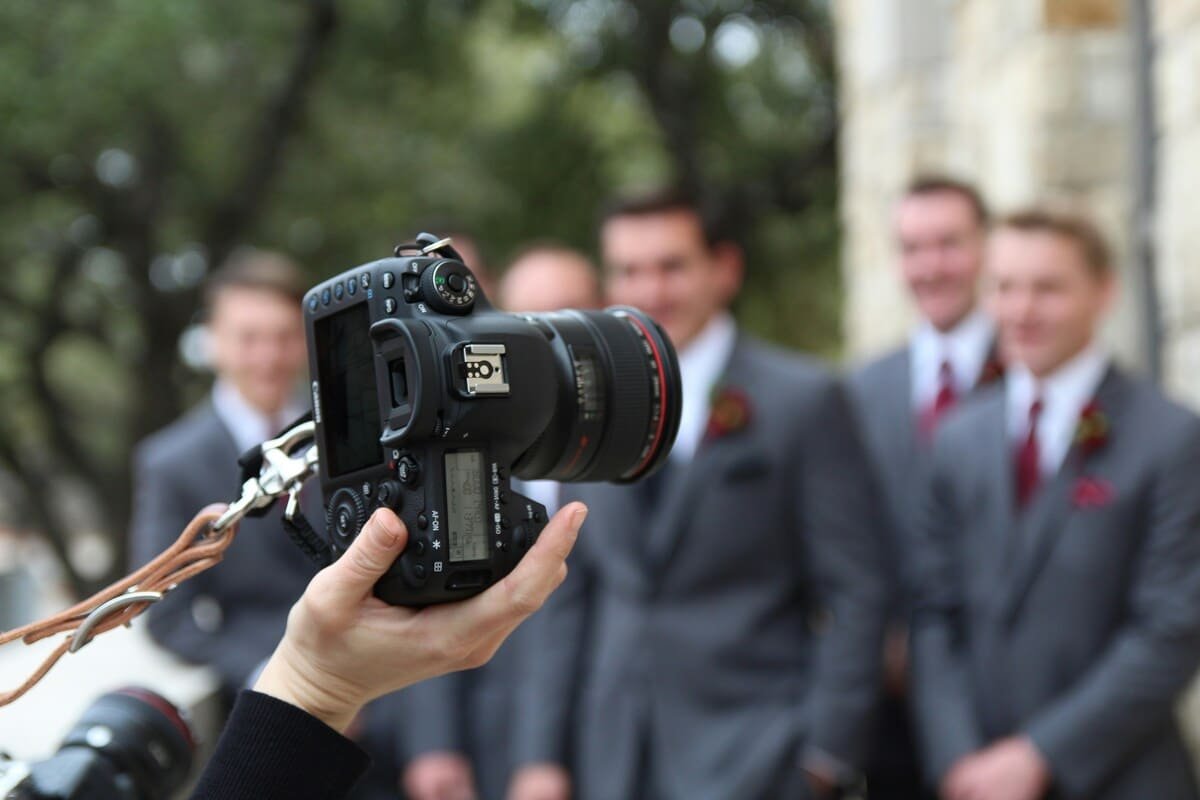
Wedding and event photography: The largest employer of professional photographers by volume. High demand, clear client base, seasonal workflow, relatively accessible entry for skilled photographers willing to invest in portfolio building. Income highly variable by market and reputation — from $30,000 to $150,000+ annually for established solo shooters.
Portrait and family photography: Broad, consistent demand across most markets. Lower average revenue per booking than weddings but more frequent. Strong opportunity for product-based sales (prints, albums, wall art) that significantly increase average transaction value. Many portrait photographers operate from home studios, reducing overhead.
Commercial photography: Higher day rates but more competitive and relationship-driven access. Requires understanding of advertising, brand aesthetics, and art direction beyond pure photography skill. Irregular workflow — feast and famine cycles are common even for established commercial photographers.
Photojournalism and documentary: The most romantically appealing and least financially reliable path. Staff positions at news organisations have declined dramatically over the past twenty years as print media contracted. Most working photojournalists are freelancers, competing for assignments from a shrinking pool of editorial clients. Income is typically lower than other photography specialties, and the work frequently involves difficult conditions, ethical complexity, and significant travel.
Architecture and real estate photography: High and consistent local demand, particularly for real estate. Lower per-shoot rates but volume compensates. Architectural photography (commissioned by architects and developers) pays significantly more but requires a specific portfolio and industry relationships to access.
Product and e-commerce photography: Growing consistently alongside the expansion of online retail. Can be set up with relatively modest studio equipment. Workflow is repetitive compared to other specialties but demand is reliable and client relationships can be long-term.
Scientific and technical photography: Medical photography, forensic photography, aerial survey photography, microscopy — niche specialties that typically require additional technical qualifications beyond photography alone. Often staff rather than freelance positions with stable employment and benefits.
Photography education: Teaching photography at universities, community colleges, or specialist schools. Typically requires a degree and a credible professional portfolio. Staff positions provide stable income and benefits; adjunct teaching is poorly paid and insecure.
Education: What It Does and Doesn't Do
The “do you need a photography degree?” question has no single correct answer — but it has a more nuanced answer than either “yes, absolutely” or “no, just shoot a lot.”
What formal photography education genuinely provides
Structured technical foundation. A well-designed photography programme covers the full technical curriculum — camera operation, studio lighting, darkroom or digital processing, colour theory, image editing — in a structured sequence. Self-teaching covers this ground eventually, but formal education covers it systematically, with access to equipment you may not be able to afford independently.
Access to equipment and facilities. Medium and large format cameras, professional studio lighting rigs, darkrooms, large-format printers, scanning equipment — most photography students have access to gear and facilities during their studies that would cost tens of thousands of dollars to assemble independently.
Critiques and feedback culture. The structured critique — presenting work to peers and faculty for honest evaluation — is one of the most accelerating environments for developing visual judgment. It is uncomfortable and often harsh. It is also extremely effective. Self-taught photographers who lack access to regular honest critique tend to develop more slowly than those who receive consistent, specific feedback on their work.
Historical and theoretical context. Understanding the history of photography, the photographers who shaped the medium, the critical frameworks for evaluating images, and the ethical dimensions of photographic practice — these are dimensions of the craft that purely technical self-teaching rarely covers well. They matter for anyone who wants to make work with genuine depth rather than just technically correct images.
Network and industry relationships. The photography community you build during formal education — peers, faculty connections, assistant work that comes through institutional relationships — can provide meaningful career advantages, particularly in fine art, editorial, and commercial photography where who you know genuinely affects what work you access.
What formal photography education does not reliably provide
Business and entrepreneurial skills. Most photography programmes are weak on the business curriculum. Marketing, pricing, contract law, client management, accounting, and the practical realities of running a self-employed photography business are typically covered superficially or not at all. The photographers who thrive financially learn these skills independently — through books, mentors, industry organisations, or hard experience.
Guaranteed employment. A photography degree from even a prestigious institution does not come with reliable employment outcomes. Unlike medicine, law, or engineering — where a qualification opens specific employment doors — a photography qualification signals creative development but does not connect directly to employment the way vocational qualifications do. You still need to hustle, network, and build a client base after graduating.
A substitute for excellent work. The single most important credential in photography is a strong portfolio. A photography degree from a well-regarded institution tells a potential client or employer you received formal training. Your portfolio tells them whether that training produced a photographer worth hiring. Of the two, the portfolio wins every time.
When a degree is worth it
If you want to pursue fine art photography, editorial photography, or photography education — where institutional connections, critical context, and the credibility of formal credentials carry more weight — a degree is more likely to justify its cost.
If you want to build a commercial photography business (weddings, portraits, commercial services), the degree is significantly less important than your portfolio, your business skills, and your local market relationships. Many of the most financially successful commercial photographers never attended formal photography programmes.
Alternatives to degree programmes
Online learning: Platforms like Skillshare, CreativeLive, and MasterClass host courses from working photographers covering both technical and business content. The quality varies enormously — research specific courses and instructors before committing.
Assisting professional photographers: Spending one to two years assisting an established photographer in your target niche is one of the most effective educations available. You observe real professional workflows, client interactions, pricing conversations, and technical problem-solving under pressure. Many working photographers actively seek assistants; the income is modest but the education is irreplaceable.
Photography workshops and intensive programmes: Short-form intensive workshops — from a weekend to two weeks — with specific photographers whose work you respect provide structured learning and community without the multi-year commitment and cost of a degree.
Self-directed study combined with critique groups: Building a consistent self-directed study practice — shooting regularly, studying the work of photographers you admire analytically, seeking out peer critique groups, and reading seriously about photography — can produce outcomes comparable to formal education for motivated, self-disciplined learners.
The Income Reality

Photography income data is difficult to find accurately reported because the range is so wide and the category includes both part-time supplementary income and full-time professional earnings. The most reliable available data:
The US Bureau of Labor Statistics reports a median annual wage for photographers of approximately $40,000 — but this figure averages across an enormous range of situations, from part-time hobbyist-to-pro transitions to full-time commercial photographers, and masks the bimodal distribution where many photographers earn well below $30,000 and a smaller group earns $80,000–$200,000+.
More useful benchmarks from the Sprout Studio Photography Business Benchmark Report, which surveys self-employed photographers specifically:
- Approximately 35% of self-employed photographers gross under $25,000 annually
- Approximately 30% gross $25,000–$75,000
- Approximately 25% gross $75,000–$150,000
- Approximately 10% gross over $150,000
Note that gross revenue is not net income — after equipment costs, software, insurance, marketing, and self-employment tax, net income is typically 50–65% of gross revenue for a well-managed photography business.
The variables that most strongly predict income level among professional photographers: niche (commercial and wedding photography earn more than portrait and event on average), market size (major metropolitan areas support higher rates), business skills (pricing confidence, marketing effectiveness, client retention), and portfolio quality (which determines the market tier you can access).
The Skills That Actually Determine Professional Success
Technical photography skill is the entry requirement. The skills that actually differentiate successful professional photographers from technically competent ones who struggle:
Business and financial management
The ability to understand your cost of doing business, set profitable prices, manage cash flow through seasonal peaks and troughs, handle tax obligations, and make sound equipment investment decisions. Most photography education does not teach this. Most photographers who fail financially do so not because they lack photographic skill but because they never developed financial literacy appropriate to running a self-employed business.
Client communication and management
Every client interaction — from the first enquiry to delivery and follow-up — is a marketing decision. Photographers who communicate promptly, clearly, and professionally, who set accurate expectations and consistently meet them, who handle difficult conversations (schedule changes, disappointment with results, payment disputes) gracefully — these photographers build the referral networks that sustain long-term practices. Technical brilliance cannot compensate for poor communication.
Editing and post-processing
For most professional photography specialties, editing time exceeds shooting time. A wedding photographer who cannot process 400 images consistently and efficiently, or a portrait photographer who cannot deliver polished results from a wide range of lighting situations, will find the back-end of their business becoming a bottleneck regardless of how well they shoot. Adobe Lightroom proficiency is the baseline; specialist editing knowledge for your niche (retouching for portraits, architectural correction for real estate, colour grading for commercial) becomes increasingly important as you move up market.
Resilience and self-management
Self-employment in photography means irregular income, inconsistent workflow, solo working conditions for much of the time, unpredictable client behaviour, equipment failures at critical moments, and the constant psychological challenge of creative work being evaluated commercially. The photographers who sustain long careers develop genuine resilience — the ability to weather slow booking periods without panic, to handle critical feedback without personalising it, and to maintain consistent output quality regardless of personal circumstances.
Physical stamina
An underrated practical requirement. Wedding photography routinely involves twelve to sixteen hours on your feet carrying heavy equipment. Wildlife photography requires extended outdoor fieldwork in challenging conditions. Commercial photography means long days in studios under pressure. Event photography is a physically demanding sprint. The romantic image of photography as a contemplative, leisurely craft is rarely accurate for professional practice.
Honest Questions to Ask Before Going Professional
The following questions are worth sitting with honestly rather than answering optimistically:
Is your motivation primarily the work itself, or primarily the lifestyle you imagine comes with it?
The lifestyle associations of professional photography — freedom, creativity, travel — are real for some photographers in some niches some of the time. They are significantly less universal than the Instagram version of the photography career suggests. If the work itself — the actual shooting, editing, client management, and business operation — isn’t genuinely compelling to you, the lifestyle appeal alone is unlikely to sustain motivation through the difficult early years.
Are you willing to shoot work you find less interesting to pay the bills while building toward the work you most want to do?
Most photographers do not begin their careers shooting exclusively the work that excites them most. They shoot what generates income, they develop skills across a broader range than they ultimately want to work in, and they gradually shift their practice toward their preferred work as their reputation and client base allow. If you need immediate creative fulfilment from every booking, the early years of professional photography will be difficult.
Do you have the financial runway to build the business?
The first twelve to twenty-four months of a photography business are typically the hardest financially. Bookings are sparse, rates are lower while the portfolio builds, and business expenses begin immediately. Having three to six months of living expenses saved, or maintaining part-time employment while the business builds, significantly improves the odds of surviving the startup phase. Going full-time with no financial cushion is the most common early failure pattern.
Can you operate without external validation and structure?
Self-employment removes the external accountability structures of employment — the manager, the deadline, the performance review, the team that expects you to show up. Self-directed photographers who can generate their own momentum, set their own goals, and maintain consistent effort without external pressure are far better suited to self-employed professional photography than those who thrive in structured environments.
Is your social support network prepared for what professional photography actually involves?
Long weekends working events when partners and friends are free. Evenings spent editing after daytime commitments. Financial uncertainty in the early years that affects household budgeting. Frequent travel for location work. The photographers whose personal relationships are strained most severely by professional photography careers are typically those whose partners or families weren’t given an honest picture of what the reality would look like before the transition.
A Realistic Path Into Professional Photography
The most reliable trajectory from photography enthusiast to sustainable professional:
Phase 1 (Year 1–2): Build without burning bridges
Maintain existing employment income while systematically building your photography business on the side. Shoot every weekend, every evening opportunity available. Invest in portfolio development — personal projects, assisting established photographers, collaborating with models and other creatives to build the specific portfolio imagery you need for your target niche.
Phase 2 (Year 2–3): Validate market fit
Begin charging for your work — not at full professional rates immediately, but at rates that reflect genuine value and begin to establish pricing expectations with clients. Track every enquiry, every booking, and every referral source. Identify which services generate the most demand and which generate the best margins.
Phase 3 (Year 3–5): Transition deliberately
When your photography income reliably exceeds 50–60% of your employment income for six consecutive months, a planned transition to full-time photography becomes lower risk. The transition should be planned, not reactive — not triggered by frustration with employment but by genuine readiness of the photography business to sustain full-time income.
This timeline is slower than many photography career narratives suggest. It is also significantly more likely to produce a sustainable outcome than an immediate leap into full-time photography driven by passion alone.
Further Reading
For the financial foundation of a professional photography business — understanding costs, setting profitable prices, and building sustainable revenue — our guide to how to price photography services covers the complete pricing framework. For the income streams available to professional photographers and what each realistically generates, see our guide to how to make money with photography. For marketing and client acquisition, our guide to marketing your photography business covers the full picture.
For external perspective on the realities of professional photography careers, the Professional Photographers of America (PPA) is the largest professional photography organisation in the US and offers career resources, business education, and industry benchmarks. The British Journal of Photography’s career section covers the professional photography landscape from a UK and international perspective with regular features on working photographers’ career paths.
Final Thoughts
Photography is a genuinely viable career for people who approach it with clear eyes, business discipline, and realistic expectations about what the work actually involves day to day. It is a difficult career for people who approach it primarily as an escape from a job they dislike, with the expectation that passion alone will generate sustainable income.
The clearest indicator of whether professional photography is right for you is not your technical skill level or the quality of your current portfolio — both of those can develop. It is whether, when you sit with an honest picture of what the work actually involves — the business management, the client communication, the editing hours, the financial uncertainty, the physical demands — you still want to do it. If the answer is yes, the path exists and it is navigable. If the answer is qualified by “but I’d want to skip the parts that don’t sound appealing,” the reality of professional photography will disappoint.
The work is the career. The moments of creative fulfilment are real and sustaining — but they are interspersed with everything else that makes a business run. Build for both and you have a real shot at making it work.

Charles is a passionate photographer and visual storyteller with a keen eye for capturing authentic moments and timeless emotions. Through here, he combines creativity, technical expertise, and a love for natural storytelling to create images that preserve life’s most meaningful memories. His work focuses on genuine connections, beautiful details, and the unique stories behind every photograph.