Most photographers reach a point where the technical side of the craft stops being the challenge. Exposure is consistent. Focus is reliable. The images are competent, clean, and correct — and somehow still feel generic. They could have been made by anyone.
This is one of the most frustrating and most important stages in a photographer’s development. It’s the point where technical mastery stops being enough and something deeper is required: a distinctive visual voice. A style. A perspective that makes your images recognisably yours even without a watermark or credit.
Developing that style is less mysterious than it sounds — but it does require intentional work that most photographers never do.
What Photography Style Actually Means
Style in photography is not a filter, a preset, or a colour grade. Those are aesthetic surface treatments that can be applied to any image regardless of the thinking behind it.
A genuine photographic style is a consistent set of choices — about what you photograph, how you approach your subjects, where you position the camera, what light you seek out, what you include and what you exclude, how you process the final image — that reflects a coherent way of seeing the world. It’s the sum of a hundred decisions made consistently over time.
The photographers whose work you can identify in an instant — Dorothea Lange, Ansel Adams, Sebastião Salgado, Annie Leibovitz, Martin Parr — are not recognisable because of a technical signature. They are recognisable because every image reflects a consistent worldview, a consistent set of values about what matters and how it should be rendered.
Style is not something you invent. It is something you discover — by shooting enough, looking enough, and paying close enough attention to what you are actually drawn to when no one is telling you what to make.

Step One: Audit What You're Already Making
The first step in developing a conscious style is understanding what your unconscious preferences already are. Most photographers have a style forming beneath the surface long before they recognise it — because we are all inevitably drawn to the same kinds of subjects, light, and compositions over and over.
Pull together your 50 to 100 favourite images from the past year or two. Not your technically best — your favourites. The ones you return to. The ones that feel most like you, even if you couldn’t say exactly why.
Look at them together and ask:
What subjects recur? Are there faces? Landscapes? Architectural details? Solitary figures? Crowds? If you shoot a wide range of subjects but keep coming back to one, that’s information.
What light recurs? Are most of these images made in direct sun, open shade, golden hour, overcast grey light, artificial indoor light, night? What quality of light — hard and high-contrast, soft and wrapping, low and directional?
What tonality recurs? High key (bright, airy, light shadows) or low key (dark, moody, deep shadows)? High contrast or compressed tonal range? Warm or cool?
What is the relationship between subject and background? Isolated subjects against clean backgrounds? Subjects embedded in complex, busy environments? Do you tend to simplify the frame or embrace density?
What emotion recurs? Quiet, contemplative images? Dynamic, energetic ones? Tender, intimate ones? Stark, unsettling ones?
The pattern that emerges from this audit is the beginning of your style. You are not creating preferences — you are recognising ones that already exist.
Step Two: Study Your Influences Analytically
Every photographer is shaped by the images they have consumed. The work that moved you before you picked up a camera, the photographers whose books you return to, the images you save on your phone — these are all inputs that shape your visual sensibility whether you are conscious of it or not.
Make a deliberate practice of studying the photographers whose work resonates with you most deeply — not just enjoying it, but analysing it technically and compositionally.
For any image that stops you, ask:
- Where is the camera positioned relative to the subject? Low, high, eye level, side-on, above?
- Where is the subject in the frame? Centre, thirds, edge, partially cropped?
- How much of the frame is negative space versus subject?
- What is in focus and what is not? Is depth of field shallow, moderate, or deep?
- What is the light source and direction? How hard or soft are the shadows?
- What is the colour treatment? Are colours saturated or muted? Is the image warm or cool? High contrast or flat?
- What is the emotional register? What do you feel looking at it, and what specific elements of the image produce that feeling?
This kind of analytical viewing is the fastest way to understand what works and why — and to begin borrowing intelligently from photographers you admire rather than just being vaguely influenced by them.
A useful framework: identify three to five photographers whose work you deeply admire and who have something in common that you can articulate. That commonality — whether it’s an approach to light, a relationship to subjects, a tonal quality — is probably pointing toward something essential in your own sensibility.
Step Three: Shoot Personal Projects, Not Just Assignments
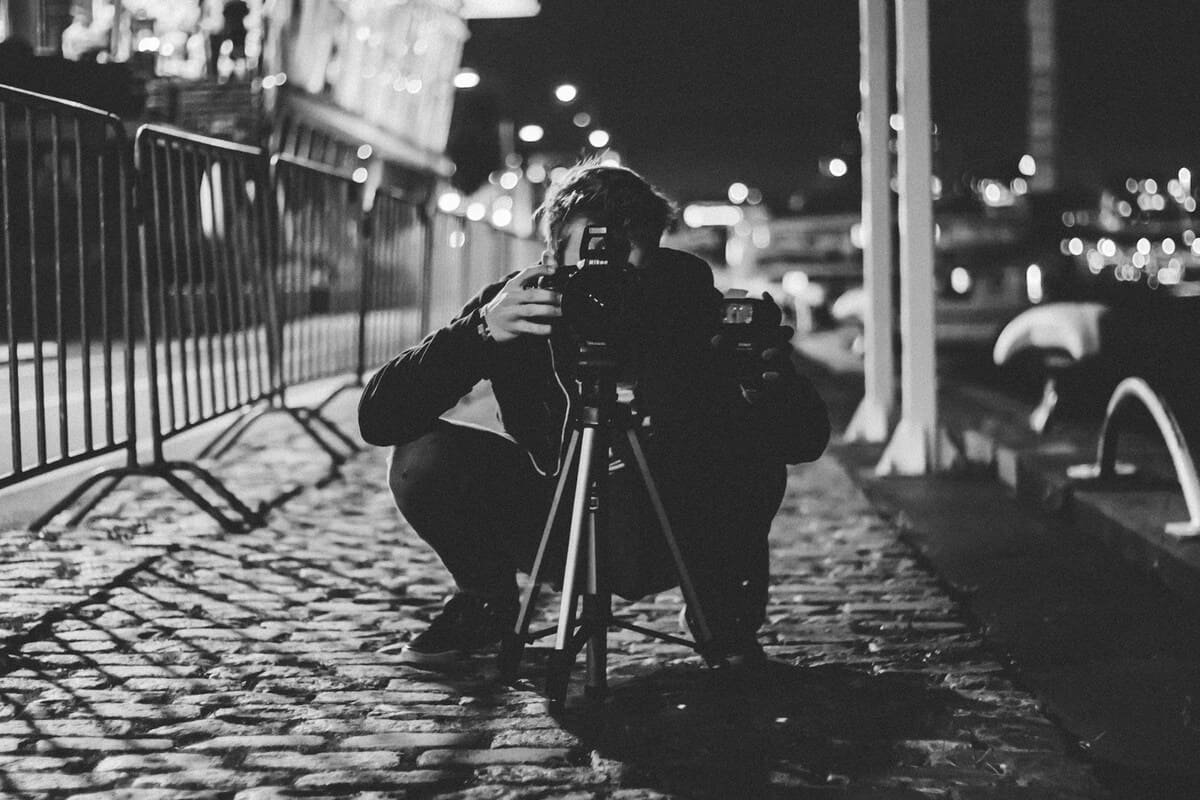
The most direct path to a distinctive style is extended work on a self-directed project with no external brief, no client expectations, and no pressure to produce commercially viable results.
A personal project gives you the conditions necessary for genuine creative exploration: a constrained subject or theme that you return to repeatedly over weeks or months, shooting with full creative freedom, making mistakes without consequence, and gradually discovering what you actually want to say about the subject rather than what you think you should say.
The constraint is important. “Photograph everything interesting” is not a project — it’s what you’re already doing. A project has a specific focus: the light in one room of your house at different times of day. Every stranger you can convince to let you make their portrait. The same street corner in your city over twelve months. Your neighbourhood at 5am. Your family during the year your child starts school.
Constraint forces creative decisions. When you cannot change the subject, you must find all the ways to see it differently — and in that process you discover your actual preferences. You learn what you find yourself doing instinctively versus what feels forced. That distinction is the core of style.
Many of the most significant bodies of photographic work in history began as personal projects with no commercial purpose: Eugene Atget photographing Paris streets over four decades. Vivian Maier making street portraits entirely for herself, never shown publicly in her lifetime. Sally Mann photographing her children at their Virginia farm summer after summer.
Step Four: Make Conscious Editing Decisions
Post-processing is where many photographers either reinforce their style or accidentally erase it. Applying trending presets — the current desaturated film look, the orange-and-teal grade, the lifted shadows matte finish — can make your images look polished and contemporary while simultaneously making them indistinguishable from thousands of other photographers applying the same preset.
Developing a consistent post-processing approach that serves your specific images takes longer but pays dividends. It means:
Choosing a colour philosophy. Do you want colours that are true to life, slightly heightened, muted and film-like, or stylised and otherworldly? Pick a direction and pursue it consistently rather than varying by mood.
Choosing a contrast and tonal approach. Deep blacks and bright whites produce a graphic, high-impact look. Lifted shadows and compressed highlights produce a soft, filmic feel. Neither is right — but consistency is what creates a recognisable body of work.
Developing a relationship with colour temperature. Consistently warm, consistently cool, or neutrally accurate? Many photographers whose work is immediately identifiable maintain a very consistent white balance approach regardless of the actual light conditions at capture.
Using selective adjustments deliberately. Dodging and burning, selective colour grading, masking — these tools shape where the viewer’s eye goes within the image. Applying them consistently to emphasise the same kinds of elements produces stylistic coherence across a body of work.
The test: can you drop a newly edited image into a grid of your existing work and have it look like it belongs? If it looks like a different photographer made it, the processing decisions are working against your developing style rather than reinforcing it.
Step Five: Embrace Limitation as a Creative Tool
One of the counterintuitive truths about developing a photographic style is that fewer options produce more distinctive work than more options.
Photographers who carry every lens they own and approach every situation asking “what focal length should I use?” tend to produce work that is technically varied but stylistically inconsistent. Photographers who work with one or two lenses for extended periods — or even just one focal length for a year — develop an intuitive understanding of how that focal length renders space, compresses or expands distance, and relates the foreground to the background. That understanding becomes part of their style.
Consider deliberate constraints as a creative practice:
One lens for a month. Whatever your least-used prime lens is, shoot exclusively with it for thirty days. You’ll learn its specific rendering characteristics and spatial relationships in a way that months of occasional use never produces.
One light source. Commit to natural light only, or window light only, or available light of any kind, for a defined period. This forces creative problem-solving within limits and produces work with consistent light quality.
One subject. Return to the same subject — a person, a place, a theme — repeatedly. Each return forces you to find a new angle, a different time, a fresh perspective. The accumulated images from this practice reveal your instincts more clearly than any variety of subjects would.
Shoot in RAW and develop manually rather than with presets. The effort of manually processing each image builds a deeper understanding of what you’re actually doing to the tonal values and colour relationships — and makes the results more specifically yours.
Step Six: Build a Coherent Body of Work
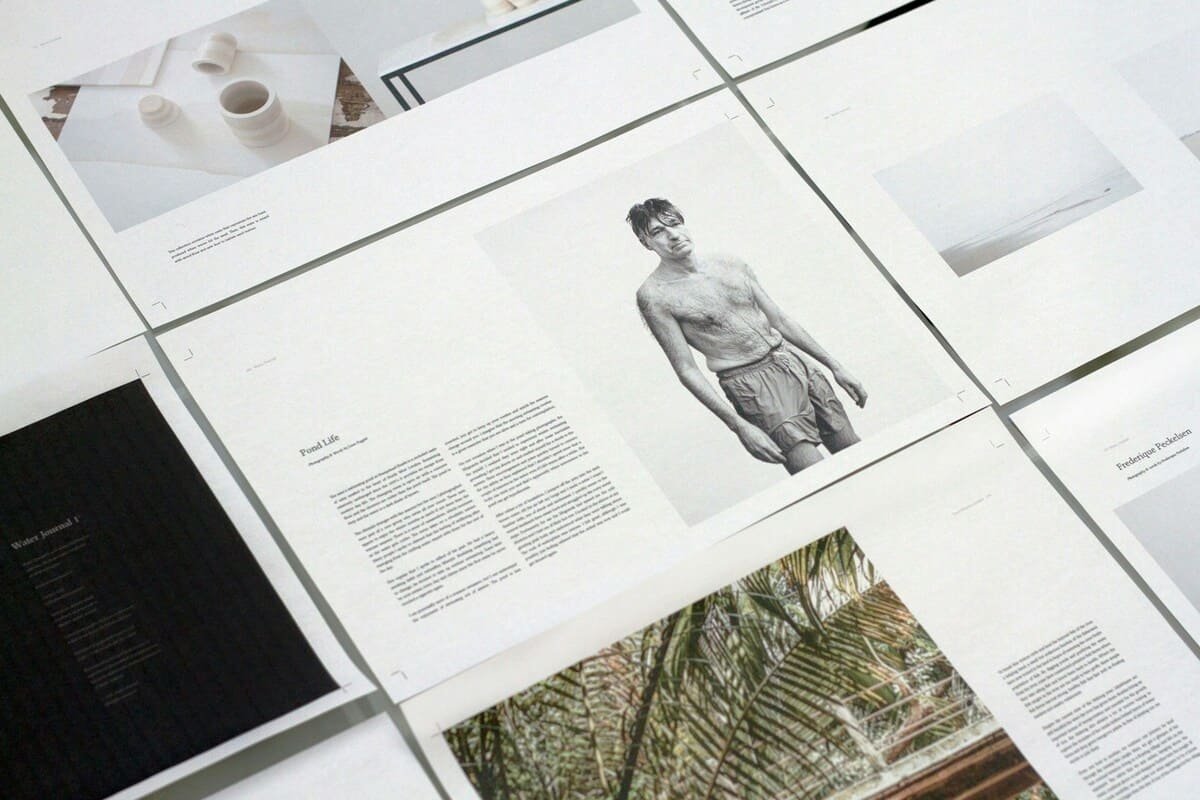
Individual strong images are not a style. A coherent body of work — a sequence of images that belong together, that share a worldview, that add up to something more than the sum of their parts — is where style becomes visible.
When curating your work for a portfolio, resist the temptation to include your widest range of subjects and techniques. Breadth is impressive technically; coherence is impressive artistically. A portfolio of thirty images that clearly belong together says far more about your vision than sixty technically excellent images in different styles and genres.
Sequence matters. The order in which images appear in a portfolio or photobook is itself a creative act — each image influences how the next one is read. Spend time on sequence rather than treating the portfolio as a collection of individually strong images.
Consider the edit ruthlessly. Remove any image that doesn’t belong — even if it’s technically excellent — if it disrupts the coherence of the whole. The images that don’t belong are usually the ones you made for other people (a client’s preference, a social media trend, a technically impressive demonstration) rather than for yourself.
The Patience Required
Style takes time. Not weeks — years. The photographers with the most immediately recognisable visual voices have typically been making work seriously for a decade or more, often much longer.
This is not discouraging — it’s clarifying. It means you don’t need to have a fully formed style before you begin. You need to begin so that the style has material to form from. Every shoot, every project, every image you make is data. The pattern emerges from the data over time.
The photographers who develop a distinctive style most quickly are not the most talented — they are the ones who shoot the most, look the most critically at their own work, study the most work they admire, and make the most conscious choices rather than default ones.
The Role of Writing and Reflection
Many photographers find that writing about their work — even privately, in a notebook never shared with anyone — accelerates the process of developing conscious intention.
After a shoot, write a paragraph about what you were trying to do, what worked, what didn’t, and what you would do differently. After processing a set of images, write about the editing decisions you made and why. When you encounter a photographer’s work that moves you, write about what specifically you are responding to.
This reflective practice builds the bridge between unconscious instinct and conscious choice — which is exactly where style lives. The photographer who can articulate why they made a specific choice is always developing faster than the one who says “I just liked the look of it.”
Further Reading
For the most thorough available study of how major photographers have articulated their own creative vision and working methods, the Art of Photography YouTube channel by Ted Forbes offers hundreds of hours of thoughtful analysis of photographic work and creative process. For written depth, John Szarkowski’s The Photographer’s Eye — available through most public libraries — remains one of the most insightful analyses of what makes a photographic image work as distinct from paintings and other visual media.
On the craft side, our guide to photography for beginners covers the technical foundations — exposure, composition, light — that this article assumes as a starting point. For understanding how different genres shape different creative approaches, the Genres section of Haiku Photography Blueprint covers the distinct demands and traditions of each major photographic discipline. For photographers ready to turn a developing style into a marketable business, our guide to marketing your photography business covers how to present and position your work to attract the right clients.
Final Thoughts
The question “how do I develop my photography style?” is really the question “how do I become more fully myself as a visual thinker?” There is no shortcut to that. There is only sustained practice, honest self-evaluation, serious engagement with the work of photographers you admire, and the willingness to make images for yourself rather than for approval.
The photographers with the strongest styles are not following trends — they are following their own deep curiosity about something, persistently and over time. That curiosity is already present in you. The work of developing a style is simply the work of learning to follow it more deliberately.

Charles is a passionate photographer and visual storyteller with a keen eye for capturing authentic moments and timeless emotions. Through here, he combines creativity, technical expertise, and a love for natural storytelling to create images that preserve life’s most meaningful memories. His work focuses on genuine connections, beautiful details, and the unique stories behind every photograph.