Autofocus has become so reliable in modern cameras that many photographers set it once and forget it. That’s a mistake. Choosing the wrong autofocus mode for a given situation is one of the most common causes of shots that look almost sharp — a portrait with the ear in focus instead of the eye, a bird in flight that’s crisp in frame one and blurred in frame two, a child mid-run who’s perfectly exposed but soft.
The difference between AF-S and AF-C isn’t complicated, but knowing which to use — and crucially, when the obvious choice isn’t actually right — makes a consistent, measurable difference to your keeper rate.
The Core Difference in One Sentence
AF-S (Auto Focus Single) focuses once when you half-press the shutter, then locks. AF-C (Auto Focus Continuous) keeps adjusting focus continuously as long as you hold the shutter half-pressed.
Everything else — all the nuance about when to use each, how they interact with focus area modes, back-button focus, and burst shooting — flows from that single difference.
AF-S (Single Autofocus): How It Works
When you half-press the shutter in AF-S mode, the camera engages the autofocus system, finds the point of sharpest contrast within your selected focus point or area, and locks onto that distance. A confirmation indicator — usually a green dot or beep — signals that focus is achieved. The focus then stays locked at that exact distance until you release the shutter button or take the shot.
This lock behaviour is useful beyond simply allowing the camera to focus. It lets you focus and recompose — point the focus point at your subject, achieve focus lock, then shift the camera slightly to place the subject off-centre in the frame while keeping the focus distance exactly where you set it.

When to use AF-S
Portraits of relatively still subjects. Point the focus point at the eye, half-press to lock, recompose if needed, shoot. AF-S gives you precise control over exactly what is sharp and eliminates the risk of the camera shifting focus between frames.
Landscapes and architecture. The scene isn’t moving. AF-S locks onto your chosen focal point — a specific rock, a window frame, a foreground element — with no risk of the camera tracking away from it.
Still life and product photography. Controlled subjects on a table or studio setup benefit from the precision of AF-S. Once focus is locked, you can fire multiple frames without any variation.
Macro photography. At very close focus distances, depth of field is extremely thin — sometimes measured in millimetres. AF-S lets you lock precisely on the exact plane you want (the stamen of a flower, the eye of an insect) and hold it there.
Low-contrast or difficult scenes. In situations where continuous focus might hunt back and forth — a subject against a very smooth background, a white wall, misty conditions — AF-S’s lock-and-hold behaviour prevents the frustrating in-and-out focus cycling.
The real limitation of AF-S
The focus lock works perfectly for the distance it locked onto. But if the subject moves toward or away from the camera after you lock focus — even slightly — the image will be out of focus. For any subject with unpredictable movement, AF-S becomes a liability rather than an asset.
AF-C (Continuous Autofocus): How It Works
In AF-C mode, the camera’s autofocus system runs continuously from the moment you half-press the shutter. It doesn’t lock — it keeps tracking. As your subject moves closer or further away, the camera adjusts the lens focus in real time to keep up.
Modern AF-C systems don’t just react to where the subject is — they predict where it will be. By analysing the subject’s current speed and direction, the camera’s predictive algorithm calculates where the subject will be at the exact moment the shutter opens (accounting for the small mechanical delay between the signal and the shutter firing) and focuses there rather than where the subject currently appears to be. On fast-moving subjects — a sprinting athlete, a bird in flight — this predictive behaviour is what separates sharp frames from soft ones.
When to use AF-C
Sports and athletics. Runners, cyclists, footballers, swimmers — any sport where athletes move continuously and at speed requires AF-C. The camera needs to be tracking, not locked.
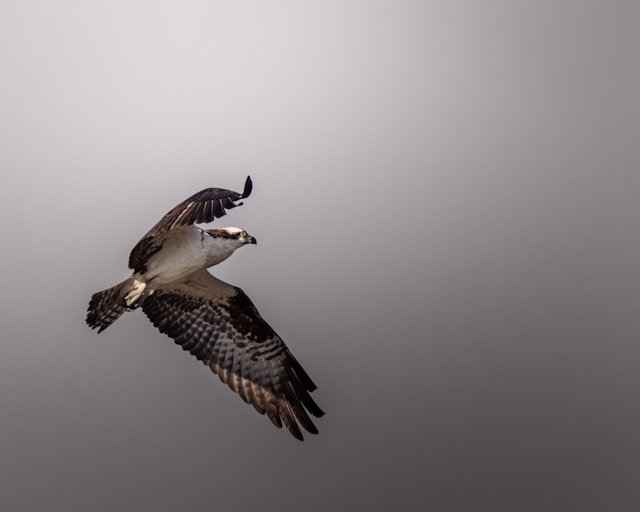
Wildlife photography. Animals are unpredictable. A deer might hold still for two seconds, then bolt. AF-C keeps the system engaged and ready regardless of what the subject does. Birds in flight in particular demand AF-C combined with a fast burst rate.
Children. Arguably the most practical everyday use. Children at play move constantly and unpredictably. AF-C dramatically increases the keeper rate in family photography, birthday parties, and events with kids.
Events and documentary work. Weddings, performances, street photography with close moving subjects — anywhere the subject’s distance to the camera is changing, AF-C keeps you covered.
Any action sequence. Dance, martial arts, motorsport, water sports — if motion is the subject, AF-C is the mode.
The real limitations of AF-C
Low-light focus hunting. In very dim conditions, the camera can struggle to find enough contrast to track reliably, causing the lens to cycle back and forth without locking. Adding a focus-assist beam (many cameras have one built in, or it fires from an external flash) helps significantly.
Obstructed subjects. If something passes between the camera and your subject — another player crossing the frame, a branch, a crowd member — the camera may lock onto the obstruction rather than your subject. This is where focus tracking sensitivity settings (discussed below) become important.
Battery consumption. Continuous autofocus uses more power than AF-S. Not a critical issue for most sessions, but worth keeping in mind for extended events or cold weather shooting.
AF-A (Automatic AF): The Hybrid Mode
Many cameras offer AF-A, which attempts to automatically detect whether the subject is moving and switch between AF-S and AF-C accordingly. The appeal is obvious — one setting that handles everything.
In practice, AF-A is unreliable for critical shooting. The camera’s movement detection can misread a slow-walking person as stationary, or a slightly swaying static subject as moving. The transitions between modes aren’t always smooth, and in the moments where it matters most — right before you press the shutter — you can’t be certain which mode is actually active.
For casual shooting or quick snapshots, AF-A is convenient. For any situation where focus accuracy matters, pick AF-S or AF-C deliberately. Knowing your subject tells you which one to choose.
Focus Area Modes: The Overlooked Variable
Choosing between AF-S and AF-C is only part of the autofocus decision. The focus area mode — which determines where in the frame the camera looks for its subject — is equally important and often overlooked by beginners.
Single Point / Flexible Spot: The camera focuses on one specific point you select. Maximum precision, minimum tracking. Best for AF-S work — portraits, still life, landscapes where you want to control the exact focus point.
Zone / Group Area: The camera uses a small cluster of focus points working together. Good for subjects that move slightly but stay within a defined area — a stationary bird on a branch, a face in a crowd. Offers more coverage than single-point without losing control.
Wide / Full Area: The camera uses all available focus points and selects what it determines to be the main subject — often the closest object, or (on modern cameras with subject detection) a face or eye. Convenient for casual shooting but can focus on the wrong element in complex scenes.
Tracking / Lock-On: Once you acquire a subject with the active focus point, the camera hands off to a tracking algorithm that follows the subject across the frame regardless of which focus points it crosses. This is the mode for wildlife in flight, sports action, and fast-moving subjects. Most effective in AF-C.
On current Sony, Nikon, and Canon mirrorless cameras, AI-based subject recognition (eyes, faces, animals, vehicles) has transformed tracking AF-C performance. When these systems are active in AF-C mode, the camera identifies and locks onto the subject’s eye with a precision that manual focus point selection can’t match for moving subjects.
Back-Button Focus: A Game-Changing Setup
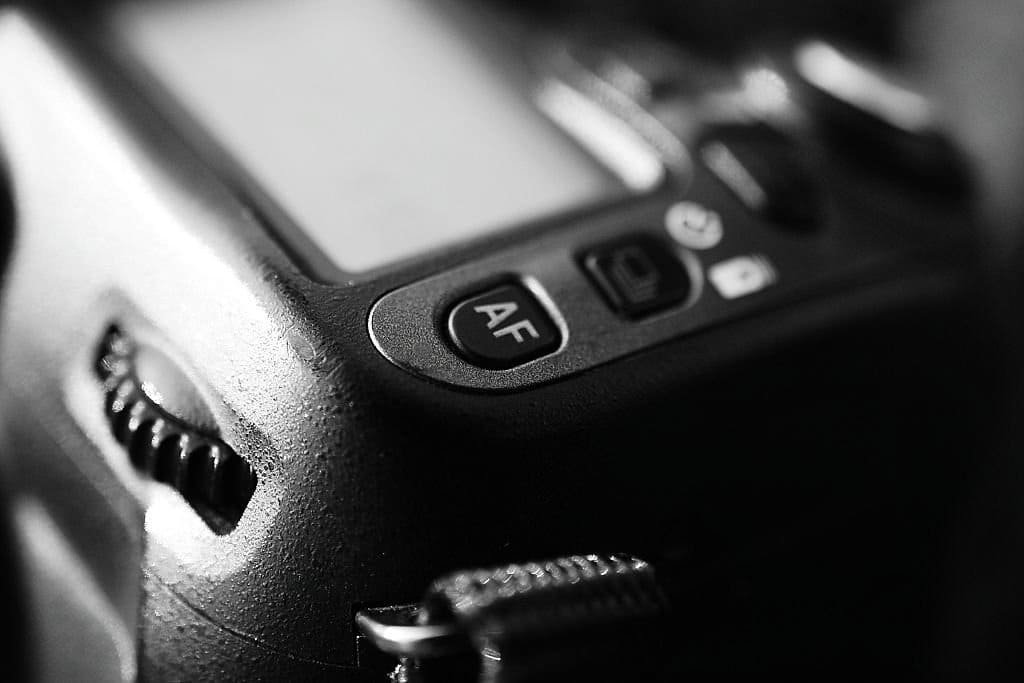
The most practically useful autofocus technique not built into AF-S or AF-C directly is back-button focus — reassigning the autofocus activation from the shutter button to a dedicated button on the rear of the camera (typically the AF-ON button or AEL button).
In the default setup, half-pressing the shutter both activates autofocus and meters the exposure. This coupling causes problems: in AF-C mode, every time you half-press to take a shot, you’re also potentially shifting focus if the camera finds a new subject. In AF-S mode, re-engaging after recomposing means re-acquiring focus from scratch.
With back-button focus:
- Your thumb controls focusing — hold it down for AF-C tracking, tap it for AF-S single acquisition
- Your index finger on the shutter controls only exposure and capture
- You can switch between effectively tracking and locked focus behaviour in a single shooting session without changing any menu settings
For a portrait session that includes candid moments between posed shots — one moment your subject is still, the next they’re walking toward you — back-button focus lets you track when needed and lock when not, using only thumb pressure to switch between behaviours.
Setting up back-button focus varies by camera body but is universally available on any mirrorless or DSLR with an AF-ON button. Consult your camera’s manual for the specific menu path — it typically takes under two minutes to configure and many photographers consider it the single most useful camera customisation available.
Advanced AF-C Settings Worth Knowing
Modern cameras offer several AF-C refinement settings beyond simply turning it on. These vary in name between manufacturers but the underlying functions are consistent:
Tracking Sensitivity / Subject Motion: Controls how quickly the camera abandons its current subject when something else enters the focus area. Set high, the camera switches to any new subject quickly — useful for isolated subjects against clean backgrounds. Set low, the camera holds onto its original subject even when obstructions pass through the frame — essential for sports where other players or objects frequently cross the path to your subject.
Focus Priority vs Shutter Priority: In AF-C, you can often choose whether the camera will fire the shutter only when it confirms focus (focus priority) or fire regardless of focus status (shutter priority). Focus priority improves your sharp frame percentage but can slow burst rate. Shutter priority maintains burst rate but includes out-of-focus frames. For most action work, focus priority is the safer starting point.
Acceleration / Deceleration Tracking: Adjusts how the predictive algorithm handles subjects that change speed suddenly — a sprinter accelerating out of blocks, a bird changing direction. Setting this higher tells the camera to expect rapid speed changes; lower settings assume more consistent movement.
Subject Recognition AI: On recent Sony (Real-time Tracking), Canon (Intelligent Tracking and Recognition), and Nikon (3D Tracking and subject detection) systems, enabling AI subject detection before activating AF-C dramatically improves tracking reliability. The camera identifies eyes, faces, animals, and vehicles and locks tracking onto those specific subjects rather than relying purely on contrast and colour information.
Quick Reference: AF-S vs AF-C by Shooting Scenario
| Scenario | Mode | Notes |
|---|---|---|
| Posed portrait (studio) | AF-S | Lock on eye, recompose freely |
| Street portrait (candid, approaching) | AF-C | Subject closing distance |
| Landscape / seascape | AF-S | Scene is static |
| Wildlife (perched, still) | AF-S | Subject not moving |
| Wildlife (in flight, running) | AF-C | Predictive tracking essential |
| Sports action | AF-C | Continuous tracking + burst |
| Children playing | AF-C | Unpredictable movement |
| Macro (controlled) | AF-S | Precise focus plane control |
| Wedding ceremony | AF-S | Subjects mostly stationary |
| Wedding reception (dancing) | AF-C | Erratic movement |
| Architecture | AF-S | No movement |
| Stage performance / dance | AF-C | Continuous motion |
Related Techniques on Haiku Photography Blueprint
Understanding autofocus modes connects directly with other camera fundamentals. Managing exposure settings alongside autofocus — particularly shutter speed when shooting action — is covered in our guide to ISO and digital noise management, where the relationship between ISO, shutter speed, and motion is explained in detail. For a broader look at camera fundamentals and technique, the Basics section of Haiku Photography Blueprint covers the full range of in-camera settings that work alongside autofocus.
Further Reading
For a comprehensive technical breakdown of how phase-detection and contrast-detection autofocus systems work at the hardware level, Cambridge in Colour’s autofocus tutorial is one of the most thorough free resources available. For camera-specific AF-C tracking settings and their practical effects, the photography team at DPReview regularly publishes autofocus performance tests that are worth consulting before purchasing a new body.
Final Thoughts
The choice between AF-S and AF-C comes down to one question: is your subject’s distance to your camera going to change between the moment you acquire focus and the moment the shutter fires? If no — AF-S. If yes — AF-C.
Everything else — focus area modes, tracking sensitivity, back-button focus, subject recognition AI — is refinement built on top of that fundamental decision. Get the mode right first, then layer in the additional settings as your shooting demands it. The photographers who consistently nail focus aren’t using anything mysterious — they’ve simply matched their autofocus mode to their subject, every single time.

Charles is a passionate photographer and visual storyteller with a keen eye for capturing authentic moments and timeless emotions. Through here, he combines creativity, technical expertise, and a love for natural storytelling to create images that preserve life’s most meaningful memories. His work focuses on genuine connections, beautiful details, and the unique stories behind every photograph.